Knowing Your Emotional Triggers Isn't Soft: It's Edge
Emotional self-awareness is not a personality exercise. It is a concrete trading advantage that reduces costly mistakes and protects capital.
 Marcus Chen4 min read
The Market Does Not Care About Your Feelings
But your feelings determine how you trade. Every position you take, every stop you honor or ignore, every size decision you make is filtered through your emotional state at that moment. If you do not understand your triggers, you do not understand your risk.
This is not motivational psychology. I spent a decade watching professional traders, people with quantitative training and institutional risk systems, make terrible decisions because of unexamined emotional responses. The best risk management system in the world does not help if the person operating it overrides it every time they feel fear, greed, or shame. Knowing your triggers is not soft. It is a risk control mechanism as concrete as a stop loss.
The Five Triggers That Cost the Most Money
After cataloging hundreds of blown trades across multiple desks, the same emotional triggers appeared over and over. Most traders have one or two dominant triggers. Knowing yours gives you a chance to interrupt the pattern before it costs you.
Trigger 1: Fear of missing out (FOMO). The stock you were watching runs 15% without you. You chase it at the top because the pain of watching gains without participating feels unbearable. FOMO-driven entries are almost always too late, too large, and without a defined exit plan. I watched a trader in 2020 chase Tesla after it had already tripled. He entered at $880 pre-split with a 15% position. Within two months it dropped to $560. He eventually exited at $620 for a 30% loss on an oversized position.
Trigger 2: Anchoring to past prices. You bought at $100. The stock is now at $70. Every day you look at it and see "-30%" instead of evaluating whether the stock at $70 is a buy, hold, or sell on its current merits. The purchase price is irrelevant to the stock's future returns, but your brain treats it as a reference point that distorts every subsequent decision.
Trigger 3: Loss aversion after a winning streak. You have been profitable for three months. The thought of booking a loss feels like it will "ruin" the streak. So you hold losers too long, move stops wider, and refuse to take small losses that would protect you from large ones. The streak becomes the priority instead of the process. When it finally breaks, it often breaks badly because you let losses accumulate while defending an illusion.
Trigger 4: Boredom. The market is quiet. Your positions are flat. Nothing is happening. So you start looking for trades, not because the setup is there but because doing nothing feels like falling behind. Boredom trades have the worst expectancy of any emotional trigger because they start from a place of zero conviction. You are not trading a thesis. You are trading your discomfort with inactivity.
Trigger 5: Shame after a mistake. You made a bad trade. Instead of logging it and moving on, you feel a deep need to "fix" it, either by doubling down on the position or by immediately taking another trade to offset the loss. Shame-driven trading is revenge trading's quieter cousin. It does not look frantic. It looks like determination. But the motivation is emotional repair, not expected value.
Mapping Your Triggers
Knowing the common triggers is a start. Knowing your specific triggers is the edge. Here is how to find them.
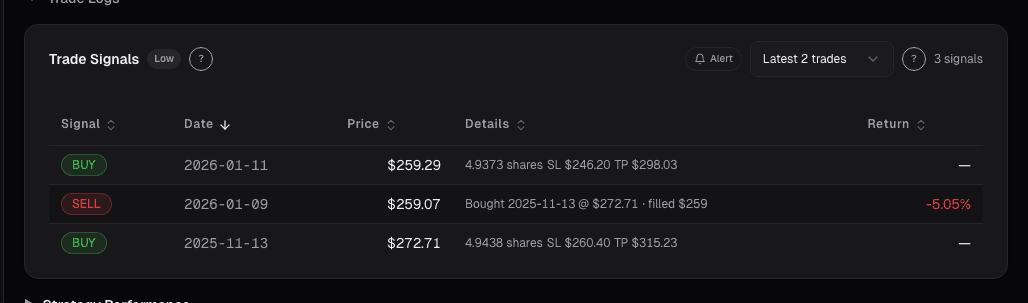
Step 1: Audit your worst trades. Pull up your last 20 losing trades in your portfolio dashboard. For each one, write down what you were feeling when you entered. Not what you were thinking. What you were feeling. Rushed? Anxious? Excited? Bored? Angry? If you kept a trading journal with emotional state entries, this is where it pays off.
Step 2: Look for clusters. You will find that your losses are not evenly distributed across emotional states. They cluster. Maybe 60% of your worst trades happened when you felt excited. Maybe your biggest position sizing errors happen when you are frustrated. The cluster is your dominant trigger.
Step 3: Define your early warning signs. Every trigger has physical and behavioral precursors. FOMO comes with rapid tab-switching and checking prices every few minutes. Boredom manifests as scrolling watchlists looking for "something interesting." Learn what the trigger feels like before it results in a trade.
Step 4: Build an interrupt. Create a speed bump between the emotion and the action. Before any trade, rate your emotional state from 1 to 10 on a calm-to-activated scale. If you are above a 6, wait 30 minutes before executing. The urge often fades within the waiting period.
Systems Beat Willpower
Relying on willpower to manage emotional triggers is like relying on willpower to manage position sizing. It works until it does not, and it fails precisely when the stakes are highest.
Build systems that make it harder to act on triggers. Trade alerts enforce risk limits that apply regardless of your emotional state. If your system says the maximum position is 4% and your drawdown limit is 15%, those constraints hold even when your brain is screaming at you to go bigger or hold longer. The rules exist to protect you from the version of yourself that emerges under emotional duress, and that version will always be worse at trading than the calm, rational version that wrote the rules.
The Edge Is Self-Knowledge
Markets are competitive. Every quantitative edge gets arbitraged. Every informational edge gets priced in. But behavioral edge, the ability to avoid costly mistakes that other people make repeatedly, is durable because most people never do the work of examining their own psychology.
Knowing that you chase stocks when you feel FOMO is not a personality insight. It is a risk factor with a quantifiable cost. Manage it like one.
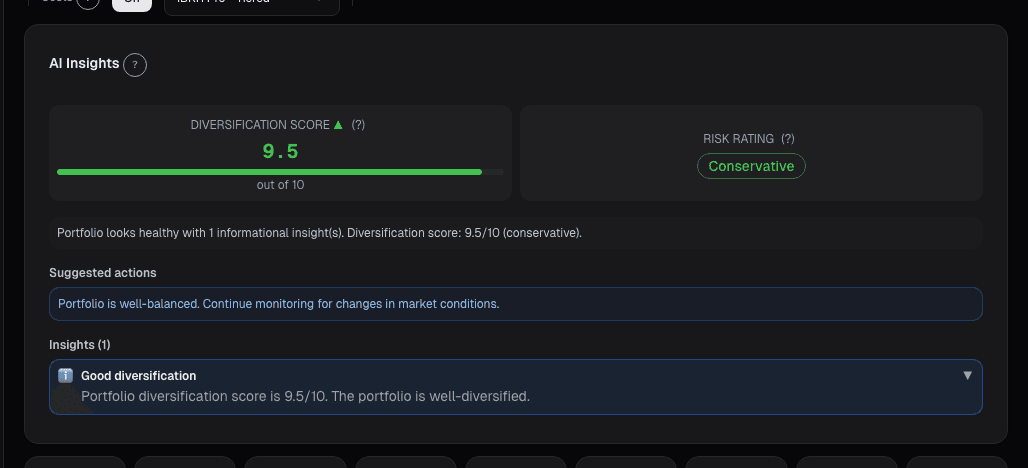
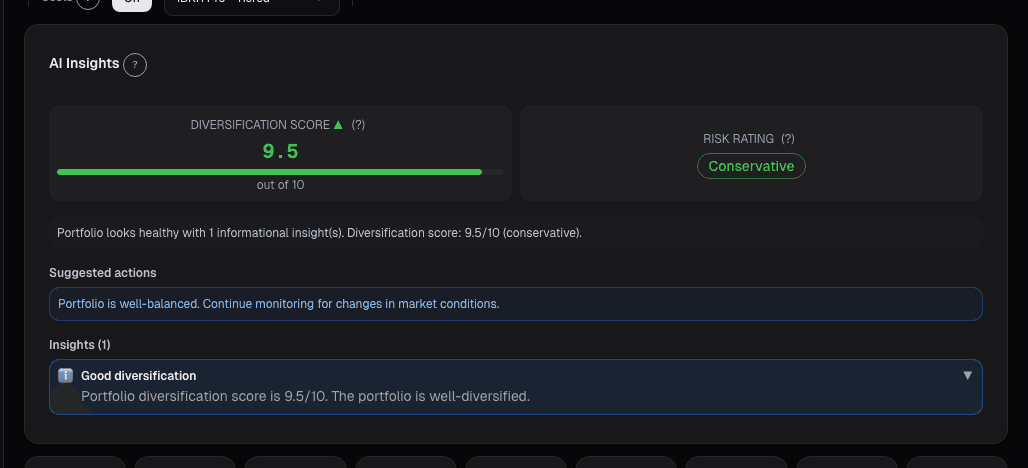
See it in the app
Live dashboard views that match this post. Each tile deep-links to the exact card.
Related reading
A 30% Drawdown Requires a 43% Gain to Recover
A 30% drawdown requires a 43% gain to recover. The asymmetric math explained, with sizing rules to prevent one bad trade from permanently impairing the account.
Revenge Trading: How One Bad Day Becomes a Bad Month
Revenge trading is the single fastest way to turn a manageable loss into a catastrophic one. Here is how it works and how to break the cycle.
Keeping a Trading Journal
A trading journal is the cheapest, most effective tool for improving performance. Here is what to track, how to review it, and why most people quit too soon.
Ready to try alphactor.ai?
Validate your trading strategies with statistical credibility testing. Start free.
Get Started Free