How to Paper Trade Without Fooling Yourself
How to use paper trading in Alphactor to test strategies honestly, avoid common self-deception traps, and build confidence before risking real capital.
 Marcus Chen4 min read
The Problem with Most Paper Trading
Paper trading -- simulating trades without real money -- is widely recommended and rarely done well. Without structure it teaches you little, because fake money does not trigger real emotions. But paper trading done with discipline is one of the fastest ways to validate a strategy and discover process flaws before they cost real money. Here is how to do it using paper trading in Alphactor.
Step 1: Create a Paper Trading Portfolio
From the sidebar, go to Portfolio and click New Portfolio. Name it clearly as a paper portfolio: "Paper - Mean Reversion Strategy" or "Paper - Earnings Plays Q3." Separating paper portfolios from real ones prevents confusion and makes performance tracking clean.
Set the starting capital field to match a realistic amount you would actually invest. If you would realistically allocate $25,000 to a new strategy, use that number. Paper trading with $1 million when you have $25,000 teaches you nothing about position sizing or risk management at your actual scale.
Step 2: Define Your Rules Before You Start
This is the step that separates useful paper trading from self-deception. Before placing a single paper trade, write down:
- Entry criteria: What specific conditions must be met to open a position? Be precise. "The stock looks cheap" is not a rule. "Conviction scoring above 65, P/E below sector median, and RSI below 40" is a rule.
- Position sizing: How much of your capital goes into each trade? A simple starting point: no more than 5% of the paper portfolio per position, maximum 10 positions open at once.
- Exit criteria: Define both your profit target and your stop-loss before entry. "Sell at 15% gain or 8% loss, whichever comes first" is a clear rule.
- Holding period: Are you testing a swing strategy (days to weeks), a position strategy (weeks to months), or a longer-term approach? Define it upfront.
Write these rules as a note in the paper portfolio's description field. They are your strategy specification. Every trade you make should follow them exactly.
Step 3: Execute Trades as If the Money Were Real
When your entry criteria are met, add the position to your paper portfolio with the current market price as your cost basis. Record the date and your rationale.
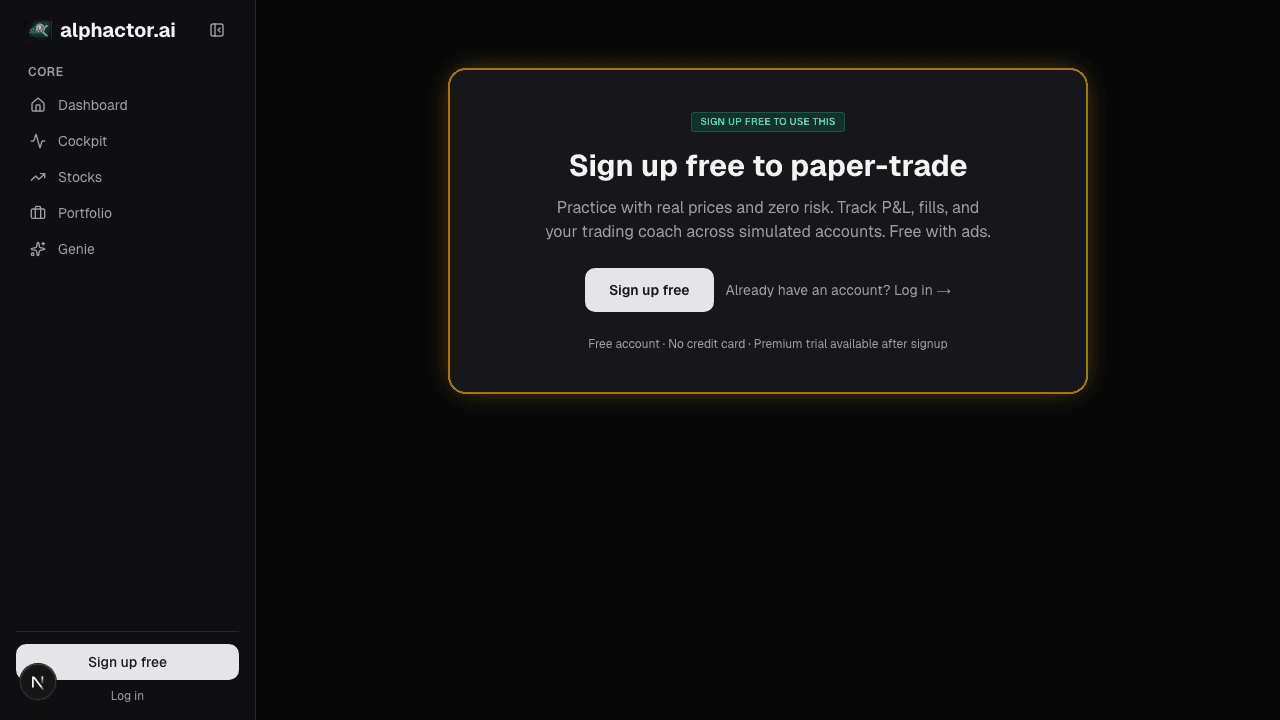
The critical discipline: do not retroactively enter trades. If you see a stock gap up 10% and think "I would have bought that yesterday," you would not have. Alphactor timestamps every position entry, so there is no fudging. Similarly, do not skip trades that your rules say to take. You are testing the system, not your gut.
Step 4: Track Every Trade with Notes
For each position in the paper portfolio, add a note with:
- Why you entered (which specific criteria were met)
- Your target exit price and stop-loss price
- Any qualitative observations about the setup
When you exit the position, update the note with:
- Why you exited (target hit, stop-loss hit, or rule-based exit)
- What the actual outcome was versus your expectation
- What you would do differently
This trade journal is the most valuable output of paper trading. After 30-50 trades, patterns emerge in your decision-making that are invisible in real time.
Step 5: Run for a Meaningful Period
You need enough trades for statistically meaningful results. Swing strategies need 4-8 weeks and 20-30 round trips. Position strategies need 3-6 months and 15-25 round trips. Do not cut the test short because early results look good -- five winning trades is noise, not a verdict.
Step 6: Analyze Results Honestly
After the test period, review your paper portfolio's performance:
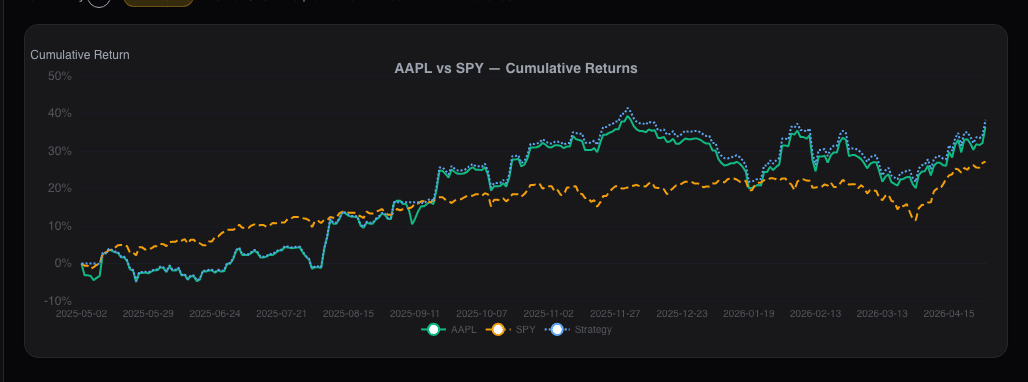
- Total return versus benchmark: Did you beat the S&P 500? If your active strategy underperformed a simple index, that is important information.
- Win rate and average win/loss: What percentage of trades were profitable? Is the average winner larger than the average loser?
- Maximum drawdown: What was the worst peak-to-trough decline? Could you tolerate that with real money?
- Rule adherence: Did you follow your rules every time? Deviations should be flagged and analyzed separately.
- Comparison to backtest: If you backtested this strategy first, how do the paper results compare? Significant divergence suggests the backtest had issues.
Common Paper Trading Traps
Cherry-picking entries. Your rules say to buy, but you wait for a better price. Execute at the signal.
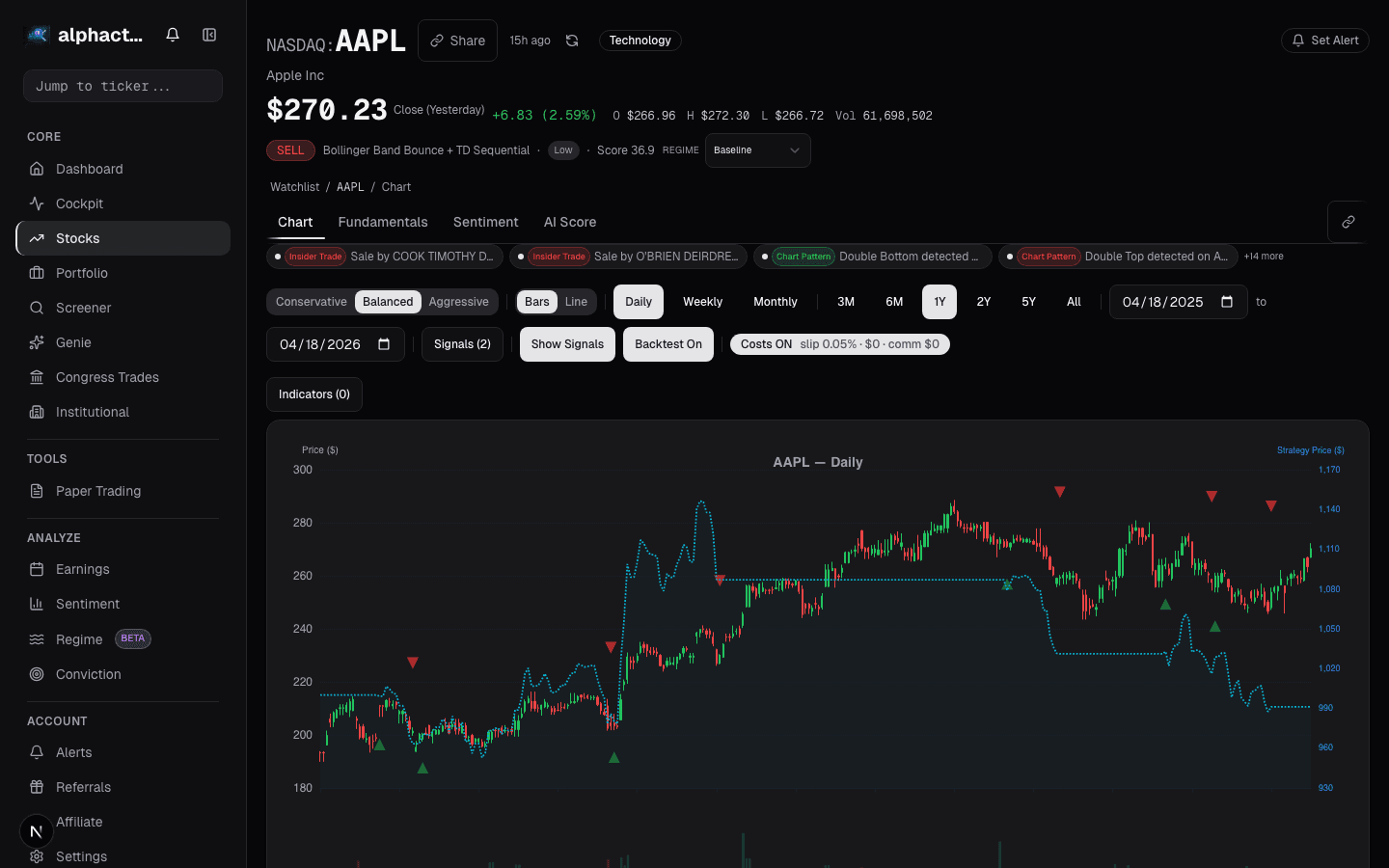
Ignoring slippage. Paper trades execute perfectly. Real trades have slippage and bid-ask spreads. Subtract a conservative estimate from your paper results.
Quitting after losses. Five losing trades is noise, not a verdict. Follow the process for the full test period.
Skipping the boring middle. If you cannot maintain discipline with fake money during a dull stretch, you will not maintain it with real money during a stressful one.
When to Go Live
Transition to real capital when you see consistent rule adherence over the full test period, positive returns after accounting for slippage, and a maximum drawdown you could tolerate with real money. Start with smaller position sizes than your paper trades used and scale up as live results confirm. Before going live, validate your strategy through Alphactor backtesting to confirm the edge holds in walk-forward testing.
See it in the app
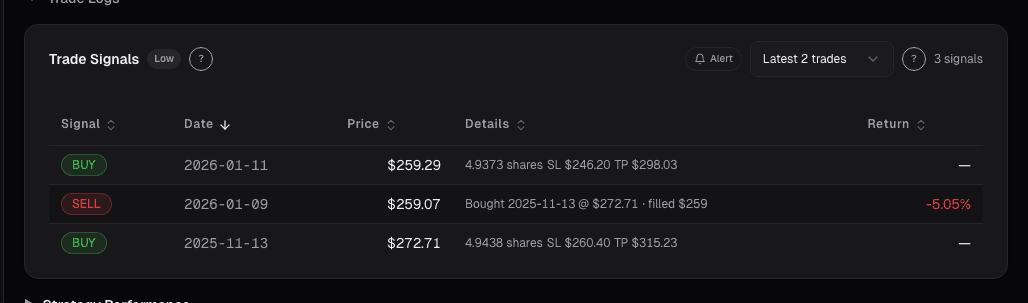
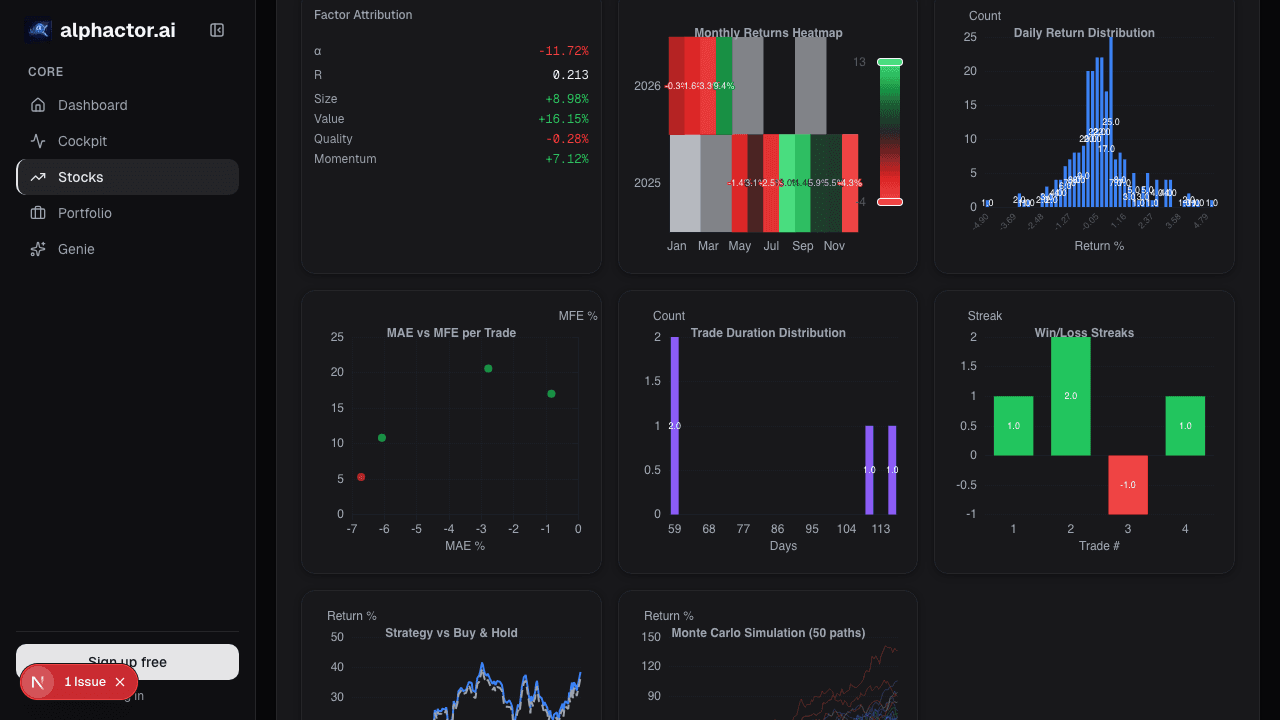
Live dashboard views that match this post. Each tile deep-links to the exact card.
Stocks mentioned
Related reading
How to Export Your Research and Share It With Your Team
A guide to exporting stock research, portfolio data, and screening results from Alphactor for collaboration and record-keeping.
Paper Trading Account Summary
Paper trading works only when you treat it like a real book. The Account Summary card on alphactor.ai tracks cash, positions, P&L, and execution quality so…
Paper Trading Coach
A log of your trades is only useful if you review it honestly. The Coach reads your fills against your stated rules and tells you, directly, with numbers …
Paper Trading Order Entry: Practicing the Trade
A good trade idea is only half the job. The Order Entry card lets you rehearse the actual execution, order type, size, stop, target, so the mechanics are…
Paper Trading Order History
Most traders have no idea what their actual edge looks like. An honest, complete order history is where that knowledge lives, reviewed weekly, it reveals…
Ready to try alphactor.ai?
Validate your trading strategies with statistical credibility testing. Start free.
Get Started Free