Paper Trading Account Summary
Paper trading works only when you treat it like a real book. The Account Summary card on alphactor.ai tracks cash, positions, P&L, and execution quality so…
 Marcus Chen7 min read
A common failure pattern I see with new traders: six months of spectacular paper trading followed by three months of flat-to-negative live returns. They ask what went wrong. Nothing went wrong. The paper account was a fiction, fills at ideal prices, zero slippage, no fee, the ability to reset after a bad week, and an overall cognitive setup that treated losing trades as "practice" rather than real outcomes. Live trading strips all of that away. When that fiction collides with reality, live P&L shows what the strategy was actually worth all along.
Paper trading is a legitimate developmental tool, but only if it simulates the uncomfortable parts of live trading. That means realistic fills, honest P&L accounting, no resets, and execution quality measured against the quote at order-entry, not against some retrospectively generous benchmark. This post is about what honest paper trading looks like, what the Account Summary card displays, and the three rules that keep the simulation useful.
TL;DR
- Most paper trading is self-deceiving. Ideal fills, no slippage, no fees, and mental resets all inflate results.
- The Account Summary is the honest scoreboard. Starting equity, current equity, realized and unrealized P&L, drawdown, Sharpe, computed the same way a real broker would.
- Don't reset the account after drawdowns. The drawdown is half the lesson.
- Compare paper Sharpe to a realistic target. Paper Sharpe > 2.0 on a live-feasible strategy is a red flag, not a green one.
- Execution quality is modeled against the quote at entry, not the intraday low or VWAP.
Paper trading only works honestly
Most paper trading that retail investors use is self-deceiving. People log hypothetical trades at the exact price they wanted, ignore slippage and fees, and then wonder why the live results look nothing like the paper ones. The mental gap is large: it takes real money in the account to feel the actual gravitational pull of positions going against you, to feel the urge to average down into losers, to feel the itch to exit winners too early. None of that fires when the account is pretend money that resets at will.
A useful paper-trading account simulates fills at realistic prices (bid/ask crosses, not mid-point), tracks cash and margin as a real broker would, applies fees and per-share commissions where applicable, and reports P&L and drawdown on exactly the basis you would experience in live. Done that way, paper trading becomes a genuine developmental tool, a place to try a strategy, find the parts that don't survive real execution, and iterate before risking capital.
What the Account Summary card shows
The Paper Trading Account Summary card shows:
- Starting equity and current equity (all P&L rolls into equity, not into a separate "account value")
- Cash available and margin used: tracked against a simulated margin rule that matches standard retail brokerage behavior
- Total P&L broken into realized and unrealized
- YTD return and since-inception return
- Max drawdown: both in dollars and in percent of peak equity
- Sharpe ratio on daily returns, annualized
- Number of round-trip trades: a proxy for sample size, because a 6-trade Sharpe of 3.0 is meaningless noise
- Daily equity curve: the visual summary of the account's journey
- Fills table: every paper execution with the assumed price and any modeled slippage
Execution quality is modeled against the actual quote at order entry, not against the intraday VWAP that gamifies performance. This matters because it's the single most common source of paper-to-live P&L divergence.
Three rules that keep paper trading honest
Don't reset the account after a drawdown. Drawdowns are information about your strategy and your psychology. Cleaning the slate erases both. If you're in a 15% drawdown in paper, the useful exercise is sitting with it, making decisions under that pressure, and seeing whether you follow your own rules. Resetting to freshness teaches you nothing and quietly trains you that drawdowns are a signal to escape rather than to manage.
Treat fills as binding. If the model slipped you 5 cents on a market order, that's 5 cents. Don't mentally edit it to "I would have gotten a better fill if I were paying attention." You weren't paying attention; that's why you used a market order. The fill is the fill. Live markets never offer retroactive fill improvement.
Compare paper P&L distribution to realistic live expectations. If your paper Sharpe is 2.5 and the strategy historically tops out at 1.0 in academic literature or industry practice, something is off in the simulation before you fund it. Realistic targets for well-executed retail strategies: Sharpe 0.8–1.3 on equity trend systems, 1.0–1.6 on diversified factor portfolios, above 1.5 only with well-specified market-making or statistical-arbitrage strategies that have per-trade edges too small for retail slippage anyway. If your paper number is well above the realistic top end, the simulation is cheating.
Interpreting the numbers
A handful of patterns I look for on the Account Summary:
- Equity curve slope vs. volatility. A smooth curve with no drawdowns longer than a few weeks is either a genuinely great strategy or a simulation that's hiding the pain. More often the latter.
- Max drawdown vs. average peak-to-trough interval. Strategies with frequent shallow drawdowns are easier to run psychologically than ones with rare deep drawdowns, even at the same total return. Pay attention to the shape, not just the endpoint.
- Realized vs. unrealized P&L. A heavily unrealized-positive account that has rarely crystallized gains is a signal that you haven't yet been tested by the decision to exit. Live trading forces those exits; paper trading lets you defer them forever.
- Number of round-trips. Under 30, you're looking at a noisy Sharpe and you should not generalize. Over 100, the number starts to mean something. Under 10, it's a vibe.
Example: my first paper-trading month
The first month I tried a mean-reversion strategy in paper, I showed Sharpe 2.6 and zero drawdowns. I thought I'd found edge. When I ran the same strategy live with a small allocation for a quarter, I had Sharpe 0.4 and a 9% drawdown in week three. The difference was entirely in how the paper account modeled fills vs. how the real market filled me. In paper, my limit orders got filled at the quote. In live, the same limit orders either didn't fill at all (when the market ran away) or filled precisely when the move against me was starting. That execution asymmetry, the difference between "fill when things are going your way" and "fill when they're going against you", is the thing paper accounts systematically underestimate. Once I added a proper limit-order fill-probability model to the paper account, paper Sharpe dropped to 0.7 and live performance roughly matched.
Common mistakes
- Running paper at an unrealistic account size. Running paper at \$1M when you'll live at \$25K ignores the sizing friction, fees-as-percent-of-P&L, and position-granularity effects that change real behavior.
- Paper trading without a written strategy. Without a codified rule set, you'll retroactively interpret random trades as "on strategy." Write down the entry, stop, target, and sizing before you paper-execute.
- Treating single-month performance as signal. You want 3+ months of paper before you fund live, and even then 3 months is 60 trading days, not a lot of data.
- Ignoring the fill model. The fill quality is where paper differs from live the most. Check what model your simulation uses. If it's not bid/ask-aware with fill probability, the P&L is optimistic by construction.
- Resetting the account quietly. Once you know it's an option, it's an option. Pretend the reset button doesn't exist.
Where it fits
Pair with Paper Trading Positions for the open-risk view, Order Entry for the trade surface, Order History for the audit trail, and Coach for AI-assisted review of your executions. The coach is the underrated piece, it reviews your exits and flags the ones that look emotionally driven rather than rule-based.
FAQ
How long should I paper trade before going live?
Minimum three months or 30 round-trip trades, whichever is longer. Longer is better, but eventually the law of diminishing returns kicks in, after six months of paper, you're mostly running in place. The friction of live trading provides learning at a faster rate once you've established the basic strategy.
What starting equity should I use?
The one you're planning to fund live. Don't paper at \$500K if you're going to live at \$20K. The sizing granularity, fee percentages, and psychological dynamics are very different.
Should my paper strategy exactly match my live strategy?
Yes, ideally. If you're going to trade different things live (because the live strategy is options-heavy and the paper simulation is equity-only, say), you're paper-testing a different strategy, and the transfer is weaker.
What's a realistic paper Sharpe for a well-run retail strategy?
0.8 to 1.3 for most equity-focused systems. Over 1.5 on realistic fills is unusual. Over 2.0 is almost always a simulation artifact or a strategy that won't scale to real money.
Can I use paper trading to try new strategies on top of my live book?
Yes, run a separate paper account for the new strategy. Don't mentally commingle "live book" and "strategy I'm experimenting with", the commingling dilutes the discipline of both.
Related reading
- Paper Trading Coach
- Paper Trading Order Entry
- Paper Trading Order History
- Monte Carlo Portfolio Simulation
Open the Account Summary → /app/paper-trading
See it in the app
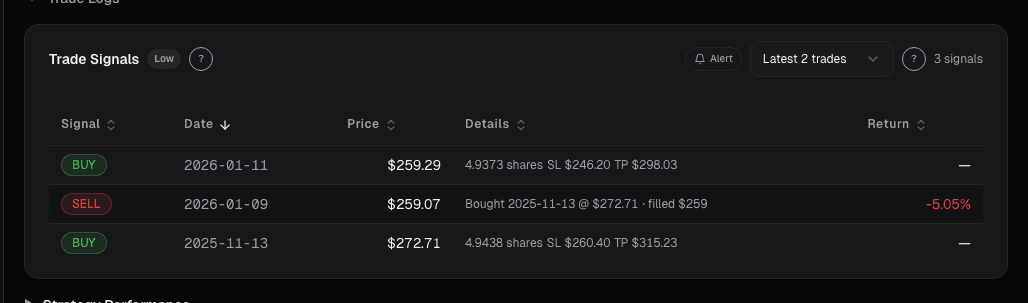
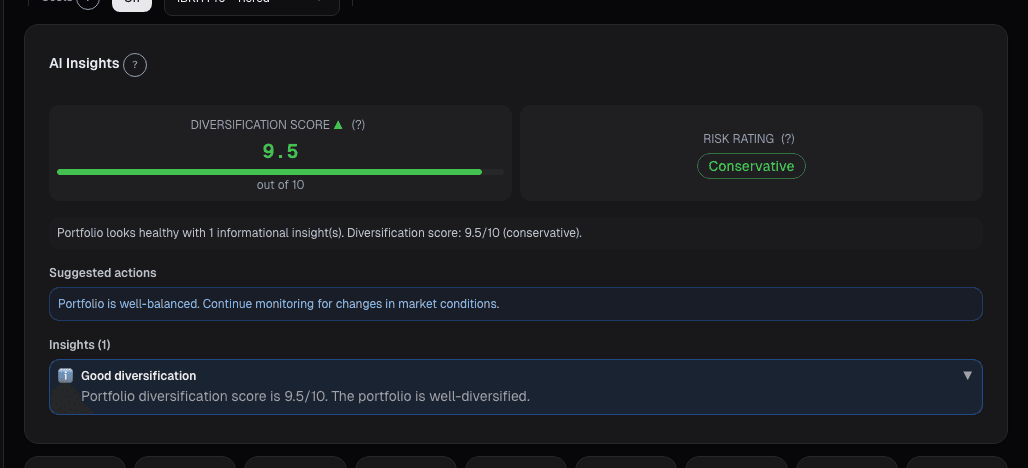
Live dashboard views that match this post. Each tile deep-links to the exact card.
Related reading
How to Paper Trade Without Fooling Yourself
How to use paper trading in Alphactor to test strategies honestly, avoid common self-deception traps, and build confidence before risking real capital.
Monte Carlo Simulation
How Monte Carlo simulations model thousands of possible portfolio outcomes and why they are more useful than single-point forecasts.
Paper Trading Coach
A log of your trades is only useful if you review it honestly. The Coach reads your fills against your stated rules and tells you, directly, with numbers …
Paper Trading Order Entry: Practicing the Trade
A good trade idea is only half the job. The Order Entry card lets you rehearse the actual execution, order type, size, stop, target, so the mechanics are…
Paper Trading Order History
Most traders have no idea what their actual edge looks like. An honest, complete order history is where that knowledge lives, reviewed weekly, it reveals…
Ready to try alphactor.ai?
Validate your trading strategies with statistical credibility testing. Start free.
Get Started Free