How to Use AI Conviction Scores to Filter Noise
Learn what Alphactor's AI conviction scores measure, how they are calculated, and practical ways to incorporate them into your investment process.
 Marcus Chen4 min read
What Conviction Scores Actually Are
Every stock in the Alphactor universe gets a conviction score -- visible in the conviction scoring view -- that synthesizes fundamental, technical, and alternative data signals into a single measure of how strong the investment case looks right now. The score updates daily as new data flows in.
This is not a price prediction. The conviction score does not tell you where a stock is headed. It tells you how many independent signals are currently aligned in a positive or negative direction. Think of it as a dashboard gauge that aggregates dozens of indicators you would otherwise need to check individually.
How the Score Is Calculated
Alphactor's conviction model pulls from three categories of inputs:
Fundamental signals: earnings quality, revenue growth trajectory, free cash flow generation, margin trends, and valuation relative to sector peers.
Technical signals: price momentum across multiple timeframes, volume patterns, moving average relationships, and relative strength versus the market.
Alternative data signals: institutional ownership changes from 13F filings, congressional trading activity, insider transactions, and short interest trends.
Each signal category contributes to the overall score, with weightings that adjust based on the current market regime. The model adapts rather than using fixed weights.
Step 1: Find the Conviction Score
You will see the conviction score in several places:
- On any stock detail page, displayed prominently near the top
- In the screener results table as a sortable column
- On the portfolio dashboard next to each position
- In alerts when a score changes significantly
The score ranges from 0 to 100. Broadly: above 70 is strong, 40-70 is neutral, below 40 is weak. But the number itself is less useful than the direction and the breakdown.
Step 2: Read the Breakdown, Not Just the Number
Click into the conviction score on any stock's detail page to see the component breakdown. This shows you:
- The contribution from each signal category (fundamental, technical, alternative)
- Which specific signals are positive, negative, or neutral
- How the score has changed over the past 30, 60, and 90 days
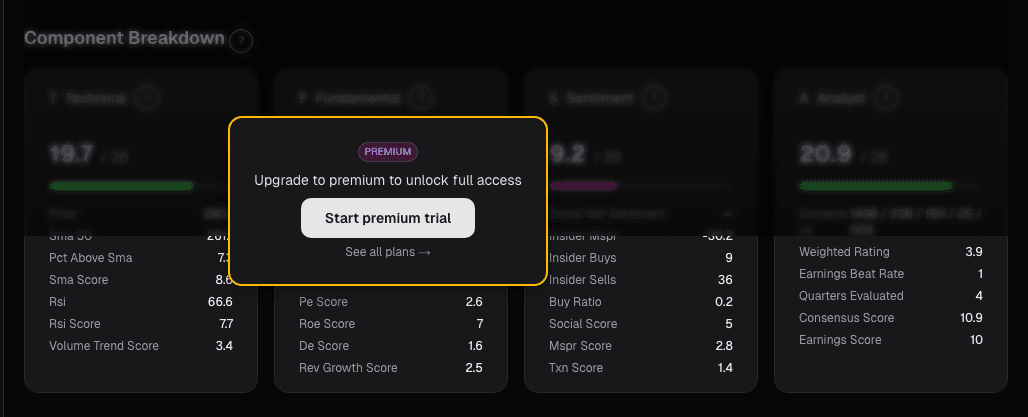
A stock with a conviction score of 65 where fundamentals are strong but technicals are deteriorating tells a different story than a stock at 65 where everything is moderately positive. The breakdown is where the insight lives.
Step 3: Use Scores in the Screener
Add conviction score as a filter in your screener to narrow results:
- Open the universe scanner and add your fundamental filters as usual
- Add a Conviction Score filter with a minimum threshold (e.g., above 60)
- Run the screen and sort by conviction score to see the highest-ranked results
This effectively layers the AI's multi-signal analysis on top of your own criteria. Stocks that pass both your filters and the conviction threshold have quantitative support from multiple angles.
Step 4: Monitor Score Changes in Your Portfolio
On the portfolio page, watch for conviction score movements across your holdings:
- Rising scores on positions you hold: the data is increasingly supportive of your thesis
- Falling scores on positions you hold: something in the data has shifted -- investigate what changed
- High scores on stocks in your watchlist but not your portfolio: potential entry candidates
Set up an alert (under Alerts > Signal type) to notify you when the conviction score on any portfolio position changes by more than 10 points in a week. This catches meaningful shifts without generating daily noise.
Step 5: Combine Scores with Your Own Judgment
The conviction score is a tool, not an oracle. Here is how to integrate it practically:
When the score agrees with your thesis: proceed with more confidence but do not skip your own diligence. Agreement from an independent model is confirming evidence.
When the score disagrees with your thesis: dig into the breakdown to understand why. If the fundamental signals are positive but technical signals are dragging the score down, you may be early rather than wrong. If fundamentals are negative and you missed a deterioration in the business, the score just saved you money.
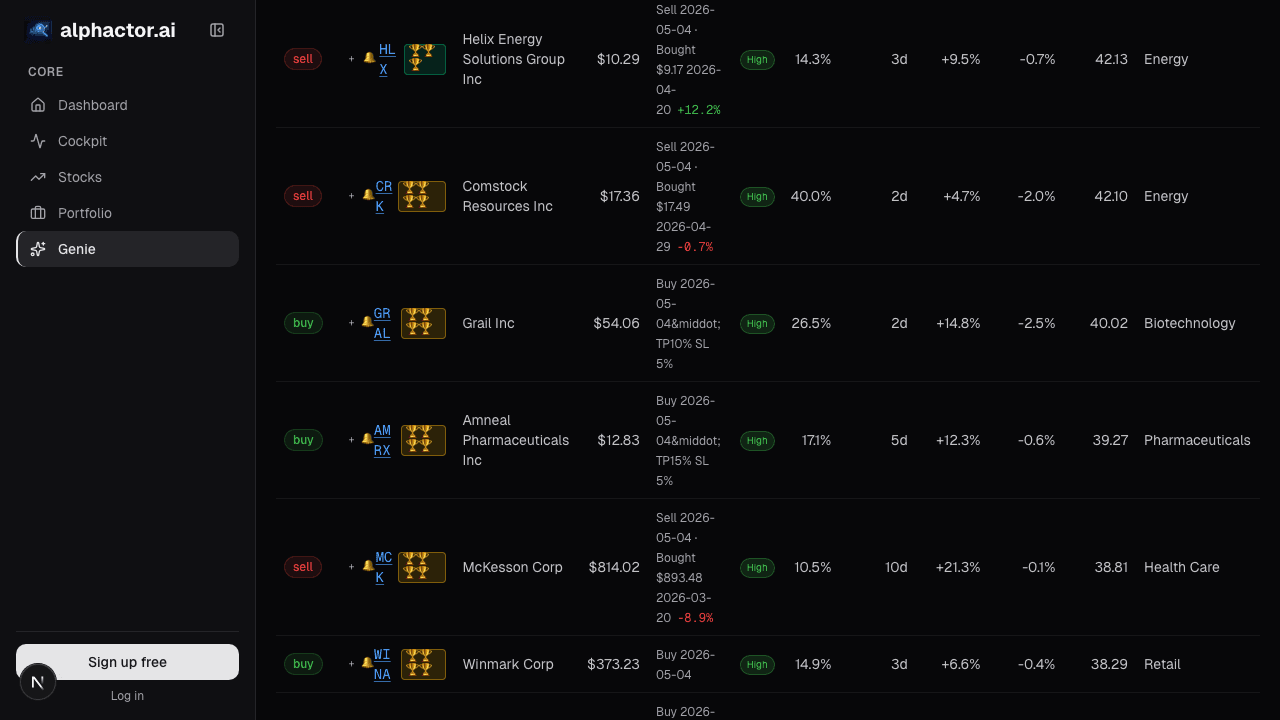
When comparing similar stocks: if two stocks in the same sector pass your screener with similar valuations, the conviction score serves as a tiebreaker based on a broader data set than your filters alone capture.
What Conviction Scores Cannot Do
Transparency matters. Here is what to keep in mind:
- Scores reflect current data, not future events. An earnings miss or acquisition announcement can invalidate the score overnight.
- The model does not know your personal risk tolerance, time horizon, or tax situation.
- High conviction does not mean low risk. A high-scoring stock can still be volatile or face sector-specific headwinds.
Making It Part of Your Routine
The most effective way to use conviction scores is as a daily or weekly check on your portfolio and watchlist. Open the portfolio dashboard, scan the scores, and ask: has anything changed enough to warrant my attention? Most days the answer is no. On the days it is yes, you catch the signal early instead of discovering it in the price action weeks later.
See it in the app
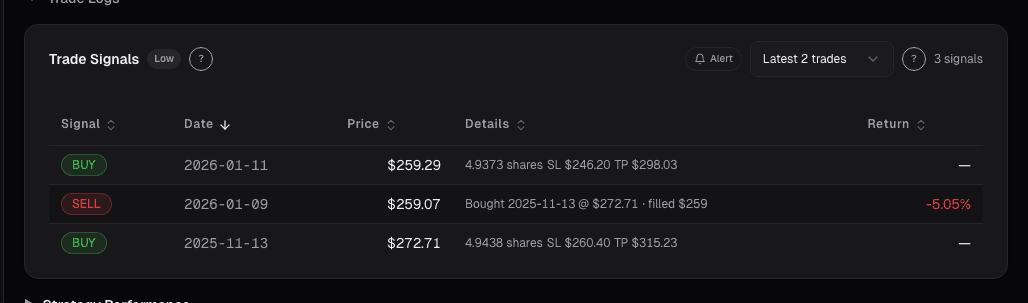
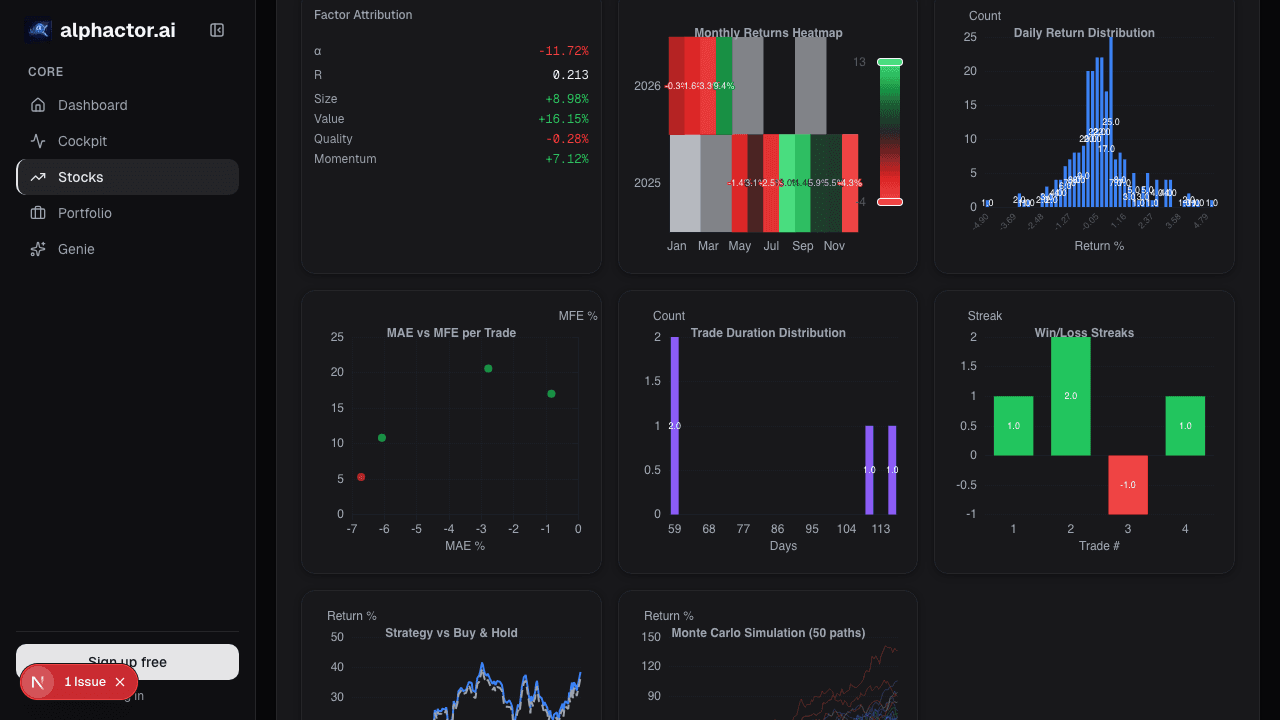
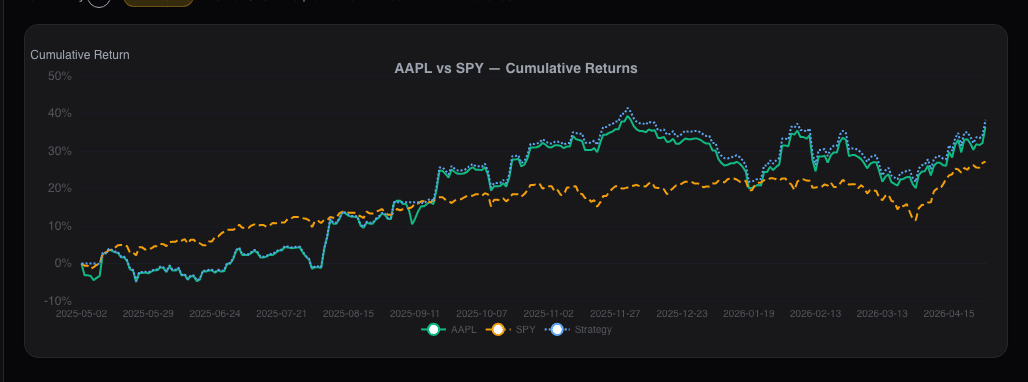
Live dashboard views that match this post. Each tile deep-links to the exact card.
Stocks mentioned
Related reading
The AI Copilot: Ask Your Portfolio a Question
How Alphactor's AI Copilot turns natural language questions into data-driven portfolio insights, grounded in your actual holdings and market data.
The 10-Minute Daily Stock Research Workflow
A structured daily routine for checking your portfolio, reviewing signals, and identifying new opportunities in under ten minutes.
How to Analyze a Company Before Earnings in 15 Minutes
A 15-minute pre-earnings checklist covering guidance revisions, balance sheet flags, and estimate dispersion using Alphactor tools: no deep-dive report needed.
Paper Trading Coach
A log of your trades is only useful if you review it honestly. The Coach reads your fills against your stated rules and tells you, directly, with numbers …
What Is a Stock Universe and How Smart Investors Use One
How defining a stock universe sharpens your research process, reduces noise, and helps you focus on opportunities that match your strategy.
Ready to try alphactor.ai?
Validate your trading strategies with statistical credibility testing. Start free.
Get Started Free