The 10-Minute Daily Stock Research Workflow
A structured daily routine for checking your portfolio, reviewing signals, and identifying new opportunities in under ten minutes.
 Marcus Chen5 min read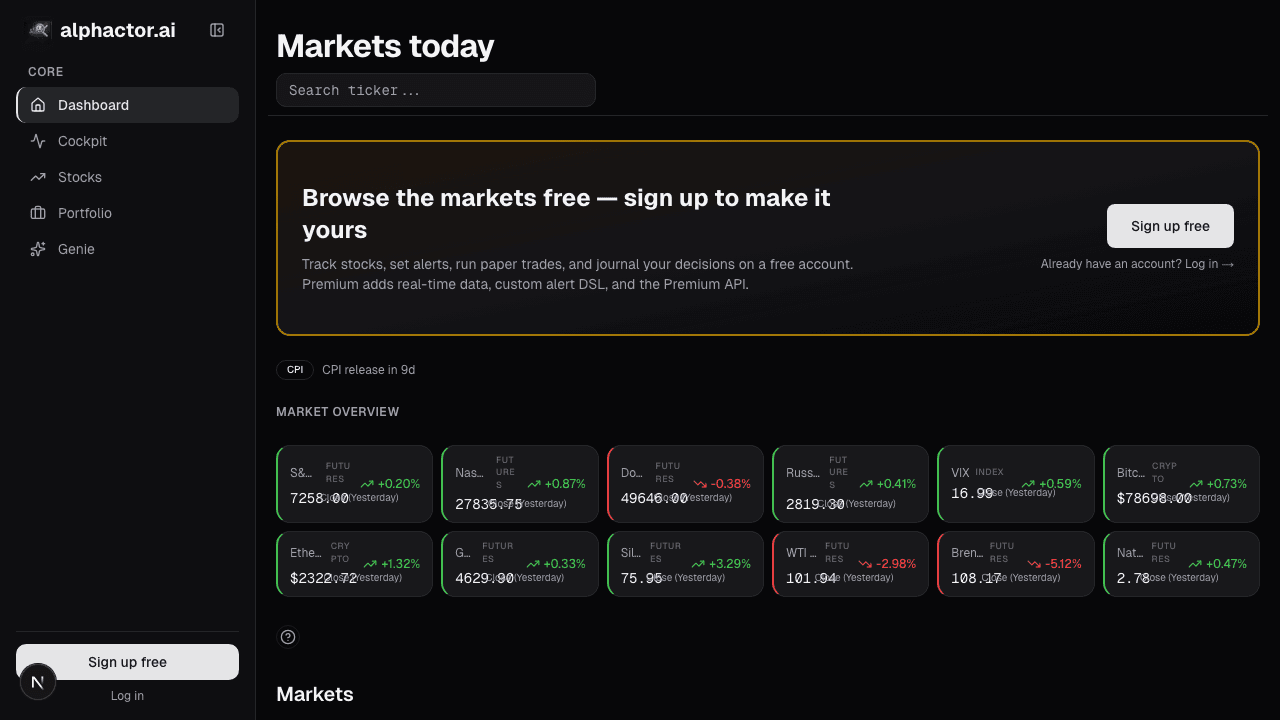
Why Most Research Routines Fail
The typical retail investor's morning routine looks like this: open a brokerage app, glance at portfolio P&L, scan Twitter for market takes, read a few headlines, feel vaguely anxious, close the app. No system. No prioritization. No actionable output.
The alternative is not spending two hours reading research reports. It is having a structured stock research workflow that takes ten minutes, covers what matters, and produces a short list of action items for the day. Here is the one that works.
Step 1: Open the Cockpit, Read the Market Context (1 minute)
Start on your market dashboard. The cockpit Market panel gives you the macro summary in seconds: broad market direction, sector signal density, and any regime changes detected overnight.
You are not trying to form a market opinion here. You are calibrating. If the Market panel shows broad risk-off signals, you will interpret your portfolio events differently than if everything is green. Context first, details second.
Glance at the Actions and Risks panels. Count the items. If there are two action items and zero risks, this will be a short morning. If there are six risks flagged, you are spending more time on Step 3.
Step 2: Review Action Items (2 minutes)
The Actions panel collects events that imply a decision. These fall into a few categories:
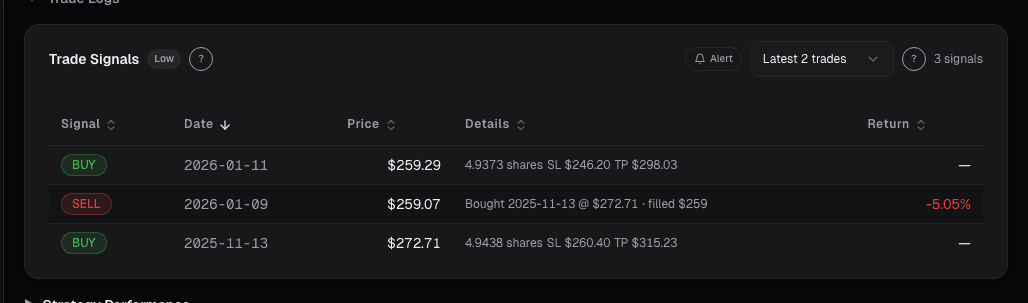
Strategy signal transitions. A credible strategy flipped to Buy or Sell on a stock you track. If it is a Buy on a watchlist name, check the entry parameters and decide if this is the right time to enter. If it is a Sell on a position you hold, evaluate whether the signal aligns with your own thesis or contradicts it.
Price and volume alerts. A stock hit a price level you set, or volume spiked to 3x its average. These are actionable by design, because you set the trigger based on a specific thesis.
Analyst upgrades. A material rating change or price target revision on a tracked stock. Not all upgrades matter, but a double-upgrade from a top-tier firm on a stock already showing technical strength is worth investigating.
For each action item, decide: act now, investigate later today, or dismiss. Do not deliberate. The point of the cockpit is to triage, not to do deep analysis during your morning scan.
Step 3: Check Portfolio Risks (2 minutes)
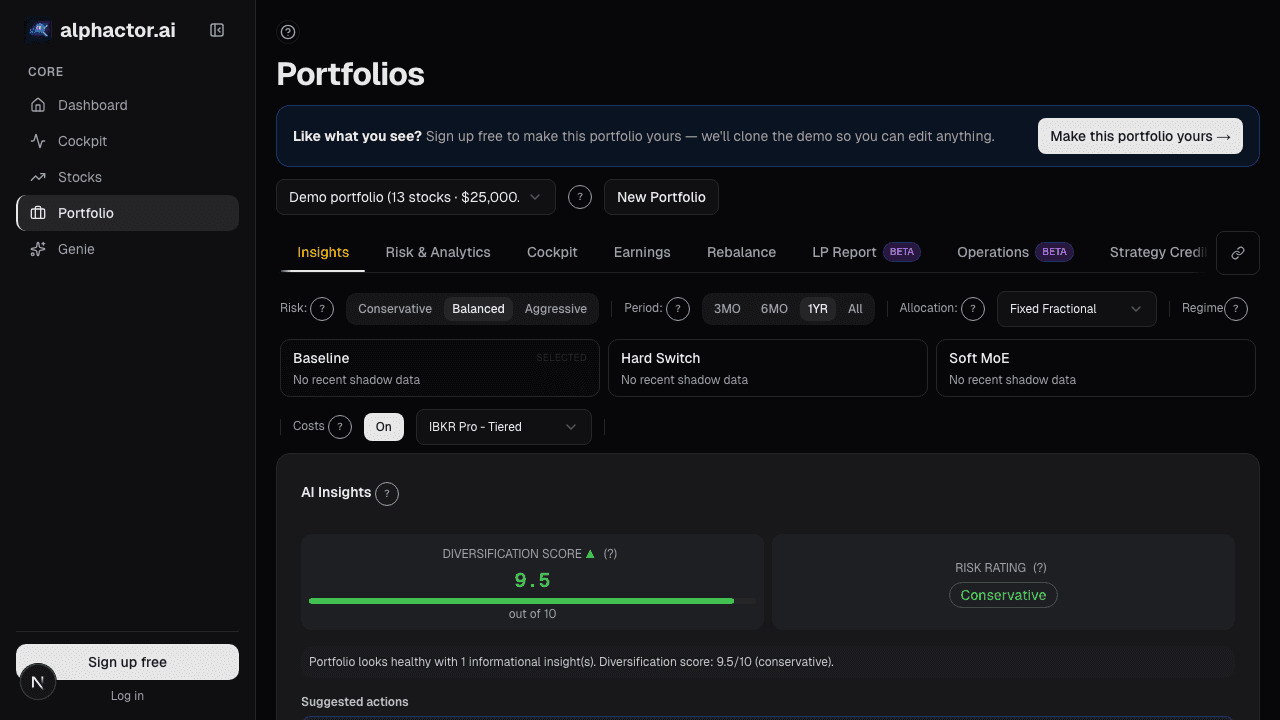
Switch to your portfolio cockpit panel. The direction summary chips tell you immediately how your held positions are distributed: bullish, neutral, risk, bearish. Click the Risk and Bearish chips to filter to the positions that need attention.
For each flagged position, the cockpit card tells you what happened: earnings miss, strategy signal flip to Sell, insider selling, drawdown exceeding your threshold. Your job is to decide whether the thesis is intact or broken.
If the thesis is intact and the event is noise, dismiss the card and move on. If the thesis is damaged, add "review [ticker] position" to your action list for later.
This step is where most investors fail because they skip it entirely. Checking P&L is not the same as checking risk. A stock can be up 20% and still have a deteriorating thesis. The portfolio cockpit surfaces the signal, not just the return.
Step 4: Scan the Universe Heatmap (2 minutes)
Open the universe scanner heatmap. This is your opportunity radar. You are looking for signal clusters: sectors or sub-sectors with unusual concentrations of buy signals from credible strategies.
You are not looking for individual stocks yet. You are looking for patterns. If Healthcare has gone from three buy signals last week to twelve this week, something is happening at the sector level. If Technology's signal count dropped by half, that is worth noting.
Spend thirty seconds on the heatmap, identify zero to two areas worth investigating, and move on. If nothing stands out, that is fine. Not every day produces new opportunities.
Step 5: Drill into High-Conviction Names (2 minutes)
From the heatmap or from the Actions panel, pick one or two stocks that deserve a closer look. Open the stock page and check:
- Conviction score. Is it above 7? Strategies with high conviction and high credibility deserve more weight.
- Recent events. The ticker bar at the top shows the latest cockpit events. Any insider buying? Sentiment spikes? Earnings on the horizon?
- Chart context. Is the stock at support, resistance, or in a clean trend? A buy signal at a support level is more compelling than one in the middle of nowhere.
If the stock passes this quick check, add it to your watchlist with a thesis note or set a trade alert at your preferred entry price. If it does not, close the tab. Do not let curiosity turn a ten-minute workflow into a ninety-minute rabbit hole.
Step 6: Act or Dismiss (1 minute)
You should now have a short list of action items. These are concrete and specific:
- Place a limit order on MSFT at $380 (Buy signal, high conviction, at support)
- Review AMZN position after earnings miss (thesis check needed)
- Watch XLV sector for continued buy signal buildup
- Dismiss three informational cards that required no action
Write these down or leave them as undismissed cards in the cockpit. Tomorrow's workflow starts by checking whether yesterday's items resolved or escalated.
Why This Works
The workflow is effective because it is structured, time-boxed, and prioritized. You are not browsing. You are executing a checklist.
Context before details. The Market panel prevents you from overreacting to individual events without knowing the broader picture.
Risks before opportunities. Checking your portfolio cockpit before scanning for new ideas ensures you are not ignoring problems while chasing shiny objects.
Signal before noise. Everything you review has been pre-filtered and ranked by the cockpit. You are not scrolling through raw news feeds or unfiltered alert lists.
Decision before deliberation. Each item gets a quick triage: act, investigate, or dismiss. Deep analysis happens outside the ten-minute window, on a schedule you control.
Build the Habit
The workflow only works if you do it daily. It takes ten minutes. The consistency compounds. After a week, you know your portfolio's risk posture. After a month, you have pattern recognition across your stock universe. After a quarter, you have a documented track record of decisions you can review and refine.
Start free and run your first ten-minute morning workflow with Alphactor's cockpit.
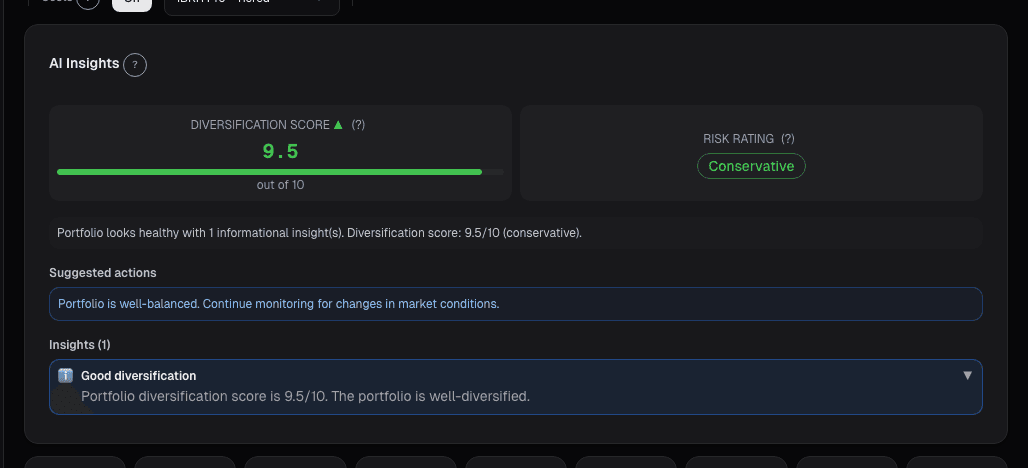
See it in the app
Live dashboard views that match this post. Each tile deep-links to the exact card.
Related reading
Cockpit Cards: Quick-Glance Intelligence per Stock
How cockpit cards surface the signals, events, and changes that matter most across your watchlist and portfolio without information overload.
From Signal to Action
Cockpit panels aggregate signals across your portfolio and watchlist into a single actionable view. Learn how to use them for daily monitoring.
How to Compare Two Stocks Side by Side (The Right Way)
A step-by-step guide to using Alphactor's comparison tools to evaluate two stocks across fundamentals, technicals, and alternative data.
How to Export Your Research and Share It With Your Team
A guide to exporting stock research, portfolio data, and screening results from Alphactor for collaboration and record-keeping.
How to Read 13F Filings Without Falling Asleep
A plain-language guide to understanding 13F filings, what they reveal about institutional investors, and how to use Alphactor's 13F explorer to spot…
How to Screen 1,000 Stocks in Under a Minute
Learn how to use Alphactor's universe scanner to filter thousands of stocks down to a focused shortlist using quantitative criteria.
Ready to try alphactor.ai?
Validate your trading strategies with statistical credibility testing. Start free.
Get Started Free