Part of: Technical Analysis
Cockpit Cards: Quick-Glance Intelligence per Stock
How cockpit cards surface the signals, events, and changes that matter most across your watchlist and portfolio without information overload.
 Marcus Chen4 min read
The Problem with Alert Lists
Most stock platforms give you a flat list of notifications. Earnings report filed. Price crossed $150. Volume spike. Analyst upgrade. They arrive in chronological order with no prioritization, no context, and no indication of whether you should care.
The result is predictable: you ignore most of them. The important ones get buried. You miss the insider buying signal on a stock in your portfolio because it was sandwiched between two irrelevant price alerts you set months ago and forgot about.
Cockpit cards replace that flat list with structured, ranked intelligence items. Each card represents a single event or change that is relevant to a stock you track. Cards are not notifications. They are decision-ready summaries.
What a Cockpit Card Contains
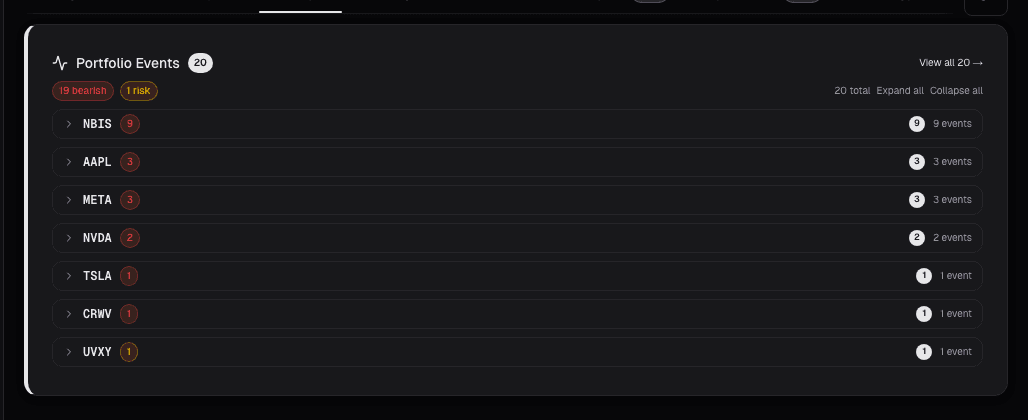
Each card surfaces one specific event tied to a stock in your watchlist or portfolio. The card includes the event type, the ticker, the key data point, and enough context to decide whether action is needed.
Event Types
Cards cover the events that actually move stocks or shift the investment thesis:
- Earnings surprises. A company reports results materially above or below consensus. The card shows the magnitude of the surprise and the immediate price reaction.
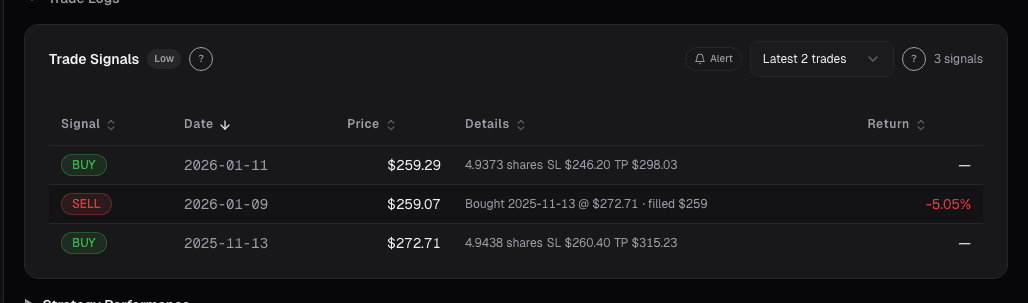
- Strategy signal transitions. A credible strategy flips from Hold to Buy, or from Buy to Sell. This is an actionable signal, not a static indicator value.
- Insider activity. Officers or directors buying or selling shares, with dollar amounts and context. Insider buying by a CEO at all-time highs tells a different story than a routine 10b5-1 sale.
- Analyst upgrades and downgrades. Rating changes and price target revisions from sell-side analysts, filtered to show only material changes.
- Volume spikes. Unusual volume relative to the stock's 20-day average. A 3x volume day on no news is often the first sign of institutional accumulation or distribution.
- Sentiment shifts. Sharp changes in social sentiment, including Reddit, StockTwits, and news sentiment. Useful as a contrarian indicator when sentiment hits extremes.
What a Card Does Not Include
Routine price movements, generic market commentary, and news articles that restate what you already know. If a stock in your portfolio moves 0.5% on an average-volume day, there is no card. Cards fire on material changes, not noise.
How Cards Are Ranked
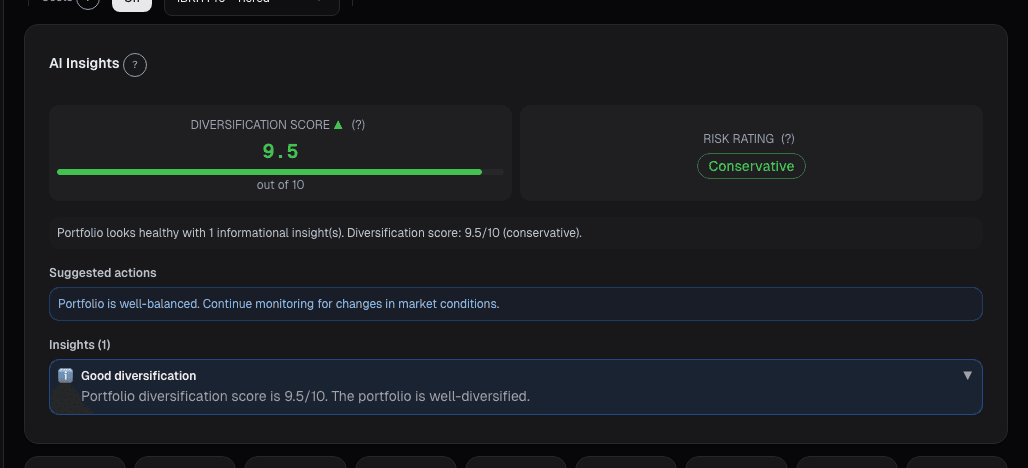
Not all events are equal. A strategy signal flip on a stock you hold is more important than a sentiment spike on a watchlist name you are casually tracking. The ranking system accounts for three dimensions:
Urgency. Time-sensitive events rank higher. An earnings surprise that just dropped ranks above an insider trade filed three days ago. Strategy signal transitions that imply action (Buy or Sell) rank above informational signals (Hold, Observe).
Relevance. Events on stocks you hold in your portfolio rank higher than events on watchlist stocks. Events on stocks with higher conviction scores rank higher than those with lower scores.
Credibility. Signals from strategies that passed the full credibility pipeline rank higher than signals from lower-tier strategies. An analyst upgrade from a top-rated firm carries more weight than a reiteration from a lesser-known shop.
The combined ranking means the first card you see each morning is the one most likely to require your attention. You work down the stack, and the further you get, the less urgent the items become.
Working with Cards
Dismiss and Filter
Cards persist until you act on them. You can dismiss a card once you have reviewed it, which removes it from the active stack. You can also filter by event type if you only want to see, say, signal transitions and insider activity while ignoring sentiment shifts.
Dismissed cards are not deleted. They move to a history view so you can review what happened and whether your dismissal decisions were correct.
Drill Down
Every card links to the full context. A strategy signal card links to the strategy detail page with the backtest, credibility tier, and current position parameters. An insider buying card links to the SEC filing and the insider's historical transaction pattern. You never have to leave the platform to investigate.
Set Up Alerts from Cards
If a card reveals something you want to track more closely, you can create a trade alert directly from the card. See a volume spike on a watchlist stock? Set a price alert at the breakout level. See a strategy signal flip to Buy? Set an alert for the recommended entry price.
Why Cards Beat Flat Alert Lists
The difference is structural, not cosmetic.
A flat alert list treats every notification as equal. You are the filter. You scan through dozens of items to find the two that matter. That is cognitive overhead you should not be paying.
Cards pre-filter and pre-rank. The system does the triage. You start at the top and work down. Most mornings, the top three to five cards cover everything that requires your attention. The rest is context you can review if you have time.
This structure also prevents the most common failure mode of alert systems: alert fatigue. When everything buzzes with equal priority, you start ignoring all of it. When the top card is always genuinely important, you keep checking.
Cards Across Your Entire Coverage
Cockpit cards work across your full coverage set: portfolio holdings, watchlist names, and universe scanner hits. You do not need to check three different screens. The card stack is a single stream of ranked intelligence across everything you track.
This is especially powerful when combined with the portfolio monitoring view, where cards for held positions are surfaced alongside your P&L and position data. The signal and the context sit together.
Getting Started
Cards activate automatically for every stock in your watchlist and portfolio. Add stocks to your watchlist, build a portfolio, and the trading cockpit starts generating cards for material events. No configuration required beyond defining which stocks you care about.
Start free and see your first cockpit cards within minutes of building your watchlist.
See it in the app
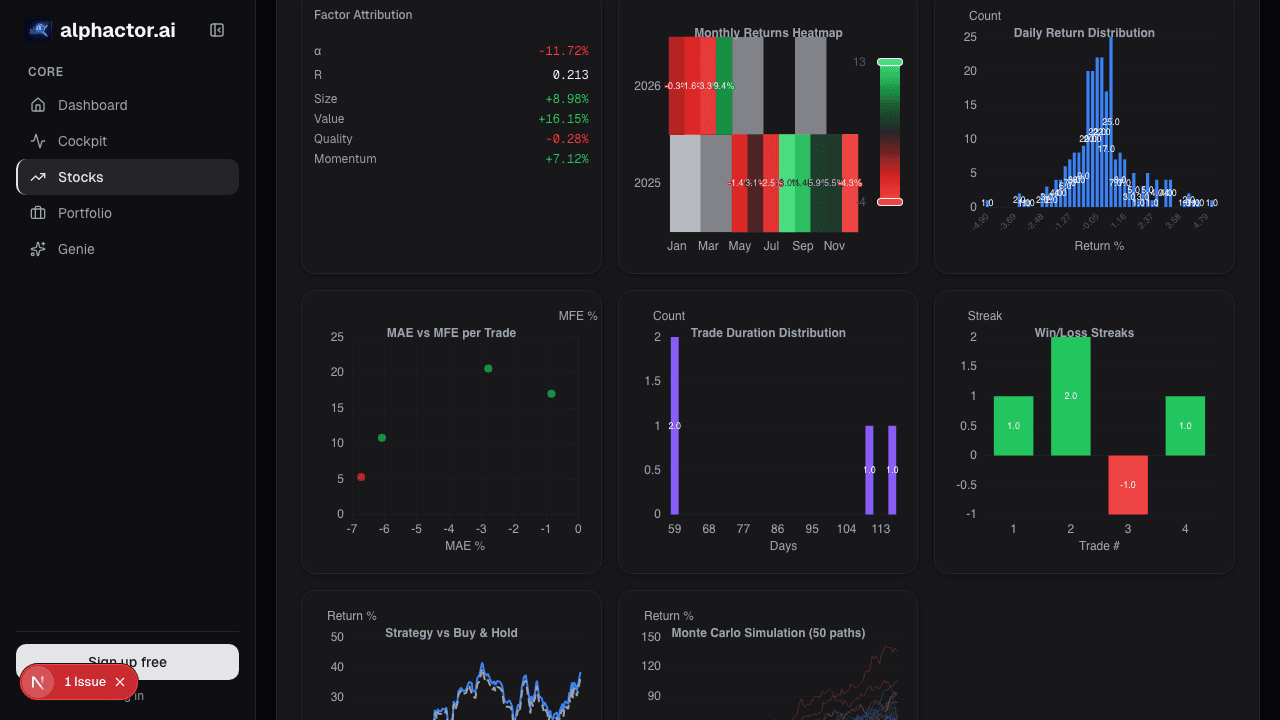
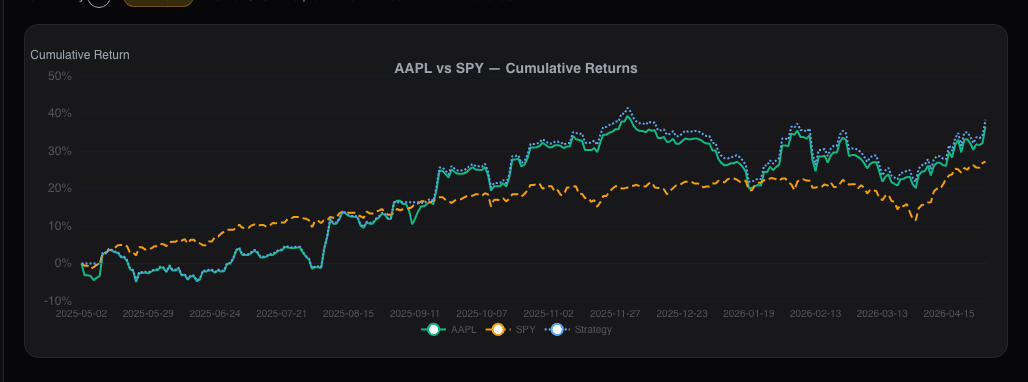
Live dashboard views that match this post. Each tile deep-links to the exact card.
Related reading
The AI Copilot: Ask Your Portfolio a Question
How Alphactor's AI Copilot turns natural language questions into data-driven portfolio insights, grounded in your actual holdings and market data.
Why Most Backtests Lie
How Alphactor's 8-layer credibility pipeline catches overfitting, data snooping, and curve-fitted strategies before they cost you money.
The 10-Minute Daily Stock Research Workflow
A structured daily routine for checking your portfolio, reviewing signals, and identifying new opportunities in under ten minutes.
Free vs Pro: Which Plan Fits Your Trading Style?
A practical comparison of Alphactor's Free, Pro, and Premium plans to help you pick the right tier for your trading and analysis workflow.
Leaderboards and Social Profiles
How Alphactor's leaderboards rank users by verified strategy performance, and how social profiles help you find traders worth following.
Mean Reversion Signals: Buying the Dip With Math, Not Hope
How to use z-score, Bollinger %B, and RSI extremes as mean reversion triggers, and why the strategy only works in specific market conditions.
Ready to try alphactor.ai?
Validate your trading strategies with statistical credibility testing. Start free.
Get Started Free