Part of: Technical Analysis
Portfolio Monitoring With Less Noise
Most portfolio dashboards show you everything. Here is how to filter down to the changes that actually require your attention.
 Marcus Chen5 min read
The Everything Dashboard Problem
Open a typical portfolio dashboard and you see every position, every daily return, every percentage change. Green and red numbers across the screen. It looks informative. It is not.
Showing everything is the same as highlighting nothing. When your dashboard displays twenty positions and all of them moved between -1% and +1% on normal volume, you have consumed information without gaining insight. You spent five minutes looking at noise and calling it portfolio monitoring.
Real monitoring is not about seeing what happened. It is about seeing what changed in a way that matters.
What Counts as a Material Change
A material change is an event that shifts the risk profile, thesis validity, or expected trajectory of a position. Not every price movement qualifies. These do:
Earnings Surprise
A company reports results significantly above or below consensus estimates. This is the most common thesis-altering event. A positive surprise on a stock you hold confirms your thesis. A negative surprise demands a reassessment: is this a one-quarter blip or a structural problem?
The magnitude matters. A one-cent beat on managed expectations is not material. A 15% revenue miss with a guidance cut is.
Drawdown Beyond Threshold
If a position drops more than your predefined threshold from its peak, whether that is 10%, 15%, or 20%, that is material. It does not mean you sell. It means you check. Has the thesis changed, or is the market giving you a better price on an intact story?
Most investors set stop losses but do not set drawdown alerts. A stop loss is mechanical. A drawdown alert is informational. It tells you to look, not to act.
Insider Transactions
Officers and directors buying or selling their own company's shares is one of the few signals with persistent statistical edge. An insider buying $2 million in stock on the open market is making a concentrated, informed bet. An insider selling through a 10b5-1 plan is following a schedule. The context matters, and your monitoring system should distinguish between the two.
Strategy Signal Transition
When a credible trading strategy flips from Buy to Sell on a stock you hold, that is a data point worth reviewing. It does not override your thesis. It tells you that the quantitative picture has shifted and you should verify whether the fundamental picture still supports your position.
Analyst Rating Change
A double-downgrade from a major firm, or a price target cut below the current price, is material. A reiteration of an existing rating is not. Your monitoring should filter for changes, not for coverage existence.
How Alphactor's Portfolio Cockpit Surfaces What Matters
The portfolio cockpit panel is designed around the concept of material change. Instead of showing all positions with their daily returns, it shows only the positions where something happened that warrants your attention.
Direction Summary Chips
At the top of the panel, four chips summarize your portfolio's current state: Bullish, Neutral, Risk, and Bearish. Each chip shows a count of positions in that category based on the aggregate of strategy signals and recent events.
This is the fastest possible portfolio read. If Risk shows 0, your portfolio is clean and you can move on. If Risk shows 3 and Bearish shows 1, you know exactly how many positions need review before you do anything else.
Click a chip to filter the panel to only those positions. The Risk chip surfaces the three positions with active risk events. The Bearish chip shows the position where strategy signals have turned negative.
Expand and Collapse
Each position in the panel shows a one-line summary: ticker, signal state, and the most recent material event. Click to expand and see the full event history, including every cockpit card that fired, every signal transition, and every alert trigger.
This two-level structure matters. The collapsed view tells you which positions need attention. The expanded view tells you why. You spend seconds on the first level and minutes only on the positions that earned your deeper focus.
Deep Links to Context
Every event in the expanded view links to the full context page. A strategy signal links to the strategy's backtest and credibility tier. An insider trade links to the filing and transaction history. An earnings event links to the full earnings analysis page.
You never hit a dead end. The path from "this position has a risk flag" to "here is the exact data behind it" is one click. The cockpit panels guide covers the full navigation model in detail.
What This Changes in Practice
Morning Reviews Get Shorter
Instead of scanning twenty positions and their daily returns, you check the direction chips, review the two or three flagged positions, and move on. Most mornings, this takes under two minutes. The positions that are fine get zero attention, which is exactly how much they need.
You Catch Deterioration Earlier
The most expensive portfolio mistake is holding a broken thesis because you were not paying attention. When monitoring surfaces material changes automatically, you catch the first warning sign, not the third. An insider sell followed by a strategy signal flip followed by a guidance cut is a pattern. Seeing the first event gives you time to evaluate. Seeing only the third means you are reacting late.
You Stop Confusing Volatility with Risk
A stock down 2% on normal volume is volatility. A stock down 2% on 4x volume with an insider sale is risk. Your dashboard cannot tell the difference if it only shows returns. The cockpit can, because it layers event data on top of price data.
The Filter Mindset
Portfolio monitoring is a filtering problem. The market generates thousands of data points daily across your holdings. Your job is not to consume them all. It is to identify the five to ten that imply a decision and ignore the rest without guilt.
The direction chips, material change cards, and expand/collapse structure are all designed for this. They let you go from "everything is noise" to "here are the three things that matter" in seconds. That is what risk management looks like in practice: not avoiding risk, but seeing it clearly and responding deliberately.
Start free and monitor your portfolio with less noise and more signal.
See it in the app
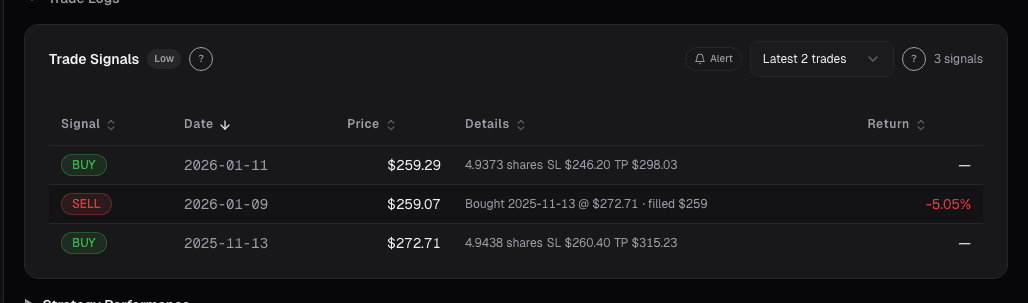
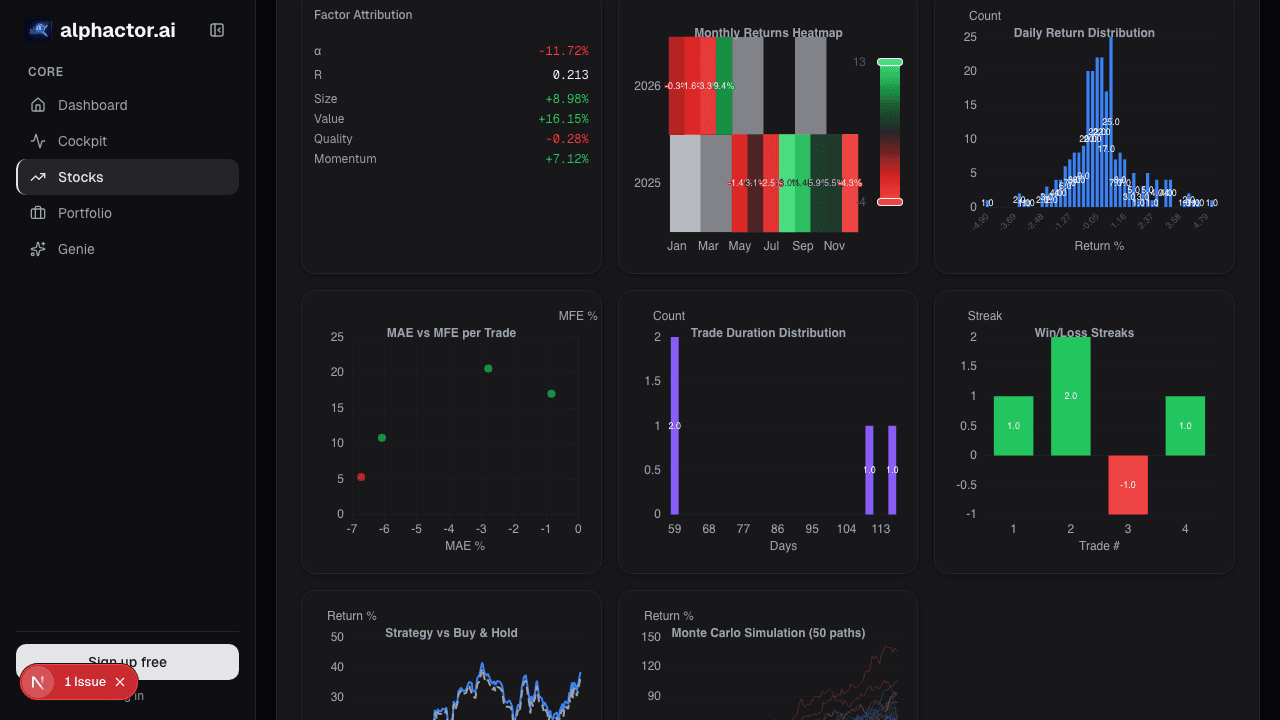
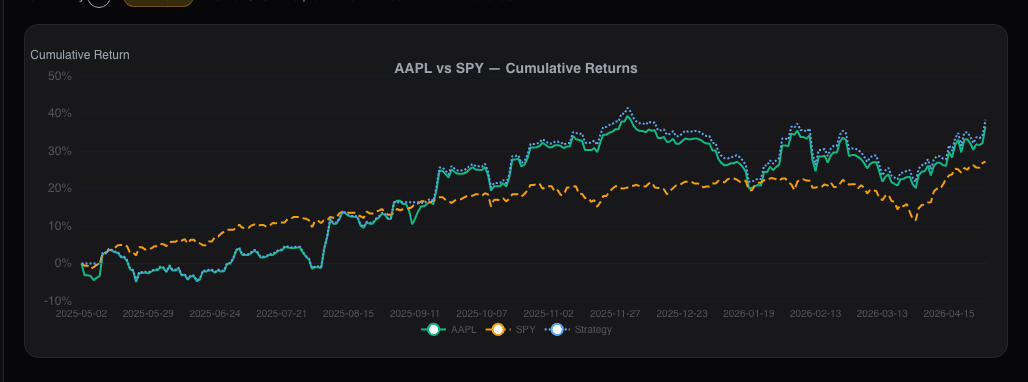
Live dashboard views that match this post. Each tile deep-links to the exact card.
Related reading
Cockpit Cards: Quick-Glance Intelligence per Stock
How cockpit cards surface the signals, events, and changes that matter most across your watchlist and portfolio without information overload.
From Signal to Action
Cockpit panels aggregate signals across your portfolio and watchlist into a single actionable view. Learn how to use them for daily monitoring.
Building a Momentum Score
Combine rate of change, relative strength, and moving average slope into a composite momentum score to screen for stocks with the strongest trends.
Alt-Data Sentiment at the Portfolio Level
Per-ticker alt-data breaks down past 10 positions. A roll-up of WSB, news, MSPR, and options lets a 90-second scan replace 100 minutes of manual checking.
Portfolio Attribution: Where Your Returns Actually Come From
Beating the benchmark by 400bps feels good until attribution tells you it was all allocation luck on one sector call. Selection vs. allocation vs.
Portfolio Audit Trail: Every Decision
Regulated managers need an audit trail. The Audit Trail card on alphactor.ai records every trade, rebalance, alert, and note into one timestamped log you…
Ready to try alphactor.ai?
Validate your trading strategies with statistical credibility testing. Start free.
Get Started Free