How to Build a Watchlist That Beats the Headlines
A practical approach to screening stocks, defining what criteria actually matter, and avoiding the FOMO trap of chasing news-driven momentum.
 Marcus Chen4 min read
The Problem with Most Watchlists
Most retail investors build their watchlists the same way: read a headline, hear a ticker on a podcast, see something trending, add it to a list they never revisit. Six months later they have 87 tickers, no thesis for any of them, and a vague sense of guilt every time they open the app.
A useful watchlist is not a collection of interesting names. It is a short list of researched stocks with clear criteria for when you would buy and at what price.
Start with a Screening Process
Before you add anything to your watchlist, define what you are looking for. This does not need to be complicated. Pick 3-5 quantitative filters that match your investing style and run a screen.
For a value-oriented approach, you might start with:
- P/E below sector median
- Free cash flow yield above 5%
- Debt-to-equity below 1.0
- Revenue growth positive over trailing 12 months
For a growth approach, different filters:
- Revenue growth above 20% year-over-year
- Gross margins above 50%
- Operating cash flow positive or approaching breakeven
- Addressable market expanding
The specific numbers matter less than the discipline of having them. A screen forces you to articulate what "good" looks like before you start looking, which protects you from post-hoc rationalization.
The Three-Bucket System
Once a stock passes your screen, sort it into one of three buckets:
Ready to buy. You have a thesis, you know the valuation range where it is attractive, and you have identified the key risks. If the price hits your target, you act. Keep this bucket to 5-10 names at most.
Needs more work. The quantitative screen looks promising, but you have not dug into the earnings calls, competitive dynamics, or management quality yet. Schedule time to do the work or drop it.
Watching for a catalyst. The business is interesting, but the valuation is not compelling right now. You are waiting for something specific: an earnings reset, a management change, a sector rotation. Write down what you are waiting for so you remember why it is here.
If a stock does not fit any bucket, it does not belong on your watchlist.
What Actually Belongs on the List
A well-constructed watchlist entry has four elements:
The ticker and current price. Obvious, but also note the price when you added it. Reviewing your entries six months later and seeing that a stock you liked at $45 is now at $38 tells you something about your timing instincts.
Your thesis in one sentence. "Undervalued industrial with pricing power and a catalyst in the infrastructure bill" is a thesis. "Jim Cramer mentioned it" is not.
Your buy price or range. If you would buy Microsoft at any price, you have a brand preference, not a thesis. Define the valuation level that represents genuine value, whether that is a P/E of 25, a free cash flow yield of 4%, or a specific dollar amount.
Your exit criteria. What would make you wrong? If the company loses a major contract, if margins compress below 15%, if the CEO leaves. Define it now while you are thinking clearly, not later when you are watching the position drop.
Avoiding the FOMO Trap
The hardest part of maintaining a watchlist is not adding to it. It is resisting the urge to throw your process out the window when a stock jumps 15% on news you missed.
Some practical guardrails:
Impose a 48-hour waiting period. When you feel the itch to add a stock immediately, wait two days. Most impulses fade. The ones that survive deserve your attention.
Limit your watchlist size. If you can meaningfully track more than 20 stocks with detailed theses and updated price targets, you are either a full-time analyst or kidding yourself. For most retail investors, 10-15 is the ceiling.
Review weekly, prune monthly. Scan for price changes and news each week. Monthly, ask: would I add this stock today if it were not already on the list? If no, remove it.
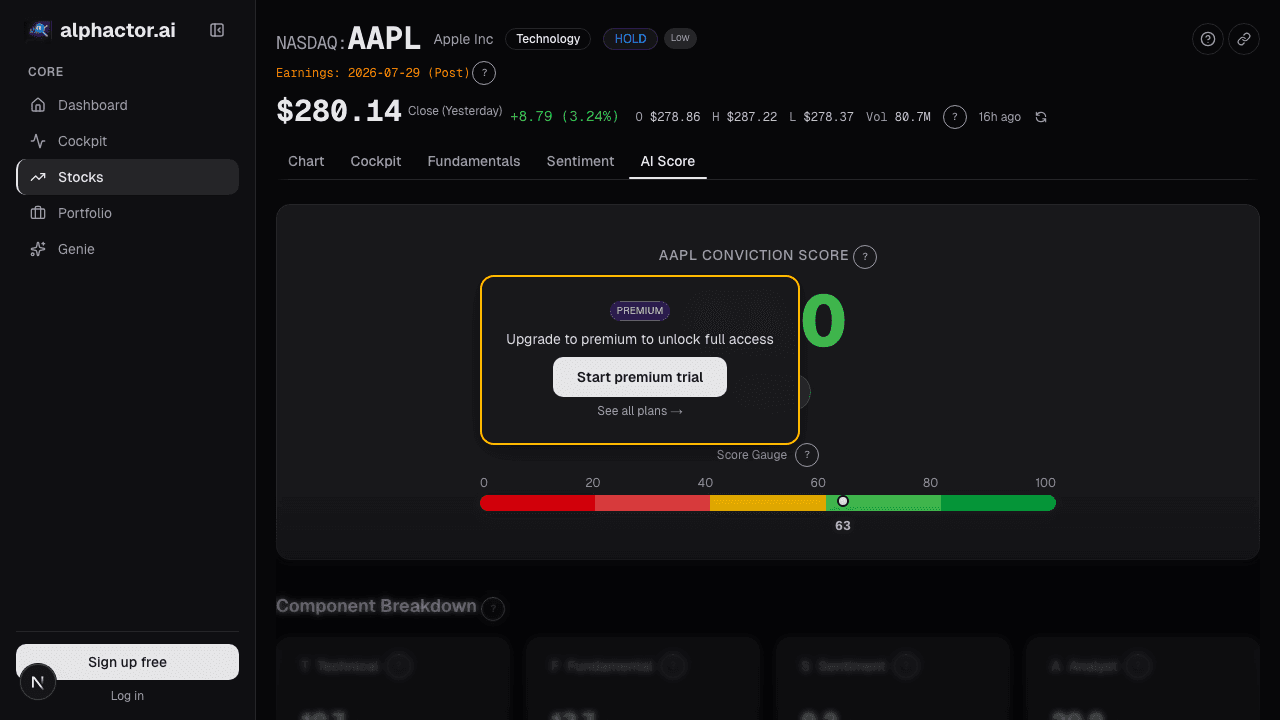
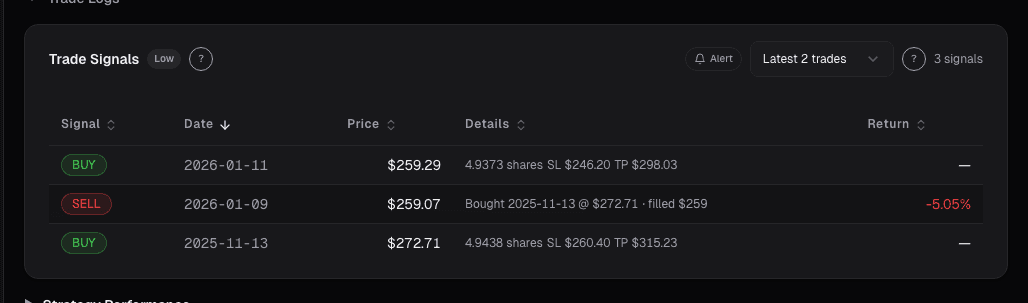
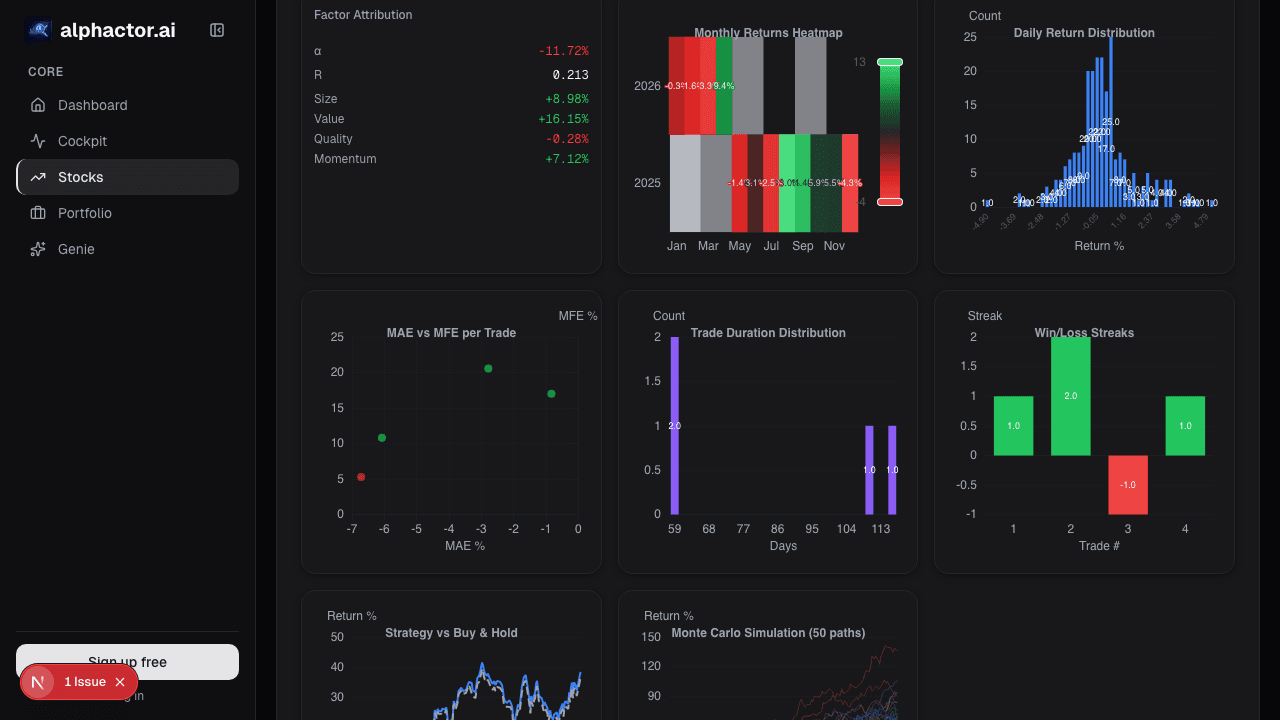
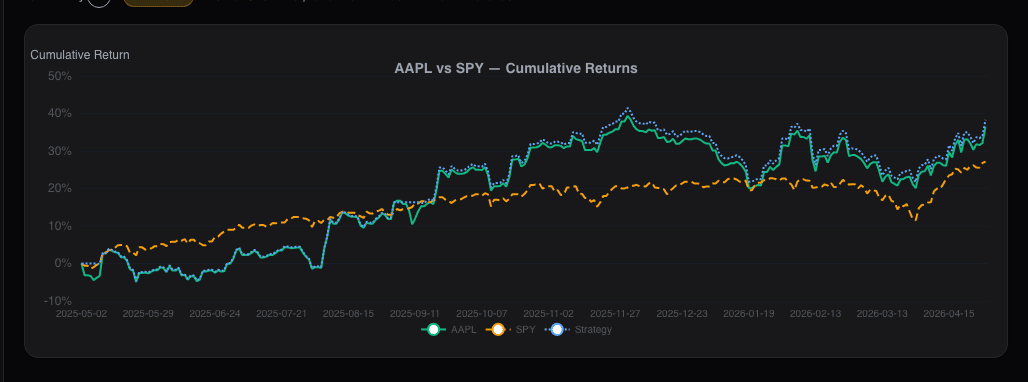
Track your hit rate. Alphactor's Alphactor backtesting tools let you test whether your screening criteria have historically identified outperformers. If your filters consistently surface stocks that underperform their sector, refine the criteria instead of overriding them with gut instinct.
Process Over Predictions
The goal of a watchlist is not to predict which stocks will go up. It is to have a prepared set of opportunities so that when the market gives you a good price, you act with confidence instead of scrambling to do due diligence while the window closes.
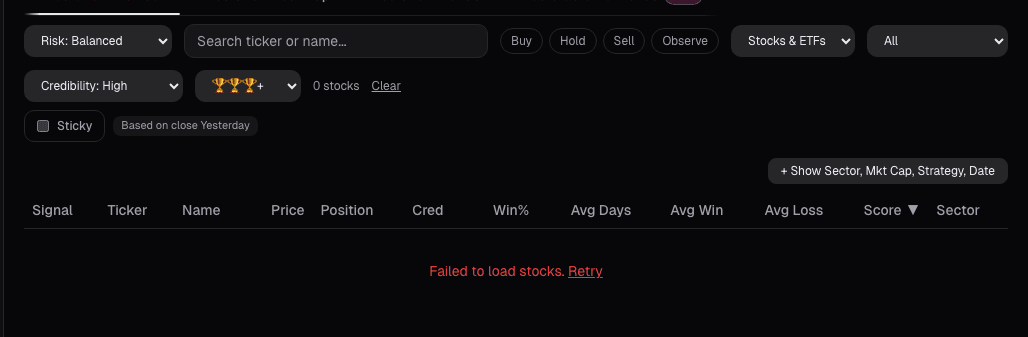
Build the list. Define the criteria. Write down the thesis. Review regularly. Remove what no longer fits. The universe scanner can serve as your starting point, surfacing candidates that match your quantitative filters before you invest the time in qualitative research. Boring work, and boring work is what separates investors who compound from investors who churn.
See it in the app
Live dashboard views that match this post. Each tile deep-links to the exact card.
Stocks mentioned
Related reading
Breakout Strategies
A systematic look at breakout trading across 500 stocks over 10 years, with real numbers on win rates, expectancy, and the filters that separate signal from…
Watchlist on the Dashboard
Your watchlist should be a live tape, not a to-do list. The Watchlist card on the dashboard pulls price, sentiment, signals, and alerts into one per-row…
Factor Investing in Plain English
Value, momentum, quality, size, and volatility: the five major investment factors explained without jargon, with practical applications for retail portfolios.
Regime-Aware Strategy Selection
Markets cycle through trends, ranges, and shocks. Learn how regime detection drives which strategy runs, and why a mixture of experts beats a single static…
Turn Your Watchlist Into an Active Research System
A passive watchlist wastes your time. Learn how to turn yours into a system that surfaces actionable intelligence on the stocks you care about.
Ready to try alphactor.ai?
Validate your trading strategies with statistical credibility testing. Start free.
Get Started Free