Part of: Technical Analysis
Turn Your Watchlist Into an Active Research System
A passive watchlist wastes your time. Learn how to turn yours into a system that surfaces actionable intelligence on the stocks you care about.
 Marcus Chen5 min read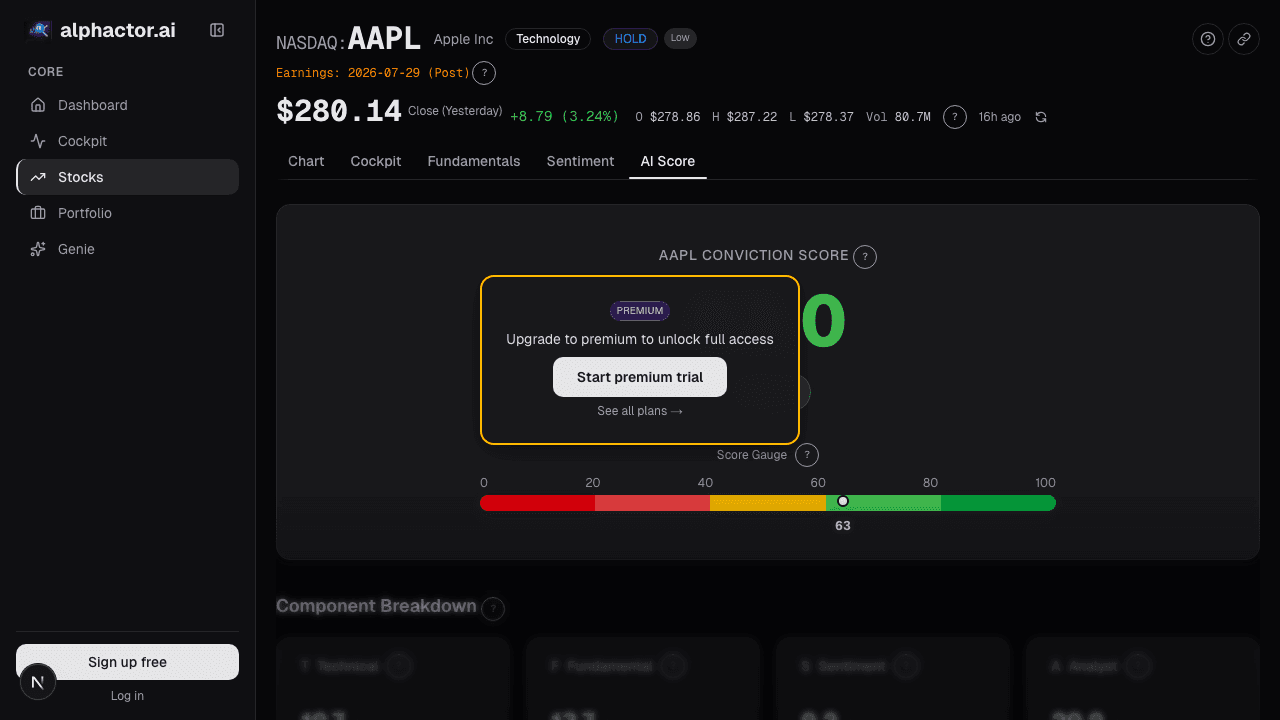
Passive Watchlists Are Dead Weight
A passive watchlist is a list of tickers that sits in your app doing nothing. You scroll through it occasionally, check a few prices, confirm that AAPL still exists, and close the tab. No new information was surfaced. No thesis was advanced or challenged. You spent time without producing insight.
Most investors treat their watchlist this way because most platforms treat it this way. The watchlist is a static bucket. You put tickers in. They sit there. The end.
An active watchlist is different. It is a system that monitors every tracked stock for material changes and surfaces actionable signals without you asking. Instead of you checking the watchlist, the watchlist checks the market and reports back.
Connecting Your Watchlist to the Cockpit
When you add a stock to your watchlist in Alphactor, the platform immediately begins monitoring it for cockpit events. Every event type that fires for portfolio holdings also fires for watchlist names:
- Strategy signal transitions. A credible strategy flips to Buy, Sell, or Hold. You see the signal, the strategy's credibility tier, and the entry parameters.
- Insider activity. Officers and directors buying or selling shares. The insider buying signals guide covers why this matters and how to interpret the data.
- Sentiment spikes. Sharp movements in social sentiment from Reddit, StockTwits, or news sources. Useful both as momentum confirmation and as a contrarian warning at extremes.
- Analyst upgrades and downgrades. Material rating changes and price target revisions.
- Volume anomalies. Days where volume exceeds 2-3x the 20-day average, which often precede directional moves.
- Earnings events. Reports, surprises, and guidance changes.
The difference between a watchlist stock and a portfolio stock is ranking priority. Portfolio events rank higher in the cockpit card stack because they involve capital at risk. But watchlist events still surface, ensuring that the stocks you are researching stay on your radar even when you are not actively looking at them.
The Stock Ticker Bar: Quick Context Without Leaving the Page
Every stock page in Alphactor includes a ticker bar at the top that shows the most recent cockpit events for that stock. When you click into a watchlist name to check its chart or fundamentals, the ticker bar tells you what happened since your last visit.
This solves a common problem. You add a stock to your watchlist because an insider bought shares. Two weeks later, you check the chart and the insider purchase is buried in a news feed you never read. The ticker bar prevents that. The most recent and most relevant events meet you at the top of the page, every time.
If you are running a daily research workflow, the ticker bar is where you do the quick pass on individual names before deciding whether to go deeper.
Strategy Signals on Watchlist Stocks
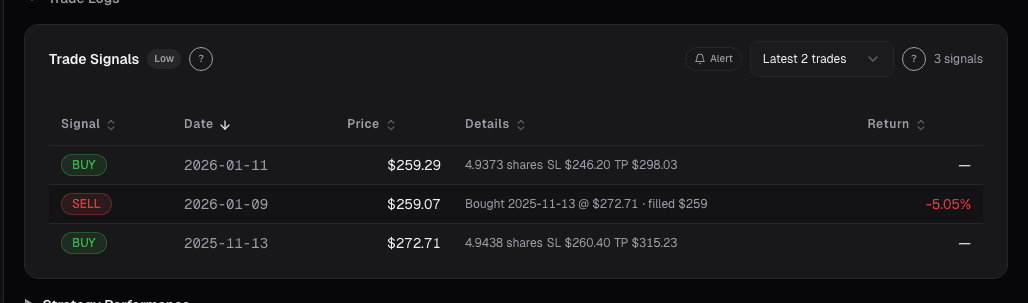
A passive watchlist tells you the current price. An active watchlist tells you whether a validated strategy thinks the stock is a Buy, Hold, or Sell right now.
Every stock on your watchlist runs through the same strategy evaluation as the full universe. If a strategy with a High credibility tier and a conviction score above 7 generates a Buy signal on a watchlist name, that is a materially different event from the price moving up 1%. The strategy has a backtest. It has a Sharpe ratio, a max drawdown, and a win rate. The signal is evidence-based, not a guess.
Tracking strategy signals on your watchlist turns it from a price list into a research pipeline. Stocks enter your watchlist because they pass your initial screen. Strategy signals tell you when the quantitative picture aligns with your thesis and when it diverges. A stock on your watchlist with a persistent Sell signal from credible strategies is telling you something your thesis might be missing.
Alerts for Price and Fundamental Changes
Beyond cockpit events, you can set targeted alerts on any watchlist stock:
Price alerts. Set a target entry price and get notified when the stock reaches it. This is standard, but the integration with the cockpit means the alert fires alongside any concurrent events. If the stock hits your price target on the same day an insider buys, you see both signals together.
Watchlist alerts. Monitor for specific fundamental changes: earnings surprises above a threshold, revenue growth deceleration, margin compression. These fire only when the data changes, not on a schedule.
Signal alerts. Get notified when a strategy signal transitions on any watchlist stock. If a stock on your watchlist has been on Hold for weeks and suddenly flips to Buy, you want to know immediately, not during your next casual check.
The alert configuration ties into the trade alerts system, where you can set multi-condition triggers that combine price, volume, and signal criteria.
From Watchlist to Portfolio: The Conversion Path
The purpose of an active watchlist is to surface the right moment to act. You add a stock because it meets your criteria. The watchlist monitors it for the confluence of signals that matches your entry thesis. When those signals align, you convert.
A typical conversion sequence:
- Stock enters watchlist after passing your quantitative screen.
- Strategy signals are on Hold. No action yet.
- An insider buys $500K in shares. Cockpit card fires. You note it.
- Two weeks later, the strategy signal flips to Buy with a High credibility score. Another card fires.
- You check the chart. The stock is at a support level with above-average volume.
- You buy and move the stock to your portfolio.
Without the active watchlist, you would have missed step 3 entirely and might not have noticed step 4 until days later. The system compressed weeks of passive checking into a sequence of pushed alerts that led to a timely, informed entry.
Building Your Active Watchlist
Start with your existing watchlist. For each stock, confirm you have a written thesis and entry criteria. Remove any name where you cannot articulate why it is there in thirty seconds.
Then let the system work. Add stocks to the watchlist and the cockpit begins monitoring. Set price alerts for your target entries. Enable signal alerts for strategy transitions. Check the cockpit daily and review the cards that fire on your watched names.
Within a week, your watchlist will have surfaced events you would have missed. Within a month, you will have a clear picture of which watchlist names are approaching actionable status and which are dormant. That is the difference between a list and a research system.
Start free and turn your watchlist into an active intelligence system with Alphactor.
See it in the app
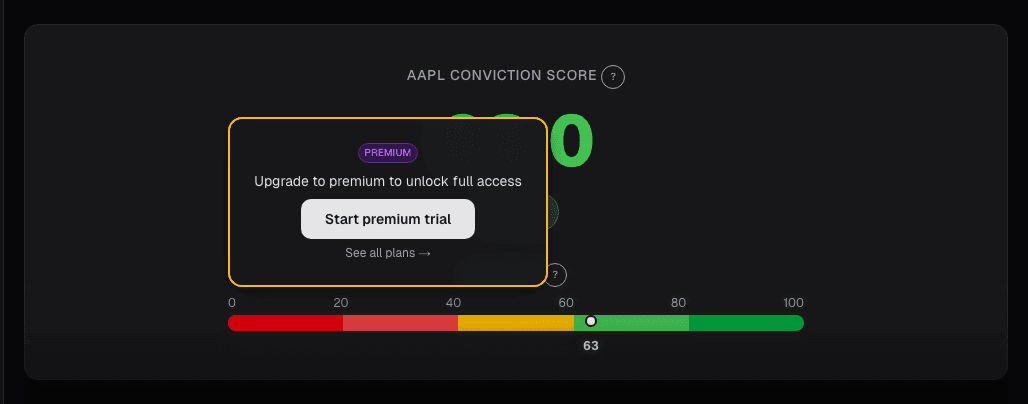
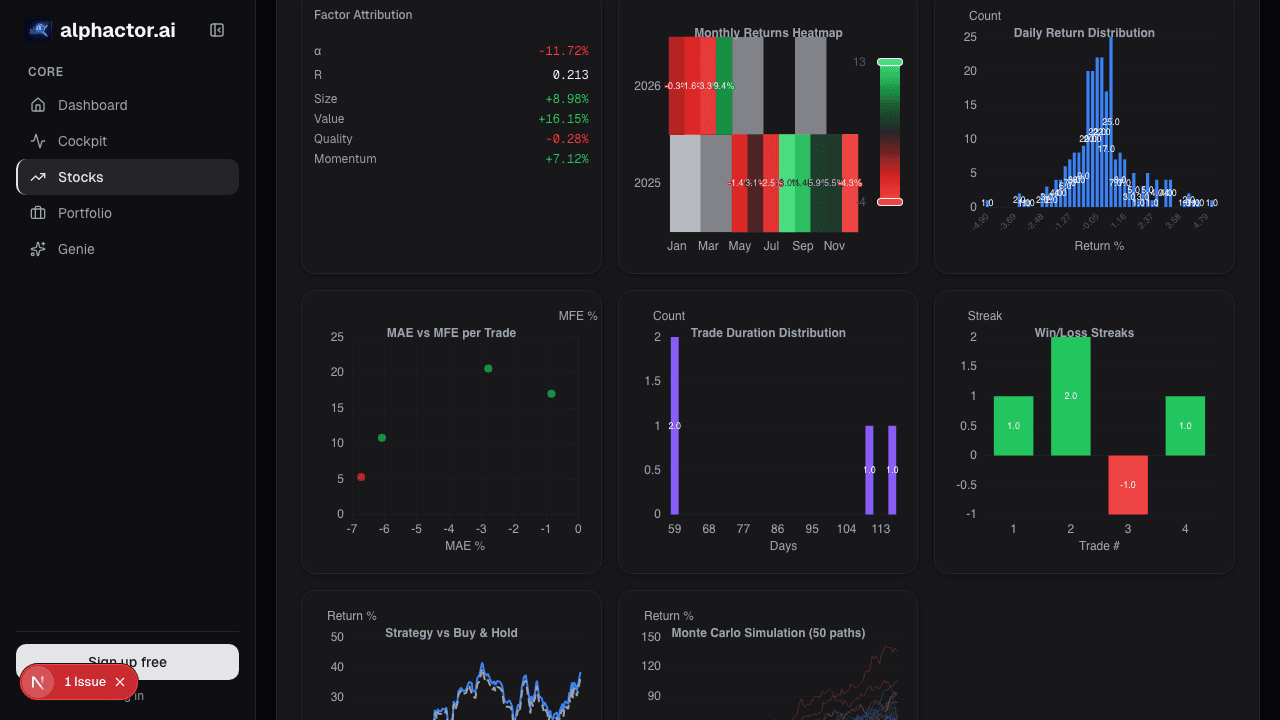
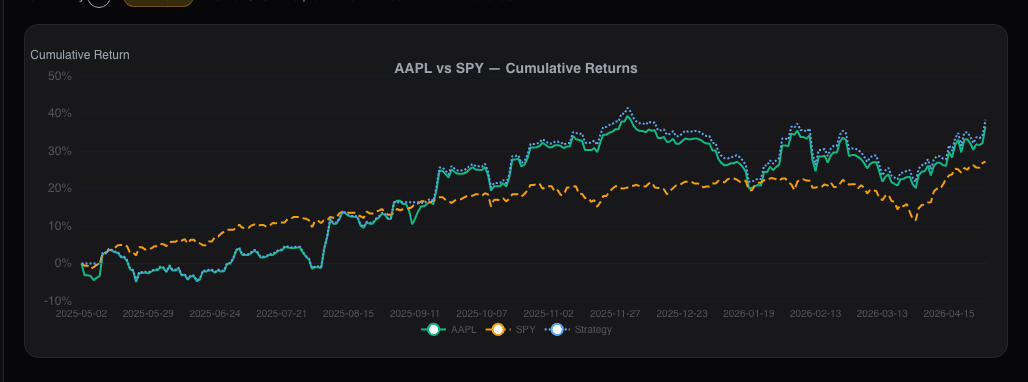
Live dashboard views that match this post. Each tile deep-links to the exact card.
Stocks mentioned
Related reading
How to Build a Watchlist That Beats the Headlines
A practical approach to screening stocks, defining what criteria actually matter, and avoiding the FOMO trap of chasing news-driven momentum.
Cockpit Cards: Quick-Glance Intelligence per Stock
How cockpit cards surface the signals, events, and changes that matter most across your watchlist and portfolio without information overload.
The 10-Minute Daily Stock Research Workflow
A structured daily routine for checking your portfolio, reviewing signals, and identifying new opportunities in under ten minutes.
Watchlist on the Dashboard
Your watchlist should be a live tape, not a to-do list. The Watchlist card on the dashboard pulls price, sentiment, signals, and alerts into one per-row…
Building a Momentum Score
Combine rate of change, relative strength, and moving average slope into a composite momentum score to screen for stocks with the strongest trends.
The Overnight Edge
From 1993-2024 the S&P 500 overnight component returned 8.9% CAGR with Sharpe 0.71 vs. 1.1% CAGR intraday. Whether the anomaly remains tradable is the question.
Ready to try alphactor.ai?
Validate your trading strategies with statistical credibility testing. Start free.
Get Started Free