What Is a Stock Universe and How Smart Investors Use One
How defining a stock universe sharpens your research process, reduces noise, and helps you focus on opportunities that match your strategy.
 Marcus Chen5 min read
The Concept Most Investors Skip
A stock universe is the defined set of stocks you will consider for investment. Everything outside it does not exist to you. That boundary is the single most underrated tool in stock research.
Most retail investors operate without one. They react to headlines, chase Reddit threads, hear a ticker at a dinner party, and add it to a growing pile of half-researched names. The result is a scattered portfolio with no coherent thesis and no systematic way to find the next idea.
Professional fund managers define their universe before they do anything else. A small-cap value fund does not wake up one morning and buy Nvidia. The universe constrains the search space, which makes the research process faster, more consistent, and less susceptible to emotional impulse.
You should do the same.
What Defines a Stock Universe
A universe is built from a few structural filters. These are not trading signals or valuation opinions. They are the eligibility criteria that determine which stocks deserve your attention at all.
Market Capitalization
Market cap is the most common boundary. It determines the type of companies you are analyzing and the dynamics you will encounter.
- Large-cap ($10B+): More analyst coverage, tighter spreads, slower-moving opportunities. Suitable if you want stability and liquidity.
- Mid-cap ($2B-$10B): Less coverage, more mispricing, moderate liquidity. The sweet spot for active stock pickers.
- Small-cap (under $2B): Thin coverage, wider spreads, higher volatility. Requires more work per name but offers larger upside when you are right.
Pick a range that matches your risk tolerance and the amount of time you can dedicate to research.
Sector and Industry
If you have domain expertise, use it. A software engineer analyzing SaaS companies has an edge over a generalist scanning the entire market. Narrowing by sector does not limit your returns. It focuses your effort where your judgment is most informed.
Liquidity
Stocks with average daily volume below 100,000 shares are difficult to enter and exit without moving the price. Unless you are running a very small portfolio, set a minimum volume threshold. This filter alone eliminates hundreds of names that would waste your time.
Exchange and Geography
Domestic vs. international, NYSE/NASDAQ vs. OTC. Most retail investors are best served by sticking to major U.S. exchanges where reporting standards are consistent and data is reliable.
Why a Universe Beats Ad-Hoc Scanning
Without a universe, your research process is reactive. You scan when you feel like it, chase what is trending, and end up with a watchlist full of unrelated names. With a universe, your process becomes systematic.
Consistency. You review the same set of stocks regularly. You notice when something changes because you have a baseline.
Coverage. A defined universe ensures you are not missing opportunities in your target space. If you track 200 mid-cap industrials, you will catch the one that just posted a breakout earnings quarter. Without the universe, you might never see it.
Speed. Scanning 200 stocks you already know is faster than scanning 5,000 you do not. You build familiarity with the names, their patterns, their typical valuations, and their catalysts.
Discipline. When a hot tip arrives for a stock outside your universe, the universe gives you a framework to say no. Either the stock meets your criteria and gets added properly, or it does not and you move on. No FOMO-driven additions.
How Alphactor Automates Universe Management
Defining a universe is straightforward. Maintaining it is the hard part. Stocks get delisted, market caps shift, sectors rotate. Manually curating a universe of 200+ names across changing market conditions is tedious work that most investors abandon within weeks.
Alphactor's Genie handles this. It maintains a broad stock universe filtered by your criteria and runs validated trading strategies across every name in it. You define the boundaries, including market cap range, sectors, minimum liquidity, and the platform keeps the universe current and scanned.
The stock directory gives you a structured starting point. Every ticker includes fundamentals, strategy signals, and credibility scores so you can evaluate whether a stock belongs in your universe before you commit research time.
The Universe Heatmap
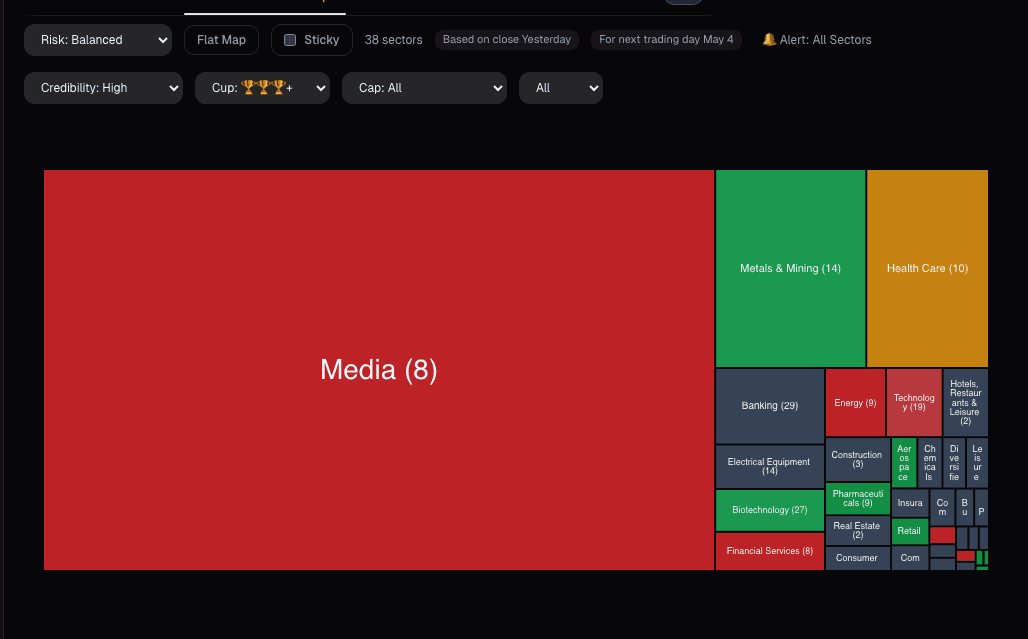
Raw lists of 200 stocks are hard to read. The universe heatmap solves this by visualizing signal density across sectors and sub-sectors. Instead of scrolling through a table, you see which corners of your universe are generating buy signals, which are quiet, and which are flashing sell.
This is how you spot signal clusters early. If five industrial stocks in your universe simultaneously generate buy signals from credible strategies, that concentration is meaningful. It suggests a sector-level catalyst that individual stock analysis might miss. The universe scanner workflows guide walks through three specific ways to use this.
Building Your First Universe
Start small. A common mistake is defining a universe of 500 stocks and immediately feeling overwhelmed. Begin with 50-100 names in a sector or market cap range you understand. You can always expand later.
Step 1. Pick your market cap range and one or two sectors.
Step 2. Set a minimum average daily volume of 200,000 shares.
Step 3. Load these filters into Alphactor's universe scanner and save them as a sub-universe.
Step 4. Review the heatmap weekly. Note which names are generating actionable signals and which are dormant.
Step 5. After a month, evaluate. Are you finding enough opportunities? Expand the universe. Too many names to track? Tighten the filters.
The goal is a universe small enough to know well and large enough to produce consistent opportunities.
The Edge Is in the Boundary
Defining what you will not look at is as valuable as defining what you will. A stock universe is not a limitation. It is a filter that converts the entire market into a manageable, researchable set of candidates aligned with your strategy. Every professional does this. Most retail investors do not, which is exactly why it remains an edge.
Start free and build your first stock universe with Alphactor's scanner.
See it in the app
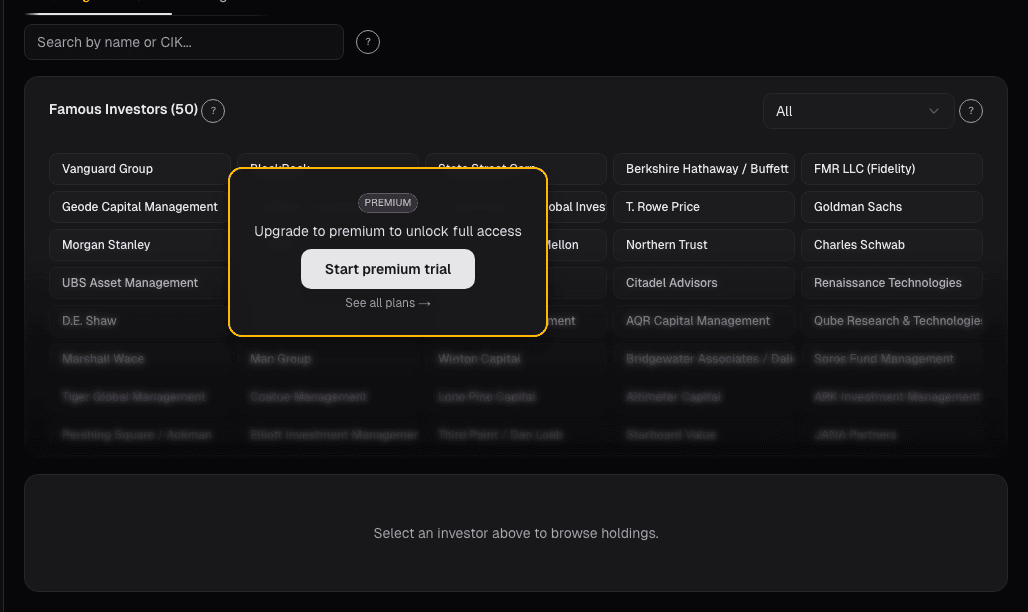
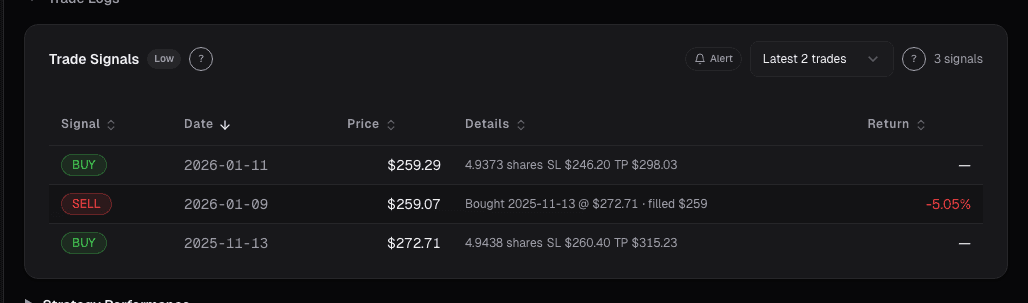
Live dashboard views that match this post. Each tile deep-links to the exact card.
Related reading
The 10-Minute Daily Stock Research Workflow
A structured daily routine for checking your portfolio, reviewing signals, and identifying new opportunities in under ten minutes.
How to Compare Two Stocks Side by Side (The Right Way)
A step-by-step guide to using Alphactor's comparison tools to evaluate two stocks across fundamentals, technicals, and alternative data.
How to Export Your Research and Share It With Your Team
A guide to exporting stock research, portfolio data, and screening results from Alphactor for collaboration and record-keeping.
How to Screen 1,000 Stocks in Under a Minute
Learn how to use Alphactor's universe scanner to filter thousands of stocks down to a focused shortlist using quantitative criteria.
How to Use AI Conviction Scores to Filter Noise
Learn what Alphactor's AI conviction scores measure, how they are calculated, and practical ways to incorporate them into your investment process.
The Overnight Edge
From 1993-2024 the S&P 500 overnight component returned 8.9% CAGR with Sharpe 0.71 vs. 1.1% CAGR intraday. Whether the anomaly remains tradable is the question.
Ready to try alphactor.ai?
Validate your trading strategies with statistical credibility testing. Start free.
Get Started Free