TradingView vs alphactor.ai
TradingView leads for charting and Pine Script. Alphactor adds an 8-layer credibility pipeline with walk-forward validation and Deflated Sharpe Ratio testing.
 Marcus Chen4 min read
Two Different Approaches to Stock Analysis
Choosing the right stock analysis platform depends on what you need. TradingView and alphactor.ai both serve traders and investors, but they approach the problem from different angles. TradingView is a charting and social platform built around technical analysis. alphactor.ai is a quantitative analysis platform built around strategy validation and credibility testing.
This comparison breaks down where each tool shines and where it falls short.
Charting and Technical Analysis
TradingView is the industry leader in charting. It offers hundreds of built-in indicators, drawing tools, multi-chart layouts, and a Pine Script language for creating custom indicators. If your primary workflow is drawing trendlines, setting alerts on price levels, and sharing chart ideas with a community, TradingView is hard to beat.
alphactor.ai provides interactive charting with common technical indicators (moving averages, RSI, MACD, Bollinger Bands, and more) overlaid on price data. The charting is clean and functional, but the emphasis is on using these indicators as building blocks for testable strategies rather than visual analysis alone.
Verdict: If charting is your main activity, TradingView has the deeper toolset. If you want to turn chart patterns into validated strategies, Alphactor adds the analytical layer.
Backtesting and Strategy Validation
TradingView offers Pine Script backtesting through its Strategy Tester. You write a Pine Script strategy, run it against historical data, and see the equity curve. It is a powerful system for programmers comfortable with Pine Script. However, the backtesting output is basic: cumulative returns, drawdown, and a few other metrics. There is no built-in credibility testing or walk-forward validation.
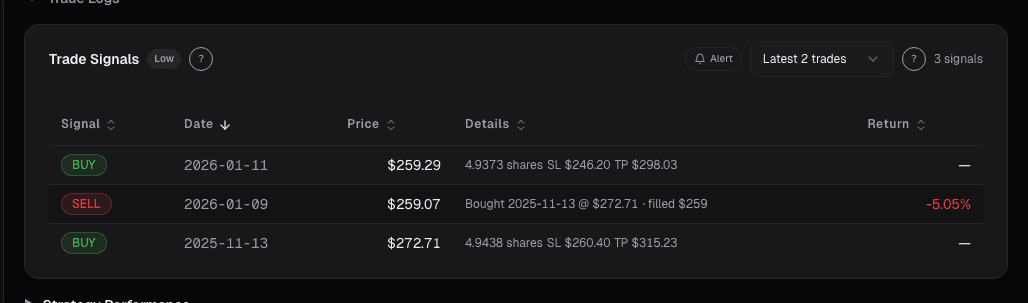
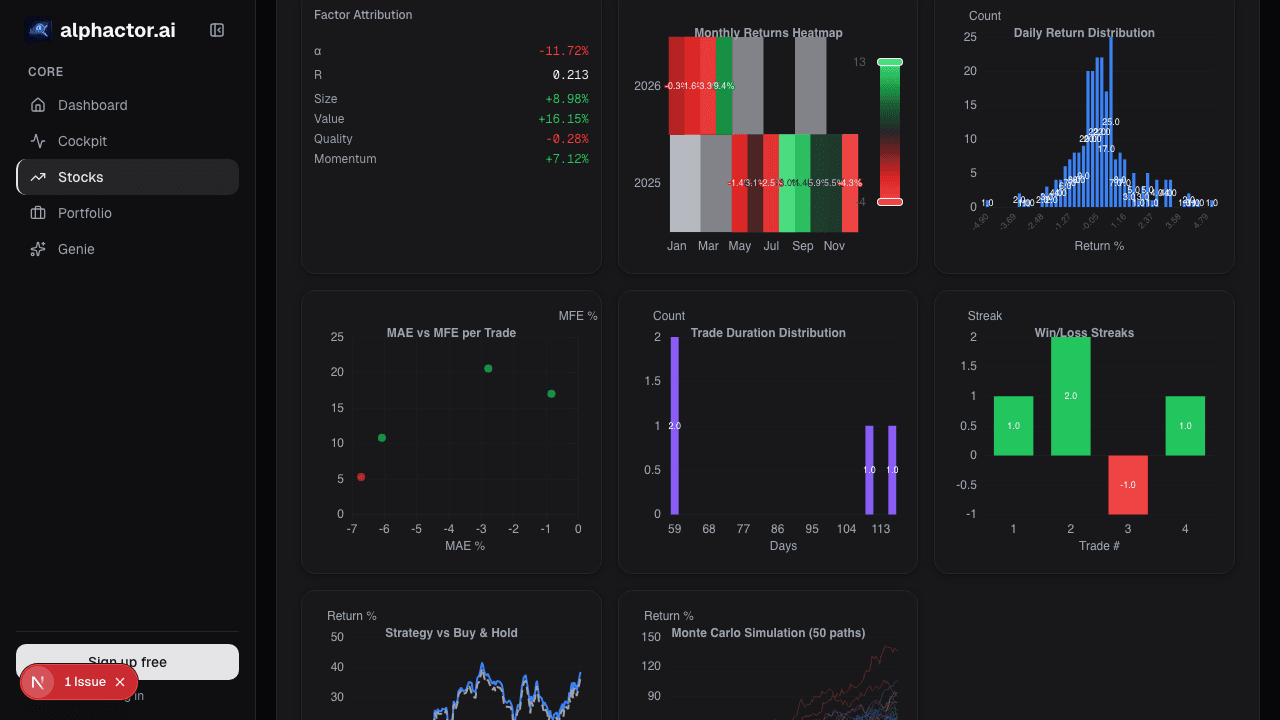
alphactor.ai approaches backtesting differently. You build strategies through a visual interface, select indicators, set entry/exit conditions, define position sizing, without writing code. The platform then runs the strategy through a 8-layer credibility pipeline that includes Deflated Sharpe Ratio, Monte Carlo simulation, walk-forward validation, regime detection, drawdown analysis, and parameter stability testing.
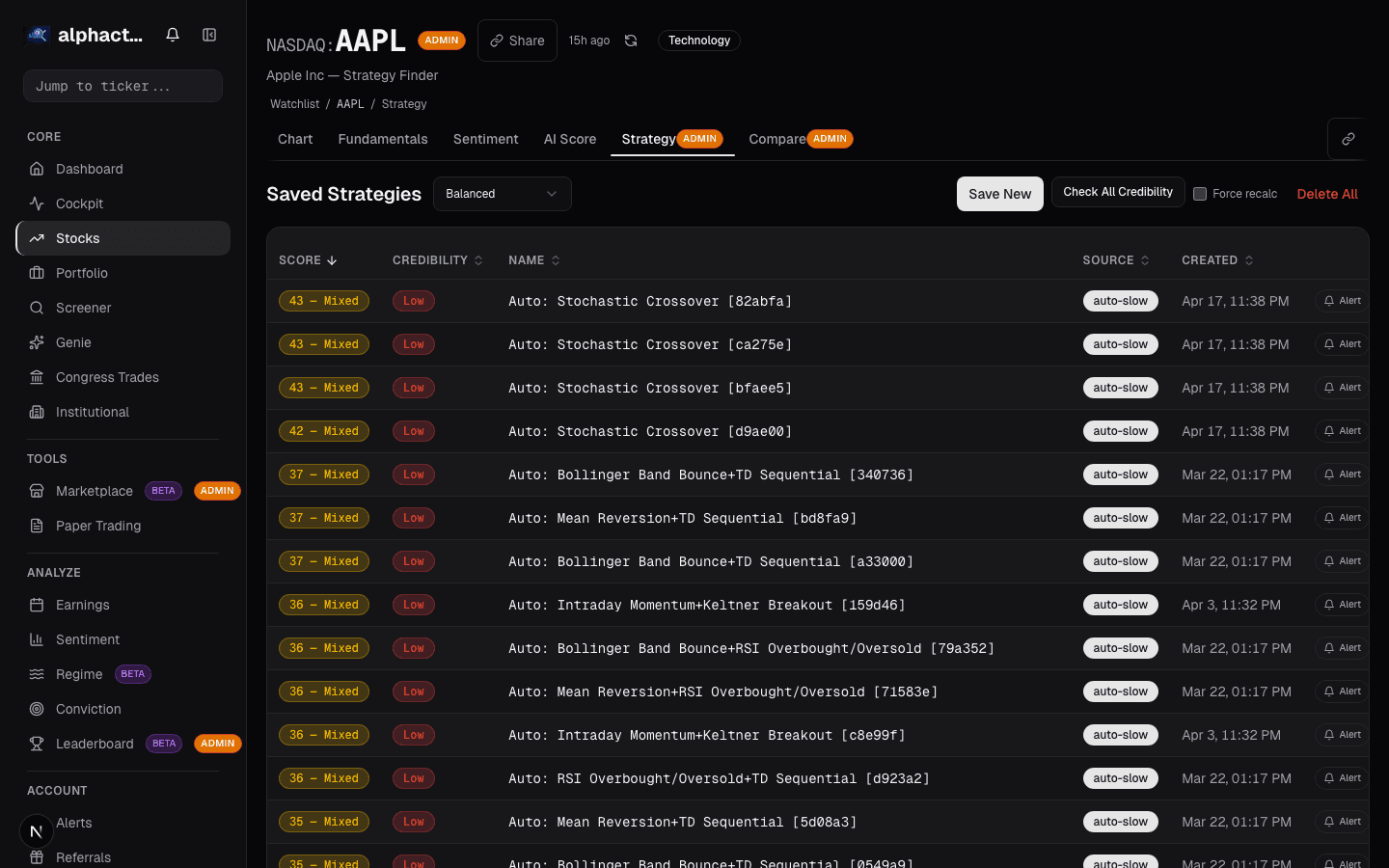
Verdict: TradingView gives more flexibility for custom strategies through code. Alphactor provides statistical rigor that catches overfitting and validates whether results are credible, without requiring programming skills.
Fundamental Data
TradingView has expanded its fundamental data coverage significantly. You can overlay financial metrics on charts, view income statements, and access basic screening tools. The data is solid but the interface is primarily chart-oriented.
alphactor.ai provides a dedicated fundamentals view for each stock with income statement, balance sheet, cash flow data, key ratios, and peer comparison views. The platform also integrates institutional holdings data (13F explorer), congressional trading activity, and insider transactions, giving a broader view of who is buying and selling.
Verdict: Both have good fundamental data. Alphactor offers more alternative data sources (13F, congress trades, insider activity) and clearer peer comparisons.
Screening and Discovery
TradingView has a stock screener with filters for technical and fundamental criteria. The screener is fast and covers global markets. You can scan for stocks matching specific chart patterns or financial metrics.
alphactor.ai offers a screener focused on quantitative metrics and strategy-based filtering. You can screen for stocks where specific strategies show high credibility scores, filter by fundamentals, and discover opportunities based on validated signals rather than just price patterns.
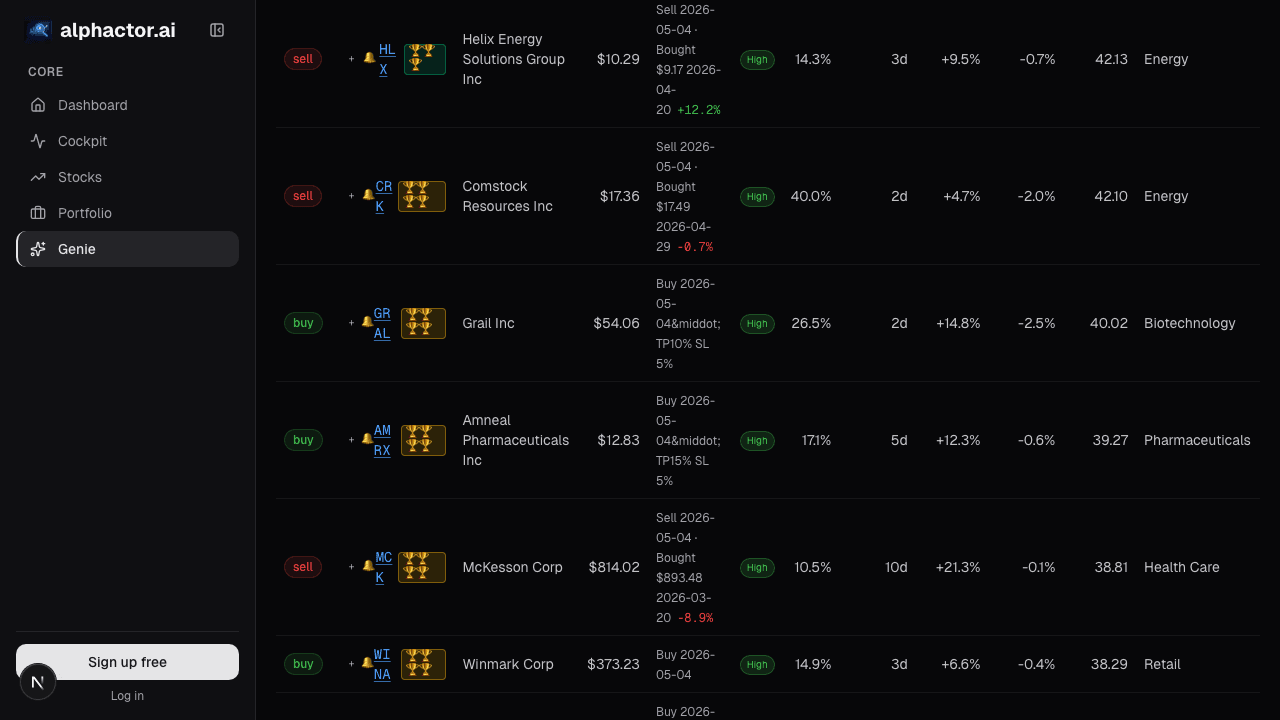
Verdict: TradingView's screener covers more markets and more filter types. Alphactor's screener is more focused on actionable, validated signals.
Pricing Comparison
TradingView offers a free tier with limited features. Paid plans range from about $15/month (Essential) to $60/month (Ultimate), with the most useful features (multiple charts, more indicators, extended hours data) locked behind the Premium ($30/month) and higher tiers.
alphactor.ai has a free tier for basic analysis, a Pro plan at $19/month that includes backtesting and credibility scoring, and a Premium plan at $59/month that adds institutional data, congress trades, and unlimited portfolios.
Verdict: Similar price points. The value depends on which features matter to you. TradingView's premium tiers add charting depth. Alphactor's premium tiers add analytical depth.
Community and Social Features
TradingView has a large, active community where users share chart ideas, publish scripts, and discuss markets. The social layer is a core part of the platform. If learning from other traders and sharing your analysis publicly matters to you, TradingView's community is a genuine advantage.
alphactor.ai is focused on individual analysis rather than social features. The platform prioritizes providing data and tools for making your own informed decisions.
Verdict: TradingView wins on community. Alphactor is built for focused, individual analysis.
Which One Should You Choose?
Choose TradingView if you are primarily a technical trader who values charting, drawing tools, Pine Script customization, and community interaction. It is the best charting platform available.
Choose alphactor.ai if you want to validate whether your strategies actually work before risking capital. The credibility testing pipeline, alternative data sources, and code-free strategy building make it ideal for traders who want statistical confidence in their approach.
Many serious traders use both, TradingView for charting and idea generation, and Alphactor for validating those ideas with rigorous backtesting and credibility analysis. The platforms complement each other well.
See it in the app
Live dashboard views that match this post. Each tile deep-links to the exact card.
Stocks mentioned
Related reading
How to Analyze Tech Stocks
The financial metrics that separate winning tech investments from hype-driven traps, with frameworks for evaluating SaaS, hardware, and platform businesses.
Why Free Cash Flow Matters More Than Earnings
Earnings can be managed. Cash flow cannot. How to use free cash flow to evaluate business quality and avoid accounting illusions.
Free vs Pro: Which Plan Fits Your Trading Style?
A practical comparison of Alphactor's Free, Pro, and Premium plans to help you pick the right tier for your trading and analysis workflow.
How to Compare Two Stocks Side by Side (The Right Way)
A step-by-step guide to using Alphactor's comparison tools to evaluate two stocks across fundamentals, technicals, and alternative data.
Ready to try alphactor.ai?
Validate your trading strategies with statistical credibility testing. Start free.
Get Started Free