Universe Trends
Sector dispersion over 10-week windows runs 12-18 percentage points. Identifying the rotation before the macro narrative forms matters more than stock-picking.
 Marcus Chen7 min read
In early 2023 I was running a book that was concentrated in quality-tech, names I'd researched deeply, high-conviction, well-sized. The book was underperforming the S&P by 4 points through February despite every name being fundamentally on-track. I pulled up the Universe Trends card and the problem was immediate and external. On the 3-month window, my sector exposure (tech + communication services) was showing -1.2 on relative strength vs. the S&P; energy was +2.1, industrials +1.5, financials +0.8. On the factor strip, quality was -0.3, momentum was +0.9, and my book's implicit factor tilt was quality-and-not-momentum. I'd built a great book in a rotation that was moving away from me. The names weren't the problem, the style was out of phase. I made two adjustments: trimmed the three largest quality-tech positions by 30% and rotated the proceeds into industrial-cyclical names that had been showing up at the top of the trends leaderboard for 8 consecutive weeks. Over the next four months the industrial allocation contributed +7 points while the residual quality-tech contributed +2. Most of the recovery came from buying what was already working rather than doubling down on what my research said *should* work. That experience changed how I sequence my week: I check Universe Trends before I read any individual ticker research. Getting the sector and factor direction right is usually worth more than getting the name right within a bad direction.
This post is about the Universe Trends card, why rotation-level analysis beats name-level analysis for allocation decisions, and the three patterns that have been the most actionable signals.
TL;DR
- Sector and factor dispersion usually exceeds within-sector dispersion. Getting the sector right matters more than stock-picking within it.
- Leadership change on 3-month windows is often late-stage continuation; historically poor risk-reward to chase.
- Breadth divergence from price leadership warns that a rally is narrow and reversion-prone.
- Style rotation leads regime rotation by 2-4 weeks: often tradeable before the macro narrative catches up.
- Use weekly; don't over-trade. Rotation signals decay slowly.
Why rotation matters more than stock-picking
Over 10-week rolling windows, the median sector return can diverge from the worst-sector return by 12-18 percentage points. That spread is larger than the spread between a good stock and an average stock within a sector over the same period. The implication: if you're in the wrong sector, you're starting with a 10-15-point handicap before stock selection matters. Great stock-picking in a losing sector rarely makes up the difference.
What the trends view gives you that name-level analysis doesn't:
- Where capital is flowing: which sectors are accumulating bid, not just which are up
- Breadth: is the rally broad-based or driven by 3 names?
- Factor leadership: is the working style momentum, value, quality, low-vol, or a rotation between them?
- Geographic leadership: is US leadership being ceded to international or EM?
- Rotation timing: is the leader on 1-month also the leader on 3-month, or is the rotation already mid-cycle?
What the Universe Trends card shows
The Universe Trends card plots rolling relative-strength indices across:
- 11 GICS sectors: on a common scale showing outperformance vs. SPY, not absolute returns
- Major styles: growth, value, quality, low-vol, momentum, size (all six)
- Capitalization: large-cap, mid-cap, small-cap
- Geography: US, international developed, emerging markets
- Sub-sector detail: semis within tech, airlines within industrials, banks within financials
Configurable windows:
- 1m / 3m / 6m / 1y / YTD: swap timeframes to see leadership persistence
- Relative vs. SPY or relative vs. equal-weighted universe
- Log scale toggle for multi-quarter views
Breadth panel:
- % of names making new 52w highs per sector
- % of names above their 50d MA per sector
- New-high / new-low ratio by sub-sector
- Advance-decline line per sector
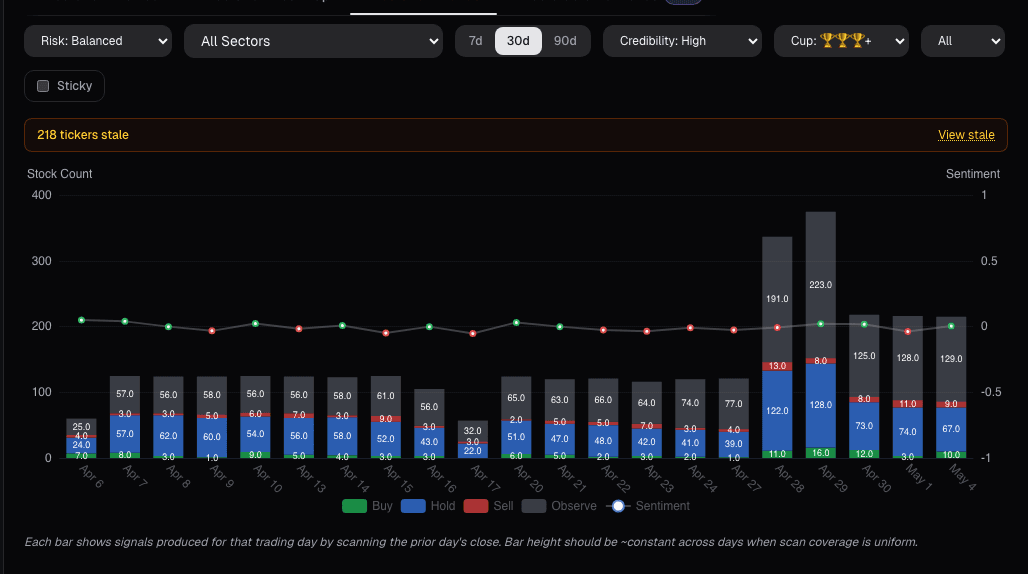
Three patterns worth acting on
Leadership change on the 3-month window signals late-stage rotation. When a sector that led on 1m underperforms on 3m, the rotation is older than it looks and you're late to the trade. Historically, chasing a sector that has led for 1 month but is fading on the 3m has negative expected return over the following 2 months, distribution is happening. The useful signal is the opposite: a sector leading on 3m that starts leading on 1m is confirming, not reversing, and continuation trades in that sector have historically worked over the following 8-12 weeks.
Breadth divergence from price leadership warns of narrow rallies. A sector making new highs on the cap-weighted index while fewer than 40% of its names are above their 50d MA is telling you the rally is concentrated in 2-5 stocks. Historically these narrow rallies resolve with the index mean-reverting rather than breadth expanding. When tech is up 8% but breadth is 35%, you're in a 3-name rally; fading the tape or rotating to broader sectors usually pays off within 6-10 weeks. Broad rallies (> 65% breadth) persist; narrow ones tend not to.
Style rotation leads regime rotation by 2-4 weeks. Growth-to-value rotations have historically preceded macro regime shifts by roughly a month. The market's sub-surface often reprices the trade before the narrative catches up. Watching the factor strip and seeing value moving from -0.5 to +0.3 on the 1-month window, while growth moves from +0.4 to -0.2, is a rotation signal you can act on before the "value is back" articles show up on financial media. The directional call is usually easier than the exact timing; being right on direction and approximately right on timing is enough.
Example: the Q1 2023 rotation
My Universe Trends snapshot from late February 2023, when I made the sector rotation:
| Sector / Factor | 1m Relative Strength | 3m Relative Strength | Breadth (% > 50d MA) |
|---|---|---|---|
| Technology | -0.4 | -1.2 | 42% |
| Communication Services | -0.3 | -0.9 | 38% |
| Energy | +1.6 | +2.1 | 71% |
| Industrials | +1.1 | +1.5 | 68% |
| Financials | +0.6 | +0.8 | 59% |
| Consumer Disc. | -0.2 | -0.5 | 45% |
| Momentum (factor) | +0.7 | +0.9 | , |
| Quality (factor) | -0.2 | -0.3 | , |
| Value (factor) | +0.4 | +0.5 | , |
The picture was: tech-and-quality fading, energy-industrials-momentum leading on both 1m and 3m, with industrial breadth at 68% (broad rally, not narrow). Rotating 30% of my quality-tech exposure into industrial-cyclical names at the tail end of February turned out to be well-timed. The continuation trade worked for another 4 months before breadth started rolling over. I didn't catch the exact top, I trimmed 70% of the industrial exposure in late June when breadth fell to 52% and 1m RS flipped negative. Over the full arc, the rotation contributed +7 points and the retained quality-tech contributed +2, roughly 3/4 of the recovery came from moving the book to where the wind was blowing rather than hoping the wind would change.
What the trends card can miss
- Single-day shocks. A 4% move in a sector on one day can distort RS readings; eyeball the chart, don't just read the number.
- Sector composition changes. GICS reclassifications occasionally shuffle names between sectors; RS is computed on the current classification, so historical sector RS can be slightly misleading at reclassification boundaries.
- Size vs. sector effects. Small-cap energy can behave very differently from large-cap energy; check the size cross-filter for important sectors.
- Correlation with macro. Energy RS is highly correlated with oil prices; the trend card shows the effect, not the cause. Pair with macro data for interpretation.
- Factor definition drift. "Quality" as Russell defines it differs from MSCI's definition; the card uses one framework throughout, but cross-source comparisons need attention.
Common mistakes
- Over-trading on 1-month-only signals. 1m RS is noisy; use 3m as the filter and 1m as the timing.
- Ignoring breadth. A sector up 6% with 30% breadth is fragile; same sector up 6% with 70% breadth is durable.
- Chasing late-stage leadership. When everyone is talking about the leading sector, the rotation is often already mid-cycle.
- Not pairing with regime. Sector trends in a trending regime behave very differently than in a correction regime.
- Letting stock-picking override allocation. Great names in weak sectors usually underperform average names in strong ones.
Where it fits
Pair Universe Trends with Universe Browser for name-level drill-down once you've identified the leading sector, Universe Heatmap for a visual snapshot of where winners and losers cluster, Universe Analytics for the cross-section correlation view, and the Regime Overview for the macro context around any rotation.
FAQ
How often does the card update?
Relative-strength series update end-of-day; breadth computes intraday.
Can I customize the benchmark?
Yes, swap SPY for any named index or a custom basket.
What smoothing is applied?
RS lines are lightly smoothed (3-day EMA) to reduce day-to-day noise; raw data is available as a toggle.
Does it handle sub-sectors well?
Yes, GICS level-3 (industry group) is available with the same RS and breadth treatment.
How should I think about the 1m vs 3m comparison?
3m is the context (is the leader persistent?); 1m is the timing (is the move still in motion?). Use both.
Related reading
Open the Universe Trends card → /app/universe
See it in the app
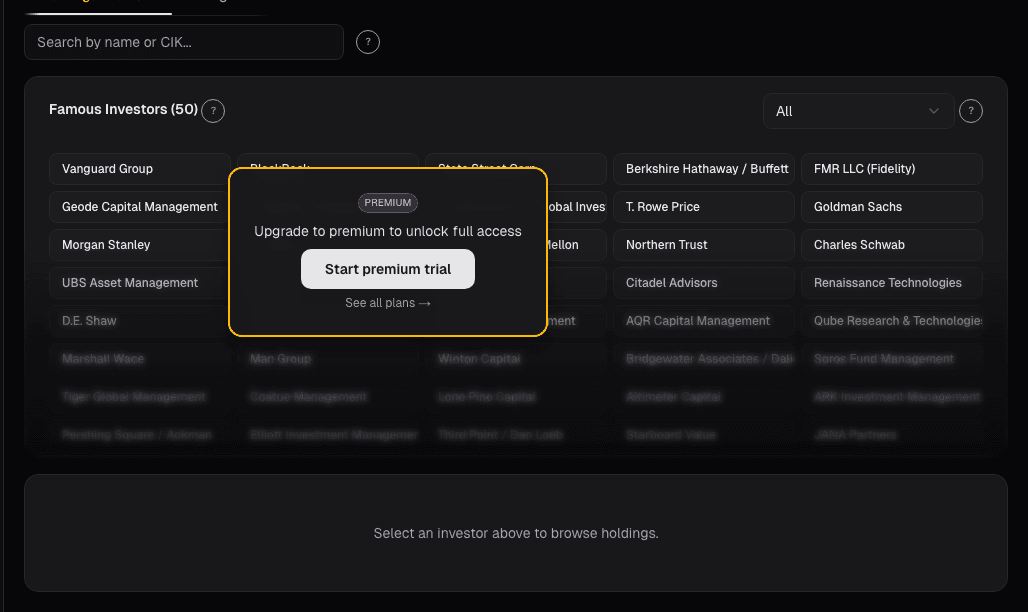
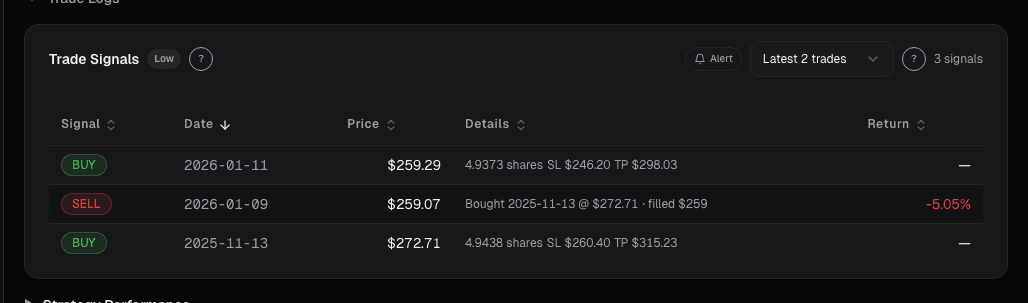
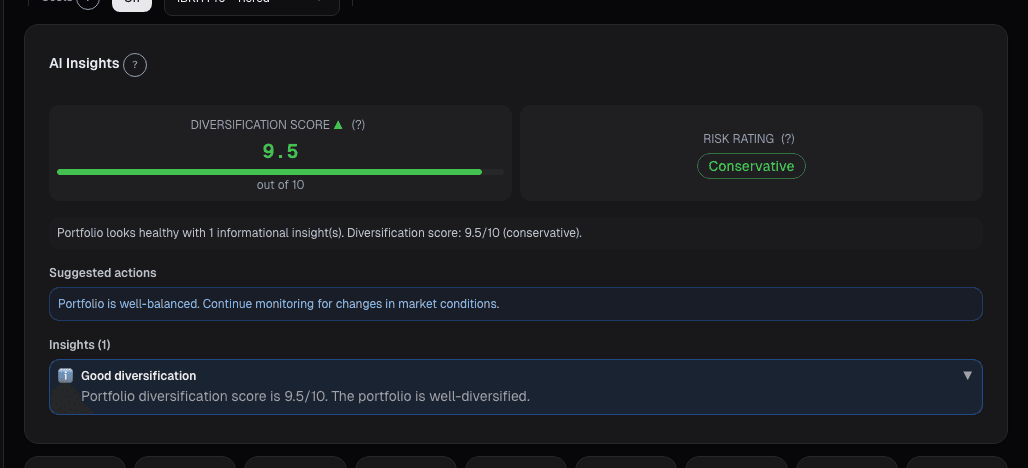
Live dashboard views that match this post. Each tile deep-links to the exact card.
Related reading
The Sector Rotation Playbook
How institutional capital rotates between sectors as the economic cycle turns, and how to track rotation signals to position ahead of the crowd.
What Is a Stock Universe and How Smart Investors Use One
How defining a stock universe sharpens your research process, reduces noise, and helps you focus on opportunities that match your strategy.
Universe Portfolios
Model portfolios show full-book behavior that name-level backtests miss. Comparing with regime-conditional Sharpe reveals tail risk that annual averages hide.
Ready to try alphactor.ai?
Validate your trading strategies with statistical credibility testing. Start free.
Get Started Free