Custom Compliance Rules: Build Guardrails for Your Portfolio
How to use Alphactor's compliance rules to enforce position limits, sector caps, and risk thresholds automatically across your portfolios.
 Marcus Chen4 min read
Why Self-Imposed Rules Beat Willpower
Every experienced investor has a story about a position that grew too large, a sector bet that became dangerously concentrated, or a drawdown that spiraled because there was no predefined exit. Discipline is the universal prescription, but discipline is a finite resource. On a bad day, in a fast-moving market, good intentions evaporate.
Compliance rules automate the discipline. Instead of relying on yourself to remember that your portfolio should never have more than 25% in a single sector, you define that rule once and the platform enforces it. Alphactor's compliance rules engine lets you build custom guardrails that flag or block trades and allocations that violate your own rules.
What You Can Define
The compliance rules engine supports several categories of constraints. Each rule is defined with a clear condition and a response: warn, block, or log.
Position size limits. Set a maximum percentage of your portfolio that any single holding can represent. A common rule is "no single position above 10% of portfolio value." If a stock appreciation or a new purchase would push a holding beyond this threshold, the platform flags the violation before you confirm the trade.
Sector concentration caps. Define the maximum exposure to any one sector. If you set a 30% sector cap and your technology holdings already represent 28%, adding another tech stock triggers a warning. This prevents the gradual drift that turns a diversified portfolio into a concentrated sector bet.
Minimum diversification. Set a minimum number of holdings or a minimum number of sectors represented. This catches the opposite problem: a portfolio that has been trimmed down to three high-conviction positions without a deliberate decision to concentrate.
Drawdown thresholds. Define a maximum acceptable portfolio drawdown. When the simulation or live tracking shows your portfolio approaching this threshold, the compliance engine flags it. This is particularly useful when combined with stop-loss rules on individual positions.
Risk metric bounds. Set constraints on portfolio-level metrics like Value at Risk or Sharpe ratio. If a proposed allocation would push your portfolio VaR beyond your defined comfort zone, the rule catches it during the simulation phase, before real capital is at risk.
Setting Up Rules in Practice
Here is a walkthrough for building a basic compliance framework on Alphactor.
Step 1: Define your investment policy. Before touching the platform, write down your rules in plain language. "No position above 8% of portfolio. No sector above 30%. Minimum 10 holdings. Maximum portfolio drawdown of 20%." This is your investment policy statement, adapted for a rules engine.
Step 2: Create the rules on Alphactor. In the portfolio settings, add each rule with its condition and threshold. Choose whether violations should generate a warning or block the action entirely.
Step 3: Run a compliance check. The engine evaluates every holding against your rules and produces a report. Green means compliant. Yellow means approaching a threshold. Red means in violation.
Step 4: Integrate with your workflow. Once rules are active, they apply to new trades and allocation changes. The compliance engine evaluates proposed changes against your rules before they take effect, catching drift in real time rather than in a quarterly review.
Before and After Compliance Rules
Before rules: You start with a well-diversified 15-stock portfolio. Over six months, three tech positions appreciate significantly. You add another tech name. Technology reaches 48% of your portfolio. A sector correction hits, and your portfolio drops 22%.
After rules: The same scenario begins. When you attempt to add the fourth tech stock, the compliance engine flags that the trade would push technology to 38%, above your 30% sector cap. You trim an existing position first. The correction still hits, but your portfolio drops 14% instead of 22%.
The rules did not predict the correction. They enforced the discipline you defined when you were thinking clearly.
Rules for Different Investor Types
Conservative income investors might set tight position limits (5%), low sector caps (20%), and strict drawdown thresholds (10%). The priority is capital preservation and steady income, so the rules keep the portfolio boring by design.
Growth-oriented traders might allow larger individual positions (15%) but set hard stop-loss rules on every holding. They accept concentration in exchange for higher potential returns, but define clear exits to limit downside.
Institutional or fund-style managers can mirror their fund mandate in the rules engine. If the mandate requires minimum 20 holdings, maximum 5% per position, and no more than two positions in any single industry, those constraints become enforceable rules rather than guidelines that drift over time.
The Relationship Between Compliance and Stress Testing
Compliance rules and stress testing work best together. Run a stress testing simulation first to understand your current risk profile. Use the results to set informed compliance thresholds. If the stress test shows your maximum drawdown under a 2008 scenario is 30% and you are not comfortable with that, set a drawdown compliance rule at 25% and adjust your portfolio until it passes.
This creates a feedback loop: stress test reveals risk, compliance rules enforce limits, portfolio adjustments bring risk within bounds, and the next stress test confirms the improvement.
See it in the app
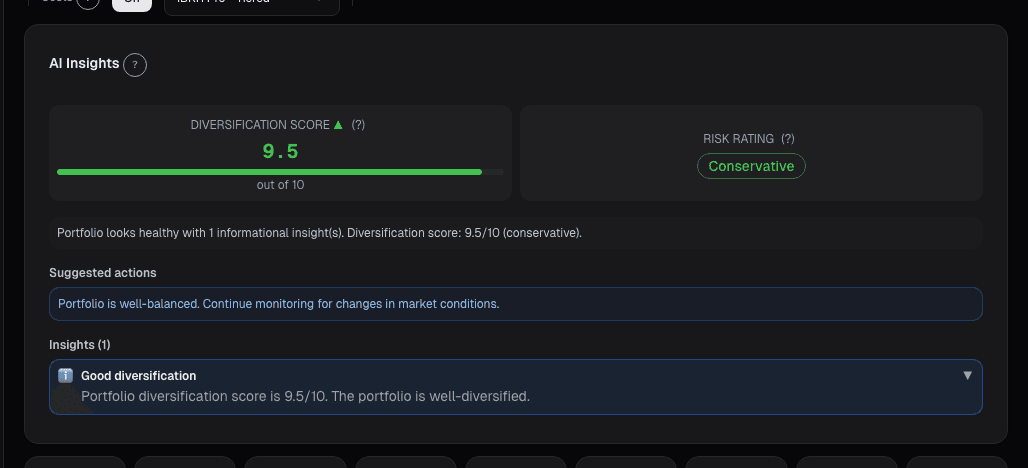
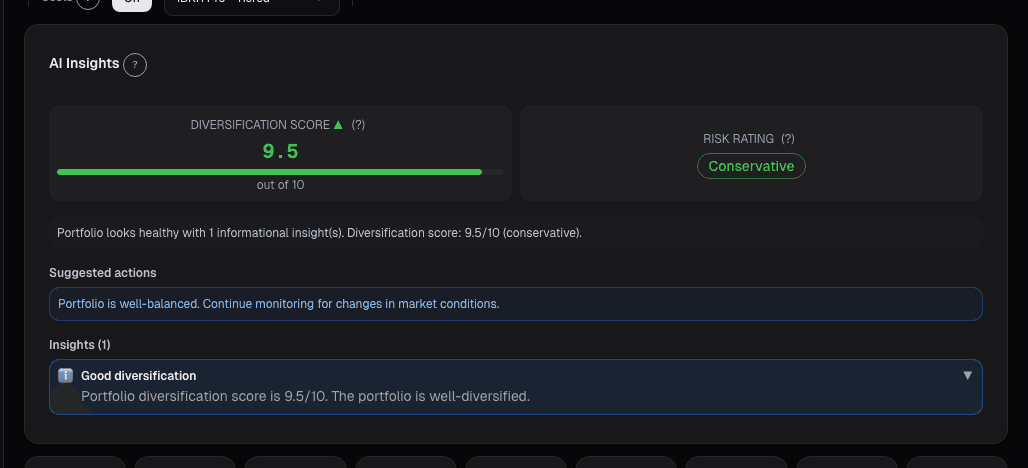
Live dashboard views that match this post. Each tile deep-links to the exact card.
Related reading
The AI Copilot: Ask Your Portfolio a Question
How Alphactor's AI Copilot turns natural language questions into data-driven portfolio insights, grounded in your actual holdings and market data.
Alt-Data Sentiment at the Portfolio Level
Per-ticker alt-data breaks down past 10 positions. A roll-up of WSB, news, MSPR, and options lets a 90-second scan replace 100 minutes of manual checking.
Portfolio Attribution: Where Your Returns Actually Come From
Beating the benchmark by 400bps feels good until attribution tells you it was all allocation luck on one sector call. Selection vs. allocation vs.
Portfolio Audit Trail: Every Decision
Regulated managers need an audit trail. The Audit Trail card on alphactor.ai records every trade, rebalance, alert, and note into one timestamped log you…
Stress Testing Your Portfolio
How to use Alphactor's portfolio stress testing to simulate historical crashes, measure VaR, and understand your real downside risk.
Ready to try alphactor.ai?
Validate your trading strategies with statistical credibility testing. Start free.
Get Started Free