Part of: Risk Management
GEV on the Yahoo Trending List Tells You One Thing. ATR Tells You Everything Else.
GE Vernova's trending rank signals attention, not edge. Realized volatility and sector regime do the actual work of sizing a GEV position safely.
 Marcus Chen7 min read
Imagine you open Yahoo Finance at 9:45 on a Tuesday and GE Vernova is sitting in the top five trending tickers. Your instinct, and it's not irrational, is to treat that ranking as a signal to do something. Watch the tape. Check the chart. Size up. The trending list feels like the market waving a flag.
It isn't. Not on its own.
TL;DR
- Yahoo trending rank measures search and click volume, not institutional order flow.
- High trending rank for GEV most often reflects media coverage of the energy-transition story, not a near-term price catalyst.
- Realized volatility, specifically the Average True Range as a normalized daily range, is the number that should drive your position size.
- GEV operates in a sector (power equipment / grid infrastructure) with cyclical vol expansion: ATR can double when energy policy headlines arrive.
- Trending rank is a starting line for research, not a trade signal by itself.
What the Trending List Actually Measures
Yahoo's trending list aggregates search-and-quote page activity across its finance properties. When GEV appears there, it means retail investors are looking at GEV pages in higher-than-usual volume. That's genuinely interesting data. It suggests attention is broadening.
But attention and edge are different things. A stock that trends because a prominent investor mentioned it on a podcast now has more eyeballs on it. It does not necessarily have more information about it. The ticker is trending because of the mention, not because anyone discovered new fundamental value. The price may have already moved to reflect the attention before you saw the trending list.
There's a pattern in the academic literature on retail attention metrics: stocks that spike in retail search volume tend to experience short-term price pressure in the direction of attention, but then fade, in roughly 40–60% of cases within five to ten sessions, depending on market regime and whether the attention was fundamental or speculative. That's too wide a range to trade on attention alone.
Why GEV's Sector Makes This Especially Tricky
GE Vernova spun out of General Electric in April 2024 as a standalone power and grid equipment company. Its business spans gas turbines, wind turbines, and electrical grid infrastructure, all sectors sitting at the intersection of energy policy, interest rates, and capex cycles. That combination makes GEV's stock sensitive to a wider-than-average range of macro inputs.
When Congress debates infrastructure spending, GEV trends. When the Fed signals higher-for-longer rates, utility and energy-transition stocks re-rate, and GEV trends. When a competitor announces turbine delivery delays, GEV trends in sympathy. None of these necessarily represent a tradeable edge unless you have a view on the specific catalyst that triggered the attention.
This means GEV's trending rank is particularly noisy as a stand-alone signal. It's a large-cap energy-transition name. It *will* trend frequently because the underlying policy debate is ongoing and retail interest in the energy-transition theme is structurally elevated. Trending rank is nearly always elevated relative to comparable industrial names. It's almost baseline.
The Number That Actually Matters: ATR
The Average True Range is the best single measure of what a "normal day" looks like for a given stock. For GEV, the 14-day ATR captures daily range including overnight gaps, which are especially relevant for a stock that reacts to energy policy headlines that often drop outside market hours.
Here's the practical application, drawing on the framework from our ATR position-sizing guide: if your total risk per trade is fixed at 1% of portfolio value, and your stop is set at 2× ATR from entry, then position size falls out of the arithmetic. You're not guessing. You're not extrapolating from the trending list. You're letting the stock's own volatility structure tell you how big to be.
Where GEV gets interesting is that its ATR isn't stable. Power equipment names, especially ones with meaningful wind-energy exposure, can see ATR expand sharply when policy headlines dominate. Imagine GEV's 14-day ATR sitting at a comfortable level in a quiet week, then doubling within a few sessions when an energy bill amendment hits the tape. If you sized your position when ATR was compressed, your stop distance is now dramatically wrong relative to current volatility.
The fix is to check ATR *at entry*, not when you first noticed the stock on the trending list. Trending rank may have caught your attention three days ago. ATR may have changed substantially since then.
The Counter-Argument: Doesn't Attention Create Momentum?
Fair point. There's real evidence that social and search attention can drive short-term price momentum, the retail-attention effect is documented in the literature. If enough people look at GEV because it's trending, some of them buy. Buying pressure creates upward price movement. If you're early in the attention cycle, you could capture that move.
I don't entirely dismiss this. But a few things make it less reliable for GEV specifically. First, GEV is not a small-cap name where a surge in retail attention is a large fraction of daily volume. It's a multi-billion-dollar company traded by institutions. Retail attention bends the tape less at this market cap. Second, the energy-transition sector is already heavily analyzed by dedicated sector funds. Information diffusion is faster. The edge from being an early retail-attention trader is thinner.
Third, and this is the regime problem, attention momentum works differently in risk-on versus risk-off markets. In a macro risk-off environment (rising rates, tightening financial conditions), even genuine fundamental news in the energy-transition sector can get overwhelmed by sector-wide de-rating. Attention-momentum strategies tend to fail hardest when macro is working against the sector. GEV has significant interest-rate sensitivity because infrastructure capital spending is discounted-cash-flow sensitive. You can be right about attention and still get hurt by regime.
Constructing the Position: A Volatility-First Approach
So what do you actually do when GEV is on the trending list and you have a view?
Start with regime. Is the macro backdrop favorable for capital-intensive industrials? Rate expectations rising or falling? Energy capex cycle expanding? If sector conditions are adverse, the bar for a position should be higher regardless of trending rank. The macro regime dashboard is where I check this in 30 seconds, rate trajectory, sector breadth, and risk-on/risk-off tilt stacked together, rather than piecing it together across three news sites.
Then check ATR. What's the 14-day ATR today, not when you first noticed the stock? The GEV chart view has the 14-day ATR and volatility bands plotted directly on the price, so you're sizing off the current number rather than one you remember from last week. Set your stop at 2× ATR and calculate the position size that risks no more than 1% of portfolio at that stop. If ATR has already expanded because GEV's been volatile recently, your position will be smaller, which is the right answer, not a problem to override.
Only then does trending rank become useful, as a timing nudge, not a sizing input. A trending-list appearance can suggest that price discovery may be more active than usual. That's a reason to be attentive, not a reason to be large.
FAQ
Does GEV trending on Yahoo actually predict a price move?
Sometimes, but the hit rate is low enough that you shouldn't size a position based on it. Trending rank most often reflects coverage volume, not pre-trade order flow. The price move, if it happens, may already be baked in by the time you see the ranking.
What ATR multiple is appropriate for a power-equipment name like GEV?
Most swing traders use 1.5–2× ATR for stops. For a sector-sensitive name like GEV that can gap on policy headlines, 2× gives you more room to survive normal noise. If you're trading shorter-term (intraday to 2-day holds), 1.5× is workable but requires tighter position sizing to compensate.
How does sector regime affect GEV's volatility?
When interest-rate expectations shift sharply or energy-policy uncertainty rises, GEV's realized volatility tends to expand beyond its normal range. ATR will reflect this if you're checking it in real time. The practical implication: in high-macro-uncertainty environments, your GEV position should be smaller than your base ATR calculation suggests, because the model assumes forward volatility is similar to trailing volatility, which isn't always true.
Should I pay attention to GEV's institutional ownership context when it trends?
Yes, but separately from the trending signal. Institutional positioning tells you something about who else holds the stock and at what levels. A heavily shorted name that trends can set up a squeeze scenario that's different from a widely-held stock attracting incremental retail attention. These are different setups requiring different sizing logic.
Is ATR-based sizing still valid if I'm trading GEV options rather than shares?
The logic applies, but the mechanism differs. For options, you'd use ATR to estimate expected move and gauge whether the option's implied move is cheap or expensive relative to realized volatility. You're still using ATR as a volatility anchor; you're just expressing the position through a different instrument.
Related posts
See it in the app
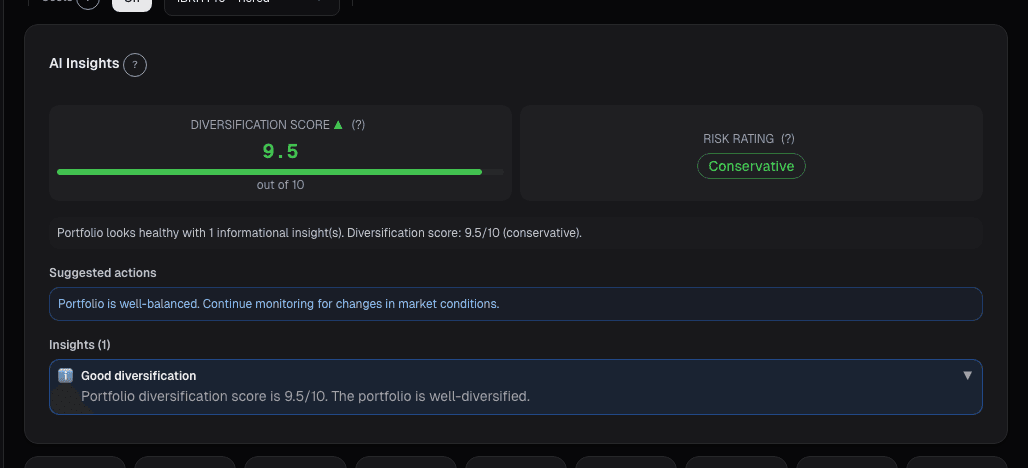
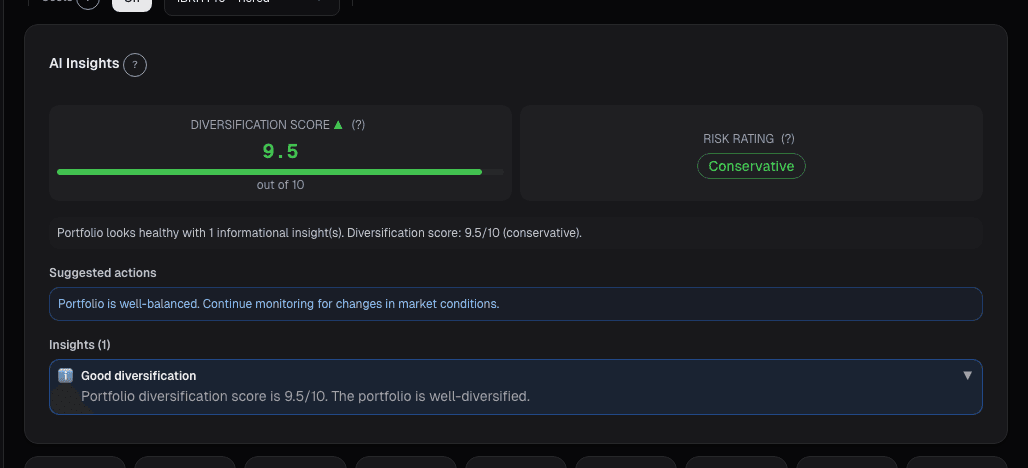
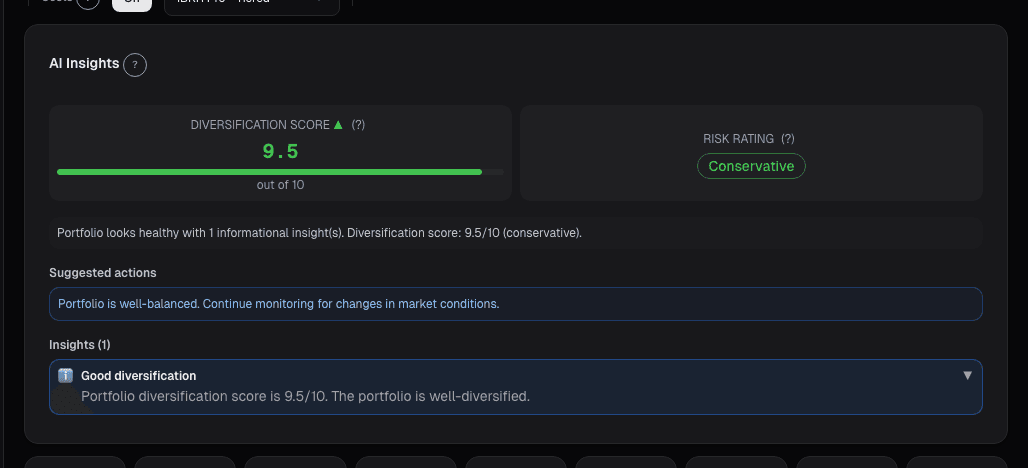
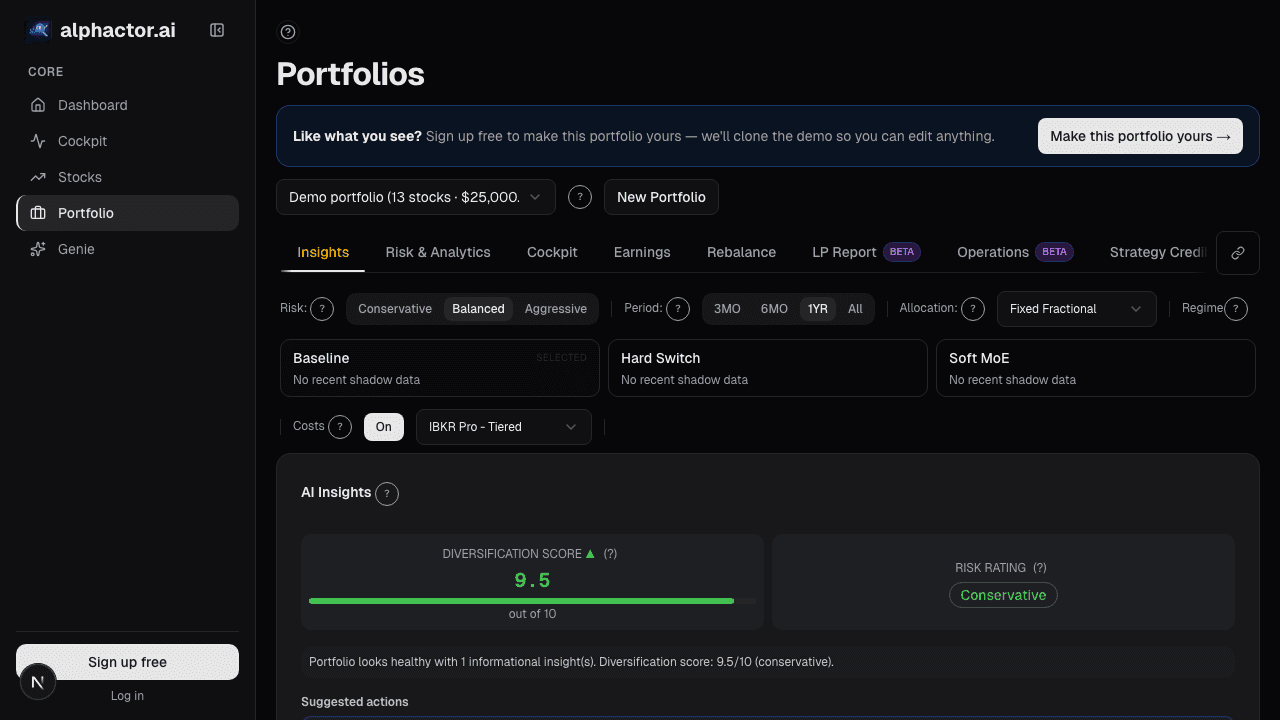
Live dashboard views that match this post. Each tile deep-links to the exact card.
Stocks mentioned
Ready to try alphactor.ai?
Validate your trading strategies with statistical credibility testing. Start free.
Get Started Free