Altman Z-Score
A 5-factor model that estimates the probability of bankruptcy within two years.
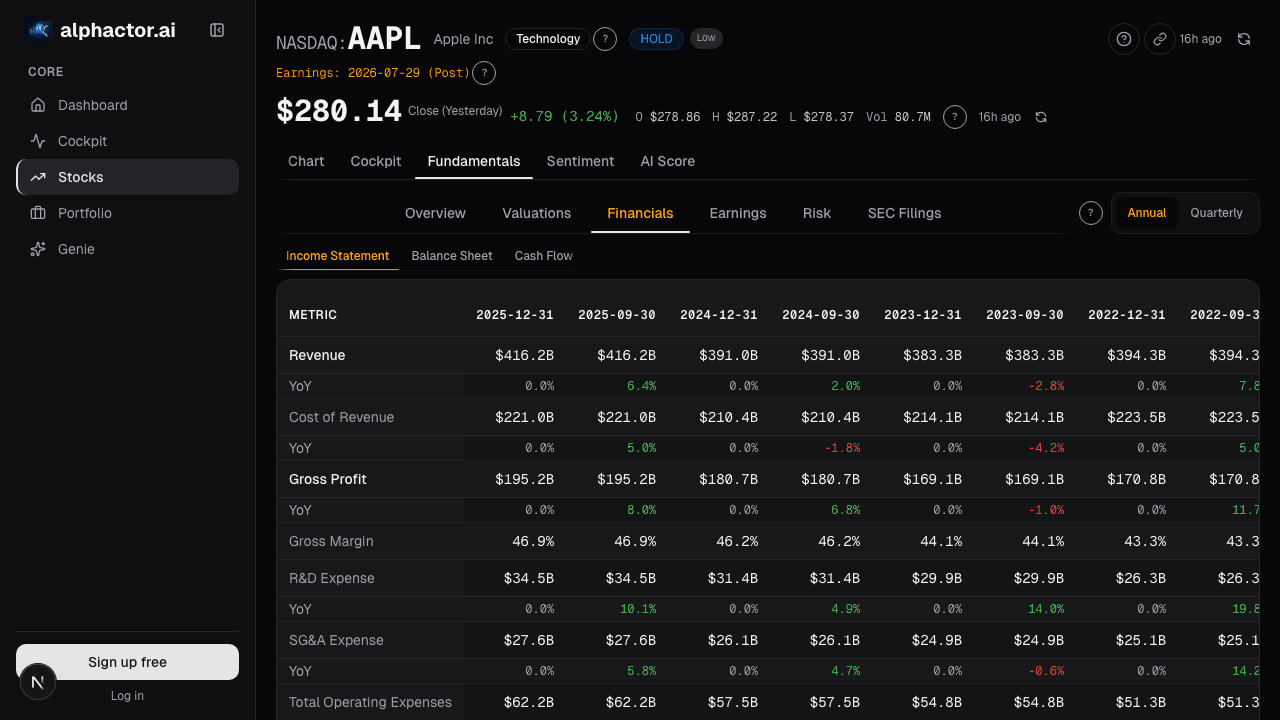
Edward Altman's Z-score combines five ratios weighted from discriminant analysis of healthy vs. distressed firms:
`Z = 1.2 × (WC/TA) + 1.4 × (RE/TA) + 3.3 × (EBIT/TA) + 0.6 × (MV equity/TL) + 1.0 × (Sales/TA)`
Zones. Z > 2.99 = safe · 1.81 < Z < 2.99 = grey zone · Z < 1.81 = distress. Altman Z' and Z'' variants exist for private and non-manufacturing companies respectively.
Why it matters. On average, firms in the distress zone default within two years at dramatically higher rates than safe-zone firms. It is not a price-return model, it is a *risk-of-ruin* filter. Combine it with a quality score (Piotroski F) and a valuation anchor (DCF, EPV) for a full "can this business survive, is it improving, and what is it worth?" stack.
Pitfalls. Real-estate and financial firms behave oddly because of leverage structure; use Z'' for them. Rapidly re-rated growth companies can have low Z despite being healthy, because `MV/TL` is not yet robust.
See it applied
Related reading
- Portfolio Earnings: Calendar, Exposure
Earnings risk is about the whole book into the week, not each position. When 40% of NAV reports in one week, and 60% of that is in a single sector, you're…
- Factor Exposure
Factor exposures are bets whether or not you chose them. Decomposition surfaces unintentional tilts before a rotation exposes them as underperformance.
- FX Exposure: The Currency Risk Hiding in Your USD Portfolio
You bought US stocks in dollars, so you have no FX risk, right? Wrong. US large-cap multinationals earn 40-60% of revenue abroad.