Concentrated vs Diversified: The Portfolio Sizing Debate
The tradeoffs between concentrated and diversified portfolios, with practical guidance on how many stocks you actually need.
 Marcus Chen4 min read
Two Schools of Thought
Warren Buffett says concentration builds wealth. Harry Markowitz says diversification protects it. Both are right, and the tension between these ideas is one of the most important decisions you will make as an investor.
A concentrated portfolio holds 8-15 positions, with significant capital behind each one. A diversified portfolio holds 25-50 or more, spreading risk broadly. Neither approach is universally correct. The right answer depends on your skill, temperament, time horizon, and how much of your net worth is in the portfolio.
The Case for Concentration
Concentration works when you have a genuine informational or analytical edge. If you have spent three months researching a company, understand its business better than the consensus, and have identified a catalyst the market has not priced in, putting 8% of your portfolio into that stock makes sense. Spreading the same capital across 40 positions you barely understand does not.
The math supports this selectively. A 40-stock portfolio where each position is 2.5% needs a holding to double just to add 2.5% to total portfolio return. A 10-stock portfolio where each position is 10% gets a full 10% boost from the same double. Your best ideas contribute meaningfully when they are sized meaningfully.
Professional investors who consistently outperform tend to run concentrated portfolios. Studies of top-performing mutual funds show that their best ideas, the top 10 holdings, outperform their remaining holdings and the market. The long tail of small positions they add for diversification actually drags down performance.
The Case for Diversification
Diversification works when your edge is uncertain, which is most of the time for most people. Even professional stock pickers are right only about 55% of the time. If your hit rate is 55% and you hold 10 stocks, a bad streak can destroy a year of performance. If you hold 30 stocks, the law of large numbers works in your favor.
The research on this is clear. A portfolio needs at least 20-25 uncorrelated positions to eliminate most stock-specific (idiosyncratic) risk. Below that threshold, you are taking risk the market does not compensate you for. Above 40-50 positions, additional diversification has negligible impact on risk reduction.
There is also a psychological dimension. A concentrated portfolio demands high conviction and the emotional resilience to watch a large position decline 30% without panic selling. Many investors overestimate their ability to handle this. If a concentrated loss causes you to abandon your strategy, the concentration failed regardless of the underlying thesis quality.
The Right Size for Your Situation
Rather than choosing a camp, consider a framework based on your circumstances.
10-15 positions: Appropriate if you are a dedicated stock analyst who spends significant time on research, have an informational edge in specific sectors, and have a multi-year time horizon. You should be comfortable with individual positions moving 5%+ in a single day without changing your behavior.
20-30 positions: The sweet spot for most active individual investors. You get meaningful exposure to your best ideas (3-5% each) while reducing the impact of any single mistake. You can maintain research coverage on this many names without it becoming a second job.
30-50 positions: Appropriate if your goal is broad market participation with mild active tilts, or if this portfolio represents the majority of your liquid net worth. Each position at 2-3% limits damage from any single failure.
The Barbell Approach
A practical middle ground is the barbell strategy: concentrate your high-conviction bets and diversify around them.
Allocate 40-50% of the portfolio to your top 5-7 highest-conviction ideas, sized at 6-8% each. These are positions where you have done deep work, have an identified edge, and are prepared to hold through volatility.
Allocate the remaining 50-60% across 15-20 positions sized at 2-3% each. These provide diversification, sector exposure, and optionality. They do not need to be your best ideas; they need to be positions where the risk-reward is acceptable.
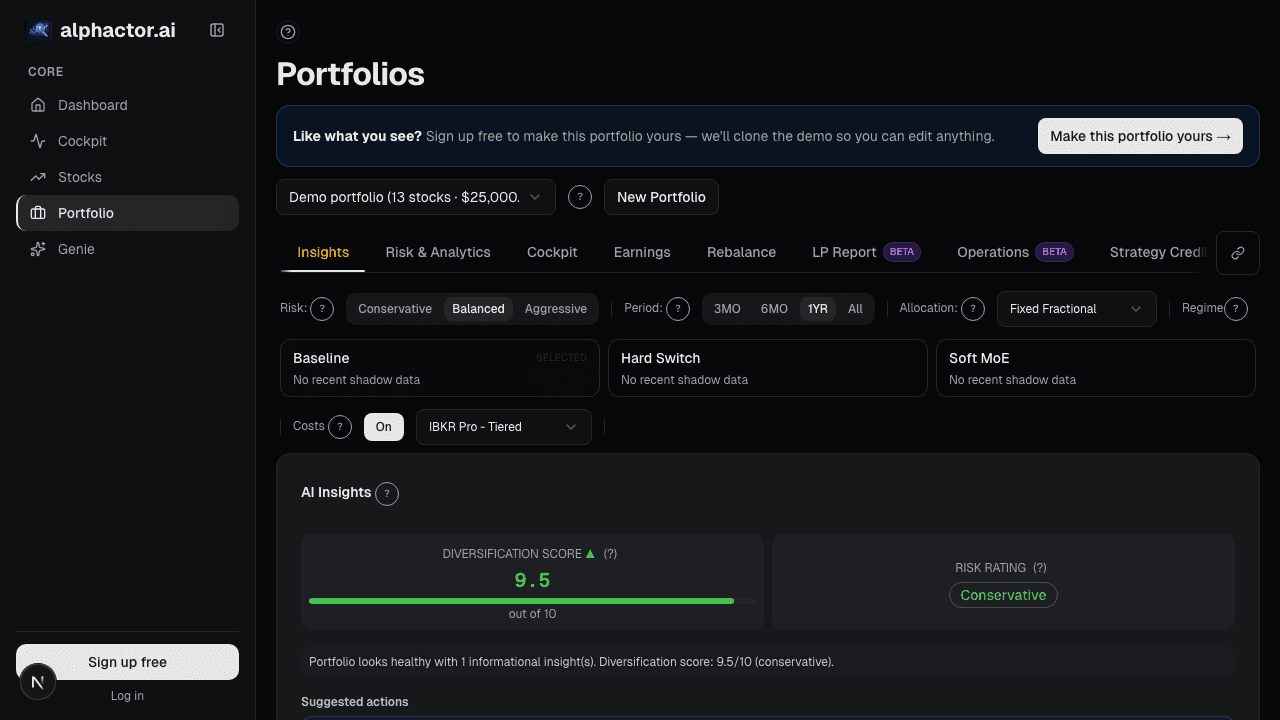
This approach gives your best ideas room to drive returns while the diversified tail provides stability. Alphactor's portfolio dashboard risk scoring helps identify which positions deserve the concentrated core versus the diversified tail by quantifying the risk profile of each holding relative to the overall portfolio.
What Matters More Than Count
The number of positions gets too much attention. What matters more is effective diversification, which depends on three things:
Correlation. Twenty stocks with low pairwise correlation provide more diversification than 40 stocks from the same sector. Measure it, do not assume it.
Position sizing discipline. A 30-stock portfolio where one position is 20% and the rest split 2.7% each is effectively a concentrated portfolio in disguise. Equal-weight or risk-weighted approaches ensure your diversification is real.
Rebalancing commitment. Diversification erodes over time as winners grow and losers shrink. Without periodic rebalancing, a diversified portfolio naturally concentrates itself.
The Honest Answer
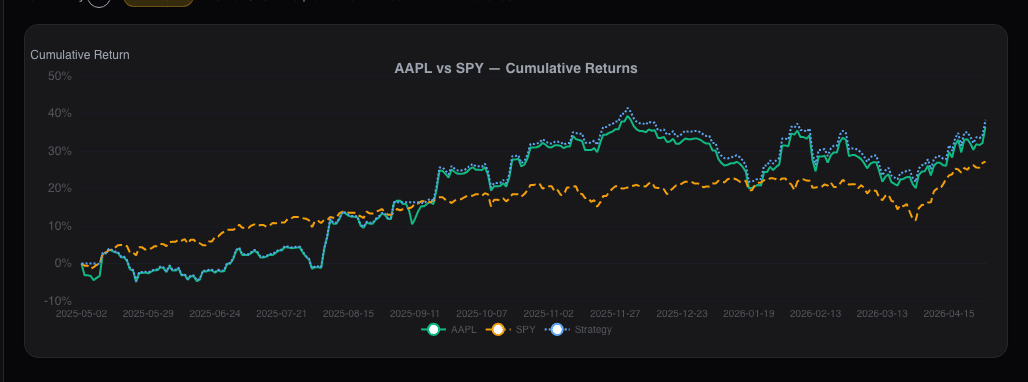
If you are reading this article, you are probably not Warren Buffett. That is not an insult. It means the optimal portfolio for you likely holds 20-30 positions with disciplined sizing, regular rebalancing, and correlation awareness. Start there, and use a tool like Alphactor's Alphactor backtesting to test your sizing assumptions against historical data. If your track record over three to five years demonstrates consistent stock-picking skill, gradually increase concentration. Let results, not confidence, drive the decision.
See it in the app
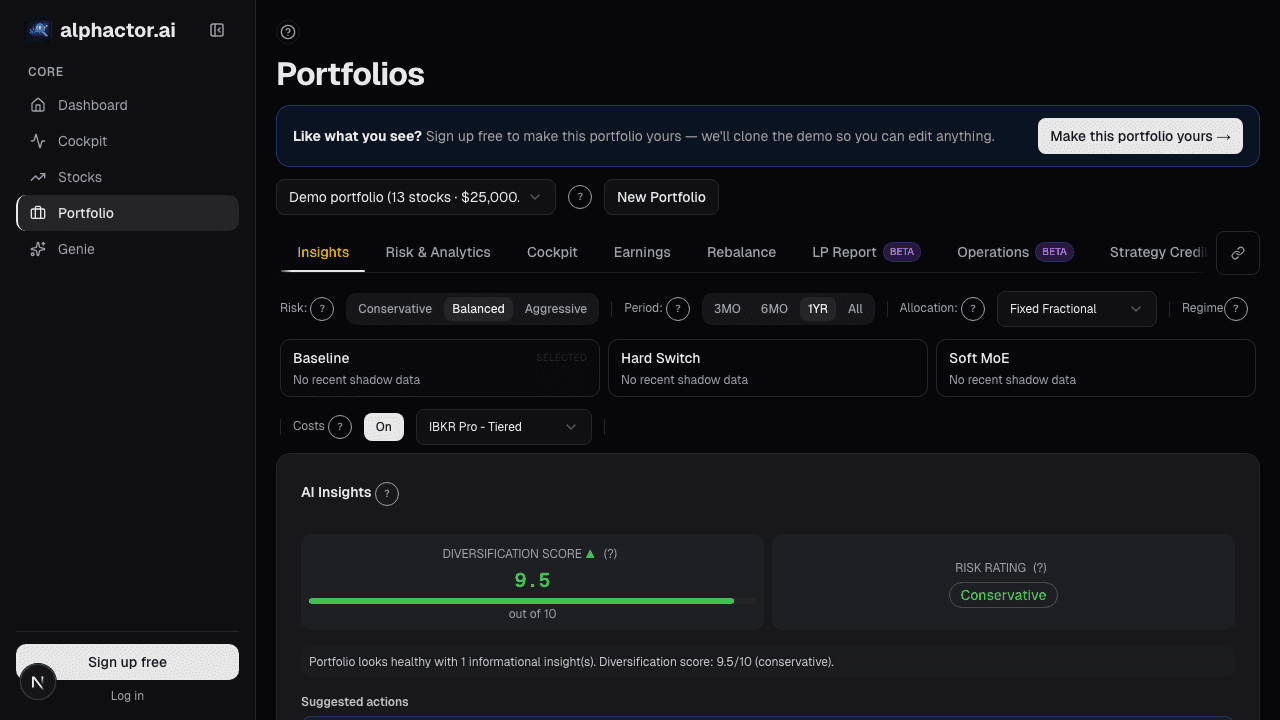
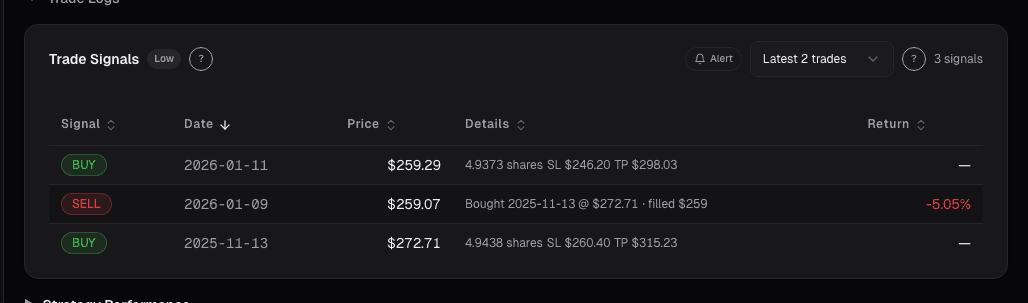
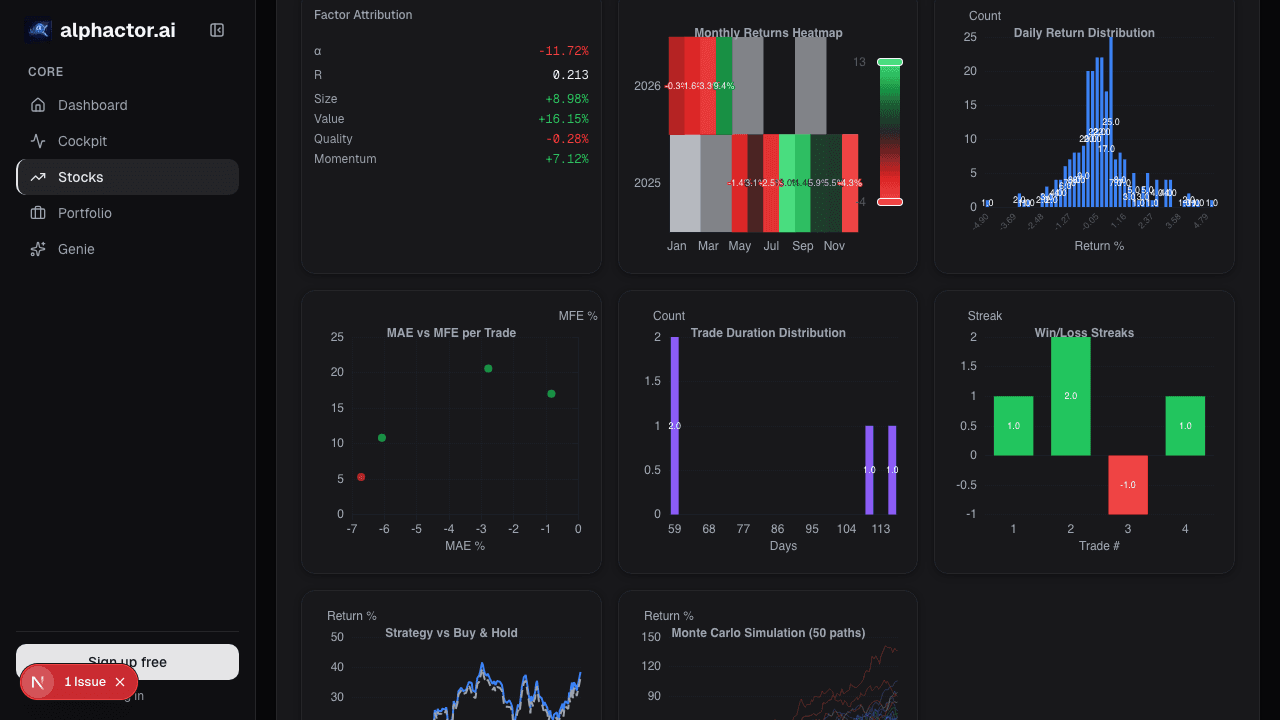
Live dashboard views that match this post. Each tile deep-links to the exact card.

Stocks mentioned
Related reading
Choosing the Right Benchmark (Hint
Why benchmarking against the wrong index distorts your performance assessment and how to select a benchmark that matches your actual portfolio.
Correlation: The Number Behind Real Diversification
How correlation coefficients reveal whether your portfolio is truly diversified or just a collection of stocks that move in lockstep.
Alt-Data Sentiment at the Portfolio Level
Per-ticker alt-data breaks down past 10 positions. A roll-up of WSB, news, MSPR, and options lets a 90-second scan replace 100 minutes of manual checking.
Portfolio Attribution: Where Your Returns Actually Come From
Beating the benchmark by 400bps feels good until attribution tells you it was all allocation luck on one sector call. Selection vs. allocation vs.
Portfolio Audit Trail: Every Decision
Regulated managers need an audit trail. The Audit Trail card on alphactor.ai records every trade, rebalance, alert, and note into one timestamped log you…
Ready to try alphactor.ai?
Validate your trading strategies with statistical credibility testing. Start free.
Get Started Free