Part of: Risk Management
Half-Kelly Position Sizing
Half-Kelly gives about three-quarters of full Kelly growth while cutting drawdown by roughly 50%, making a theoretically optimal bet practically executable.
 Marcus Chen4 min read
What Kelly Actually Says
The Kelly criterion is a closed-form answer to one question: given an edge, how much of your bankroll should you bet to maximize long-run compound growth? For binary bets with win probability *p*, loss probability *q = 1 - p*, win-loss ratio *b*, the formula is:
`f* = (p × b - q) / b`
Bet that fraction on each opportunity and you maximize the geometric mean of your returns. Bet more and you overshoot, the variance eats your compound growth. Bet less and you grow slower than you could.
The math is airtight. The problem is what happens when you follow it.
Why Full Kelly Feels Like Ruin
A full-Kelly bet maximizes the expected log return of your bankroll. It does *not* minimize the pain. In practice, full Kelly produces drawdowns that look catastrophic on the way to being mathematically optimal. A standard result: full Kelly endures roughly 50% drawdowns with high probability over a long trading career.
Very few traders can hold a position through a 50% drawdown without tampering. They cut the stop. They reduce size mid-trade. They abandon the strategy at the worst possible moment. The theoretical optimum assumes you execute every bet the same way forever. Humans do not do that.
The second problem is that Kelly is brutally sensitive to your estimate of *p* and *b*. Overstate your win rate by 5 percentage points and full Kelly can go to the wrong side of the optimum, you are now overbetting, and variance drag turns your "optimal" bet into a slow bleed. Real backtests always overestimate edge, because they are fit to the data they are scored on. So the honest Kelly fraction is smaller than the math tells you.
Why We Use Half-Kelly
Half-Kelly is what the name says: take Kelly's answer and cut it in half. You keep about three-quarters of the long-run growth rate, and you reduce maximum drawdown by roughly 50%. That trade, give up 25% of growth, remove half the pain, is almost always worth taking.
In Alphactor's position-sizing engine, every backtested strategy with a valid win-rate and payout profile gets a Kelly fraction computed, then clamped to the `[0, 0.5]` range. The implementation looks like:
p = wins / total_trades
q = 1 - p
b = avg_win / avg_loss
kelly = (p * b - q) / b
half_kelly = max(0, min(0.5, kelly * 0.5))
The clamps are not cosmetic. The lower bound prevents a negative Kelly (a losing strategy) from shorting itself into the sizing logic. The upper bound caps any single position at 50% of allocated capital, full-Kelly or fractional, we never let one name exceed half the sleeve.
The Fallback Matters
If a ticker has no usable trade history, a new listing, a strategy with fewer than 20 closed trades, a profile mismatch, Kelly is not computable. The fallback is equal weight: `1 / n` across the basket. That is deliberately conservative. An equal-weight basket beats a Kelly-sized basket whose Kelly inputs were hallucinated.
You will see this on the portfolio construction panel. When a ticker shows equal-weight sizing instead of Kelly, it means the backtest engine does not trust the win-rate estimate enough to size differently. That is a feature, not a bug.
What Half-Kelly Does in Your Portfolio
Three things change when half-Kelly sizing is on:
High-conviction winners get more capital. A strategy with 60% win rate and 1.5:1 payout has a Kelly of roughly 33%. Half-Kelly is 16.5%, large, but not all-in. A strategy with 52% win rate and 1.1:1 payout has a Kelly of roughly 9%. Half-Kelly is 4.5%, meaningful, not dominant.
Low-conviction strategies stay small or drop out. A strategy with 48% win rate loses money on average. Kelly is negative. Half-Kelly clamps to zero. The strategy does not get capital until it earns it out-of-sample.
Position sizes rebalance as edges change. When walk-forward validation shows a strategy's win rate drifting down, its Kelly fraction shrinks the next time the sizer runs. This is automatic and does not require you to intervene, the position just gets smaller over the next few rebalances.
When Not to Use Kelly
There are three cases where Kelly sizing hurts:
Very small sample sizes. A strategy with eight trades does not have a meaningful win rate. Kelly on that number is a coin flip dressed as precision. Use equal weight until sample size earns the estimate.
Highly correlated positions. Kelly assumes your bets are independent. A basket of ten tech momentum names is one bet, not ten. Naive Kelly will give each name the same aggressive sizing and leave you with a 60% sector bet you did not intend. This is why the portfolio engine applies a correlation shrinkage step after Kelly, positions that move together get their combined Kelly share split among them, not compounded.
Regime shifts. A strategy's edge is conditional on the market regime that fit it. When the regime changes, the historical win rate overstates forward edge. The regime-aware selector is our defense, an expert that does not fit the current regime gets down-weighted, and its Kelly allocation shrinks before you lose money to a stale estimate.
What to Do Today
Open the Portfolio Strategy tab, pick a stock with a live backtest, and look for the Kelly section under position sizing. You will see the raw Kelly fraction, the half-Kelly we actually use, and either the full-Kelly or equal-weight fallback if sample size is too thin. If your portfolio is currently sized by hand, try toggling to half-Kelly sizing and re-running the backtest, the compound growth and drawdown numbers will move, and the direction tells you whether your manual sizing was over- or underbetting.
Full Kelly is the math. Half-Kelly is the math you can live with.
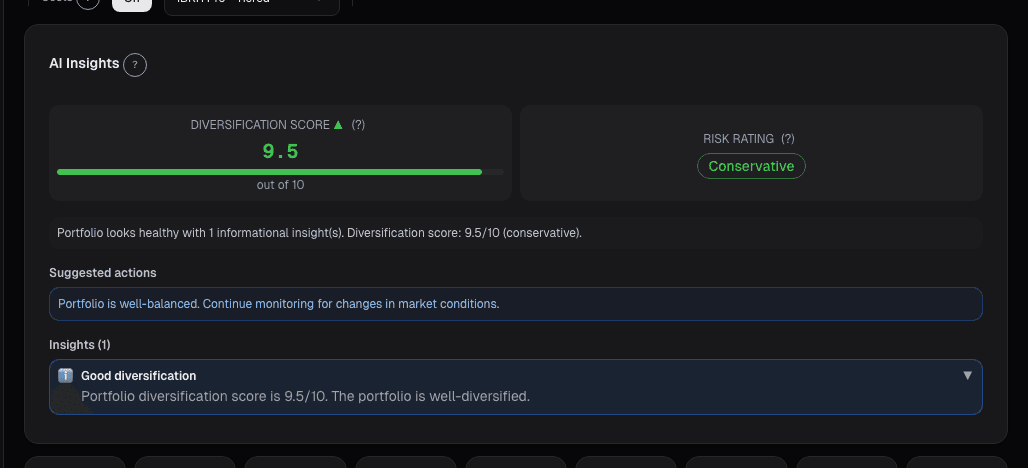
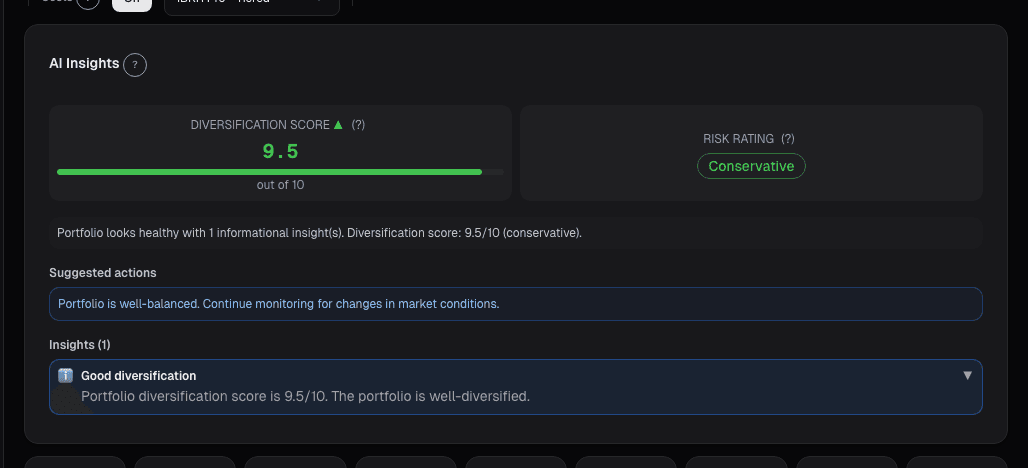
See it in the app
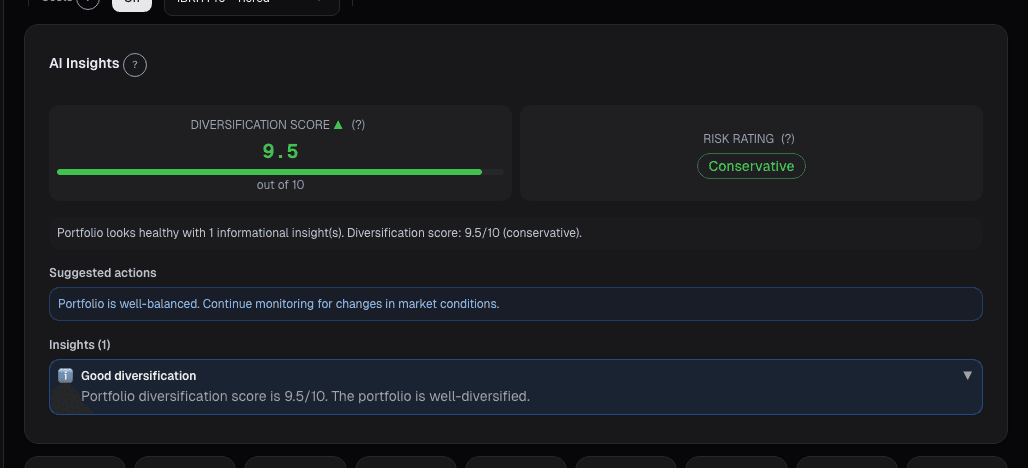
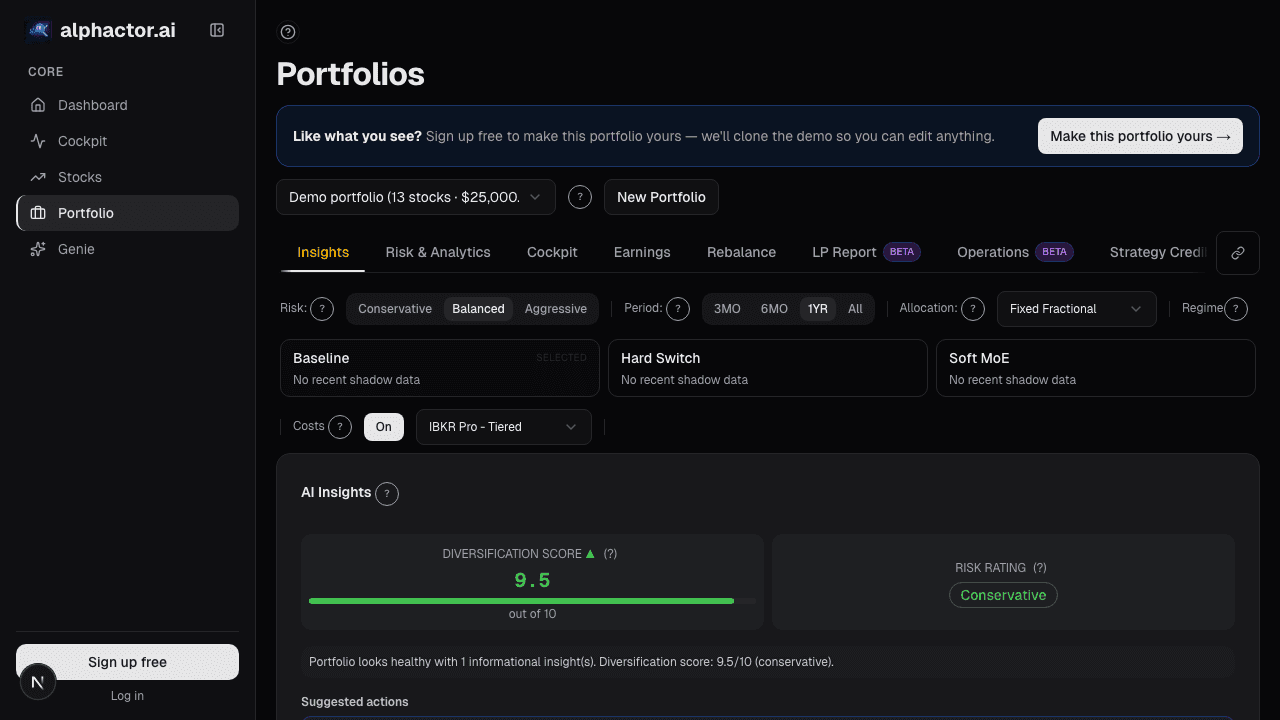
Live dashboard views that match this post. Each tile deep-links to the exact card.
Related reading
ATR for Position Sizing
How Average True Range normalizes risk across stocks, sets intelligent stop losses, and determines position size based on volatility, not gut feeling.
The Bollinger Band Squeeze
Bollinger Band squeezes predict volatility expansions. Here is how to identify them, measure their intensity, and avoid the false breakouts.
In a Crisis, All Correlations Go to One
Diversification fails exactly when you need it most. Here is why correlations spike during crises and how to build portfolios that survive it.
A Position Sizing Framework That Won't Keep You Up at Night
A practical position sizing approach built on simplified Kelly criterion, risk-per-trade limits, and portfolio-level allocation guardrails.
The 5 Position Sizing Mistakes That Blow Up Accounts
Position sizing errors kill more accounts than bad stock picks. Here are the five most common mistakes and how to avoid each one.
Ready to try alphactor.ai?
Validate your trading strategies with statistical credibility testing. Start free.
Get Started Free