Part of: Risk Management
A Position Sizing Framework That Won't Keep You Up at Night
A practical position sizing approach built on simplified Kelly criterion, risk-per-trade limits, and portfolio-level allocation guardrails.
 Marcus Chen4 min read
Why Position Sizing Matters More Than Stock Picking
Two investors buy the same stock at the same price. One allocates 2% of their portfolio. The other allocates 20%. When the stock drops 40%, the first investor loses 0.8% of their total portfolio. The second loses 8%. Same stock, same entry, radically different outcomes.
Position sizing is the most underappreciated edge in retail investing. You can be right on 7 out of 10 picks and still lose money if your three losers were your biggest positions. Conversely, a mediocre stock picker with excellent sizing discipline can compound steadily because the damage from any single mistake stays contained.
The Kelly Criterion, Simplified
The Kelly criterion, developed by John Kelly at Bell Labs in 1956, provides a mathematically optimal formula for sizing bets:
Kelly % = (Win Probability x Average Win / Average Loss) - (1 - Win Probability) / (Average Win / Average Loss)
For example: if your win rate is 55%, your average winner returns 20%, and your average loser costs 10%, Kelly suggests allocating roughly 30% to each trade.
That number is absurdly high. Full Kelly assumes perfect edge estimation, no transaction costs, and infinite time horizons. In reality, your edge estimate is imprecise, and overestimating it leads to gut-wrenching drawdowns.
The practical fix: use quarter-Kelly. Professional traders almost universally use fractional Kelly because sizing too small (slightly lower returns) is far less painful than sizing too large (potential ruin). For most retail investors, quarter-Kelly translates to positions in the 2-5% range.
Risk-Per-Trade: A Simpler Framework
If Kelly feels too abstract, try risk-per-trade sizing. The concept is straightforward: decide how much of your total portfolio you are willing to lose if a trade goes wrong, then size the position so that your worst reasonable loss stays within that budget.
Step 1: Set your risk budget. A common starting point is 1% of total portfolio value per trade. On a $100,000 portfolio, that is $1,000 of maximum acceptable loss per position.
Step 2: Define your worst-case scenario. If you are buying at $50 and your fundamental stop is $40 (a 20% decline that invalidates your thesis), your per-share risk is $10.
Step 3: Calculate position size. Divide your risk budget by your per-share risk. $1,000 / $10 = 100 shares, or a $5,000 position (5% of portfolio).
This approach automatically adjusts for volatility. A stable utility stock with a tight 8% stop allows a larger position than a volatile biotech with a 30% stop. The riskier the stock, the smaller the position. The math enforces what discipline alone often cannot.
Portfolio-Level Sizing Guardrails
Individual position sizing is necessary but not sufficient. You also need portfolio-level rules that prevent concentration from creeping in through the back door.
Maximum single position: 5% at cost. Positions can grow beyond 5% through appreciation, but never add capital beyond this threshold. If your best idea works spectacularly, let the winner run. But do not double down past 5%.
Maximum sector exposure: 20%. Even with individual positions at 3-4%, holding six financial stocks means 18-24% of your portfolio swings with interest rate expectations. Sector caps catch what position-level caps miss.
Maximum correlated exposure: 30%. Harder to measure but more important than sector caps. Three positions that all benefit from a weak dollar are a correlated cluster regardless of their sector labels. Map positions by their key drivers, not just their classifications.
Cash allocation: 10-20%. A permanent cash reserve reduces portfolio volatility and gives you dry powder for genuine bargains during corrections.
Scaling In and Out
Position sizing is not a one-time decision. Scaling into and out of positions is a practical tool for managing uncertainty.
Scaling in. Divide your target position into 2-3 tranches. Buy the first third when your thesis is established. Add the second when the thesis starts playing out (earnings confirm, catalyst materializes). Add the final third only if the setup remains intact and the price is still attractive.
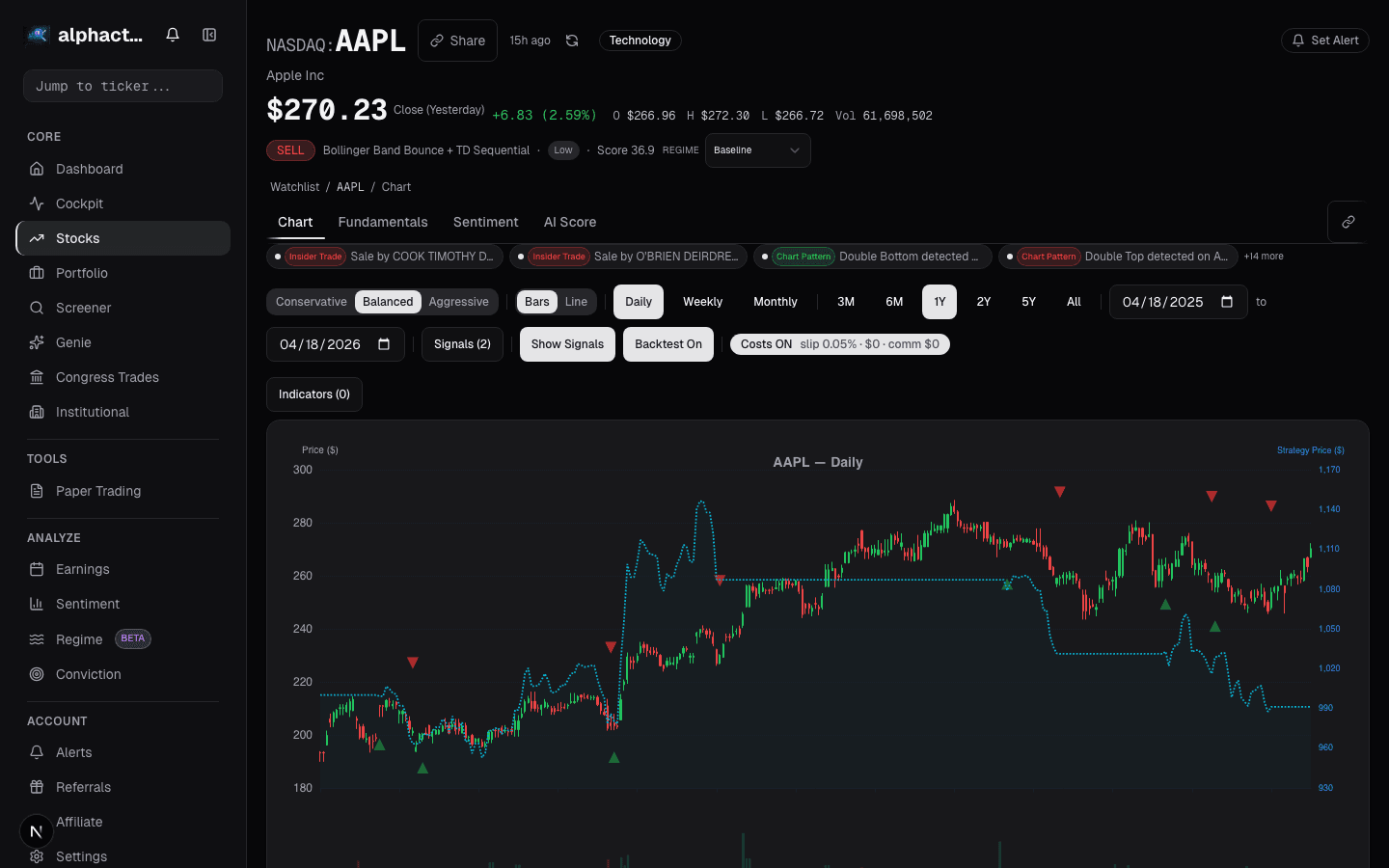
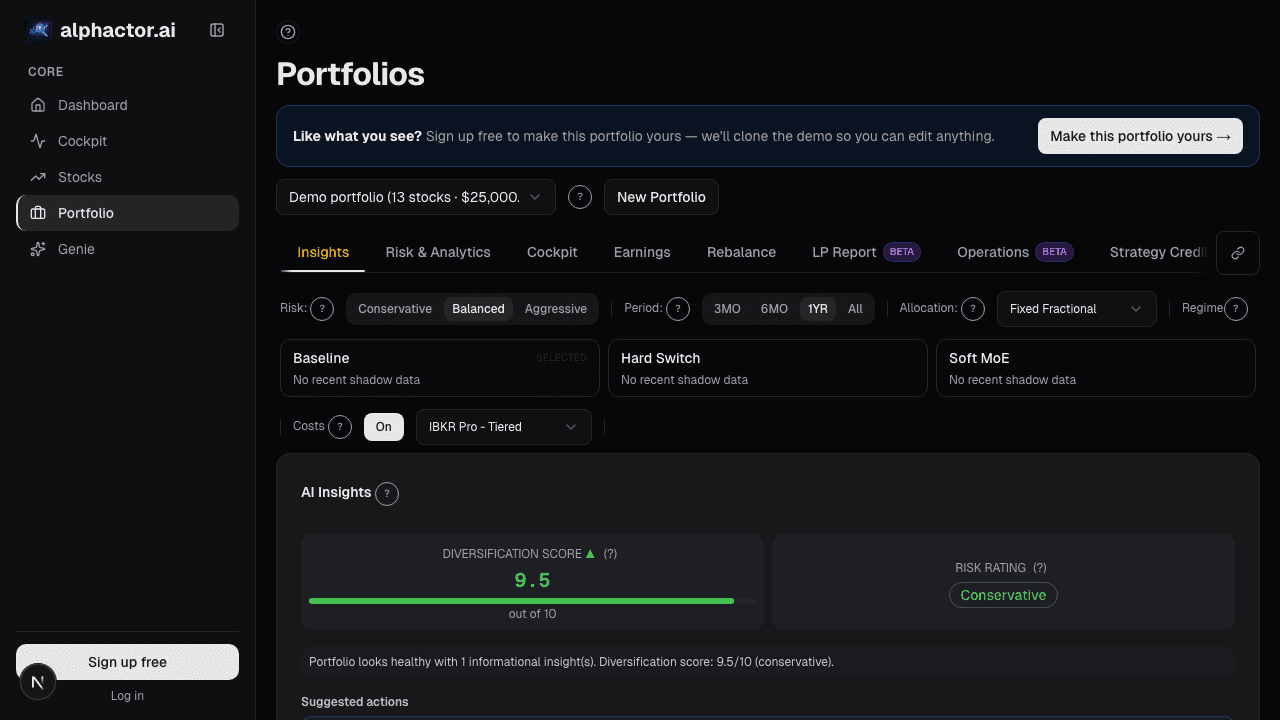
Scaling out. As a position appreciates, trim back to your target weight. Taking partial profits at predetermined levels (say, after a 30% gain) locks in returns while keeping upside exposure. Alphactor's Alphactor backtesting tools let you test different scaling rules against historical data.
The Sleep Test
After all the math, there is one final sizing check that no formula captures: can you sleep with this position? If a 2% daily move in any single holding causes you genuine anxiety, the position is too large regardless of what Kelly or risk-per-trade says.
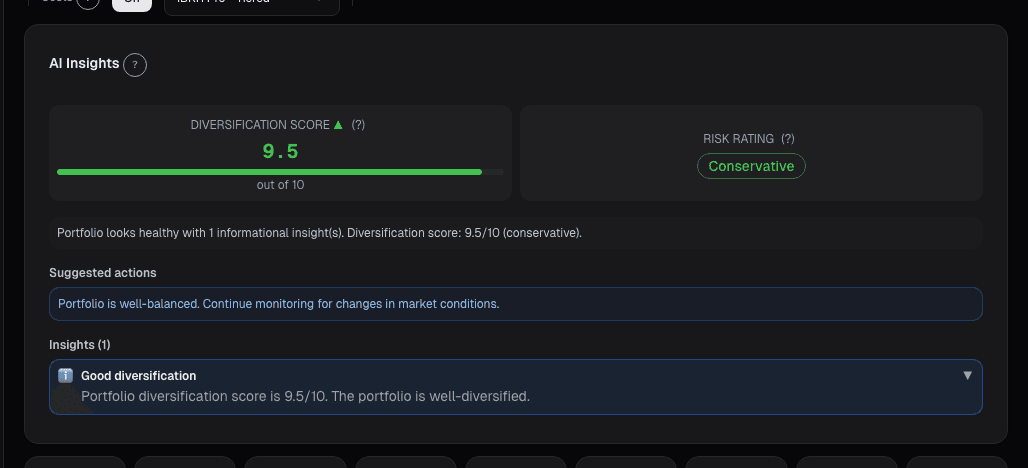
Position sizing is about sustainability. The framework that works is the one you will actually follow through a full market cycle: the rallies, the corrections, and the long boring stretches in between. Size for what you can live with, not just what the math says is optimal. Try building a position-sized portfolio on the portfolio dashboard with stress testing to see how your sizing holds up under historical scenarios.
See it in the app
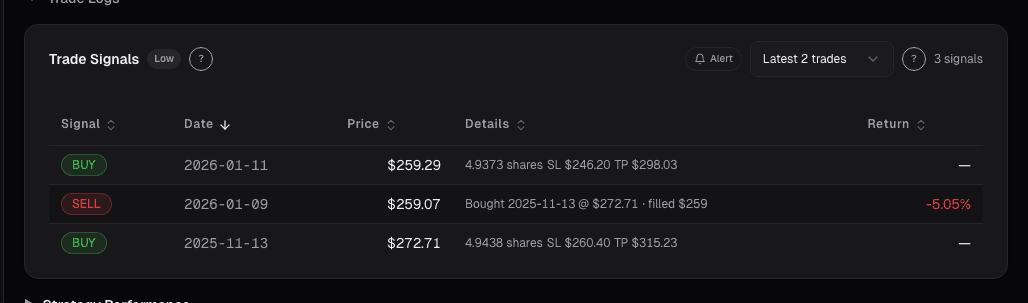
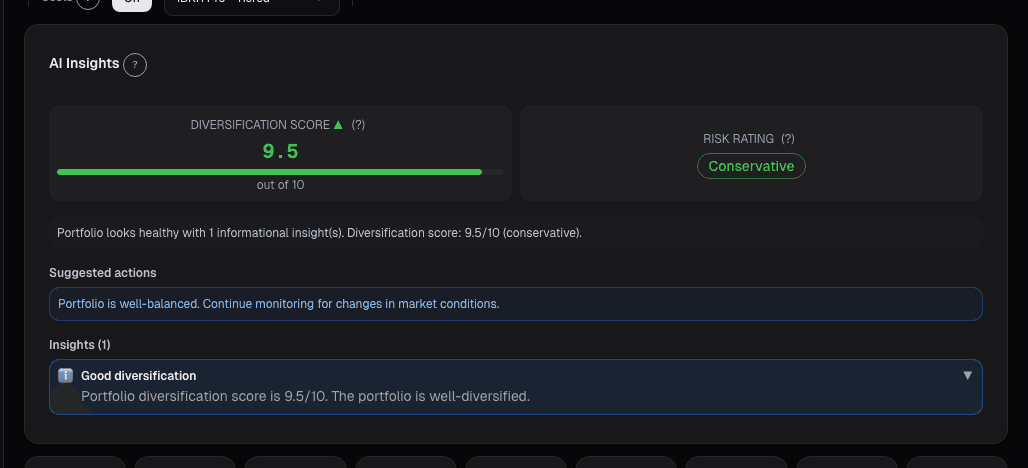
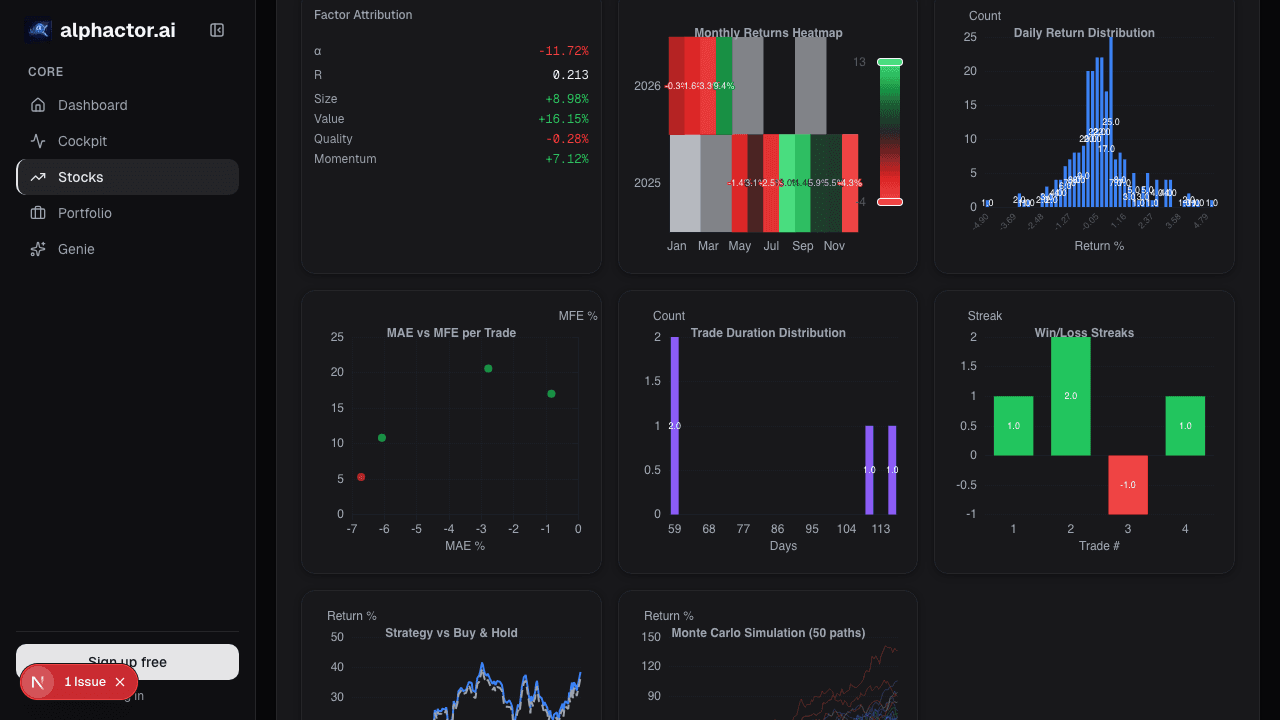
Live dashboard views that match this post. Each tile deep-links to the exact card.
Stocks mentioned
Related reading
ATR for Position Sizing
How Average True Range normalizes risk across stocks, sets intelligent stop losses, and determines position size based on volatility, not gut feeling.
In a Crisis, All Correlations Go to One
Diversification fails exactly when you need it most. Here is why correlations spike during crises and how to build portfolios that survive it.
Half-Kelly Position Sizing
Half-Kelly gives about three-quarters of full Kelly growth while cutting drawdown by roughly 50%, making a theoretically optimal bet practically executable.
Portfolio Earnings: Calendar, Exposure
Earnings risk is about the whole book into the week, not each position. When 40% of NAV reports in one week, and 60% of that is in a single sector, you're…
Factor Exposure
Factor exposures are bets whether or not you chose them. Decomposition surfaces unintentional tilts before a rotation exposes them as underperformance.
FX Exposure: The Currency Risk Hiding in Your USD Portfolio
You bought US stocks in dollars, so you have no FX risk, right? Wrong. US large-cap multinationals earn 40-60% of revenue abroad.
Ready to try alphactor.ai?
Validate your trading strategies with statistical credibility testing. Start free.
Get Started Free