Part of: Risk Management
In a Crisis, All Correlations Go to One
Diversification fails exactly when you need it most. Here is why correlations spike during crises and how to build portfolios that survive it.
 Marcus Chen4 min read
The Diversification Lie
You built a diversified portfolio. Technology, healthcare, financials, consumer staples, some international exposure. Your correlation matrix looks beautiful in calm markets: low positive correlations, a few negatives, textbook modern portfolio theory. Then a crisis hits and every position drops together. Your "diversified" portfolio loses 30% in three weeks. What happened?
What happened is the oldest rule in risk management, one that gets rediscovered in every crisis: correlations are unstable, and they spike toward one precisely when diversification matters most.
Why Correlations Break Down
In normal markets, stocks move based on their individual fundamentals. Apple's earnings report has little to do with a regional bank's loan book. Correlations between unrelated stocks stay low because different factors drive each position.
In a crisis, individual factors stop mattering. Everything becomes about one thing: liquidity. When investors need cash, they sell what they can, not what they should. The fundamental quality of a position becomes irrelevant. Forced selling hits everything.
This is not theoretical. During the 2008 financial crisis, the average pairwise correlation between S&P 500 stocks rose from approximately 0.27 to 0.80. Stocks that had nothing to do with mortgages or banking fell 40-50% because investors were liquidating everything to meet margin calls and redemptions. In March 2020, the same pattern played out in roughly 23 trading days. US Treasuries, gold, investment-grade corporate bonds, all of them sold off simultaneously in the initial panic as investors scrambled for cash.
During the 2022 rate shock, the traditional 60/40 portfolio, supposedly the gold standard of diversification, had its worst year in decades. Both stocks and bonds fell together because both were being repriced for the same factor: interest rates. The correlation between the S&P 500 and long-term Treasuries went from negative (the whole basis of 60/40) to strongly positive. A portfolio designed for diversification delivered concentrated losses.
The Mechanism: Liquidation Cascades
Understanding why correlations spike requires understanding how liquidation cascades work.
Phase 1: Initial shock. A specific sector or asset class drops sharply. Subprime mortgages in 2008. Pandemic lockdowns in 2020. Aggressive rate hikes in 2022. Losses are concentrated in the directly affected area.
Phase 2: Margin calls and redemptions. Leveraged investors in the affected area face margin calls. Fund managers face redemptions. Both need to raise cash immediately. They start selling their most liquid positions, which are often their best-performing, least-related holdings.
Phase 3: Contagion. The selling from Phase 2 pushes down prices in unrelated sectors. This triggers margin calls for other investors, who were not even exposed to the original shock. Now they sell. The selling becomes self-reinforcing.

Phase 4: Correlation convergence. At this point, everything is falling because everyone is selling. Asset-specific fundamentals cease to matter. The only factor is "are people selling." Correlations converge toward one because there is effectively only one trade happening: risk-off.
This sequence is not rare. It happens in every significant market dislocation. The 1998 LTCM crisis, the 2008 financial crisis, the 2011 European debt crisis, the 2015 China scare, the 2018 Vol-mageddon, March 2020, the 2022 rate shock. The trigger changes. The cascade mechanism does not.
What Actually Diversifies in a Crisis
If traditional stock diversification fails in crises, what works? The honest answer is: fewer things than you think.
Cash. The only asset with zero correlation to everything in all environments. The problem is it has zero expected return. Holding 15-20% cash is not exciting but it is the most reliable crisis hedge available to retail investors. It also gives you the ability to buy assets at distressed prices, which is where generational returns come from.
Trend-following strategies. Managed futures and systematic trend-following strategies have historically delivered positive returns during equity crises because they go short assets in downtrends. The key word is "systematic." Discretionary short selling during a crisis is a different skill entirely.
True uncorrelated assets. These are rarer than advertised. Real estate, private equity, and most alternatives are correlated with equities in crises, they just report returns on a lag that hides it. Look for assets with genuinely different return drivers, not just different labels.
Building a Crisis-Aware Portfolio
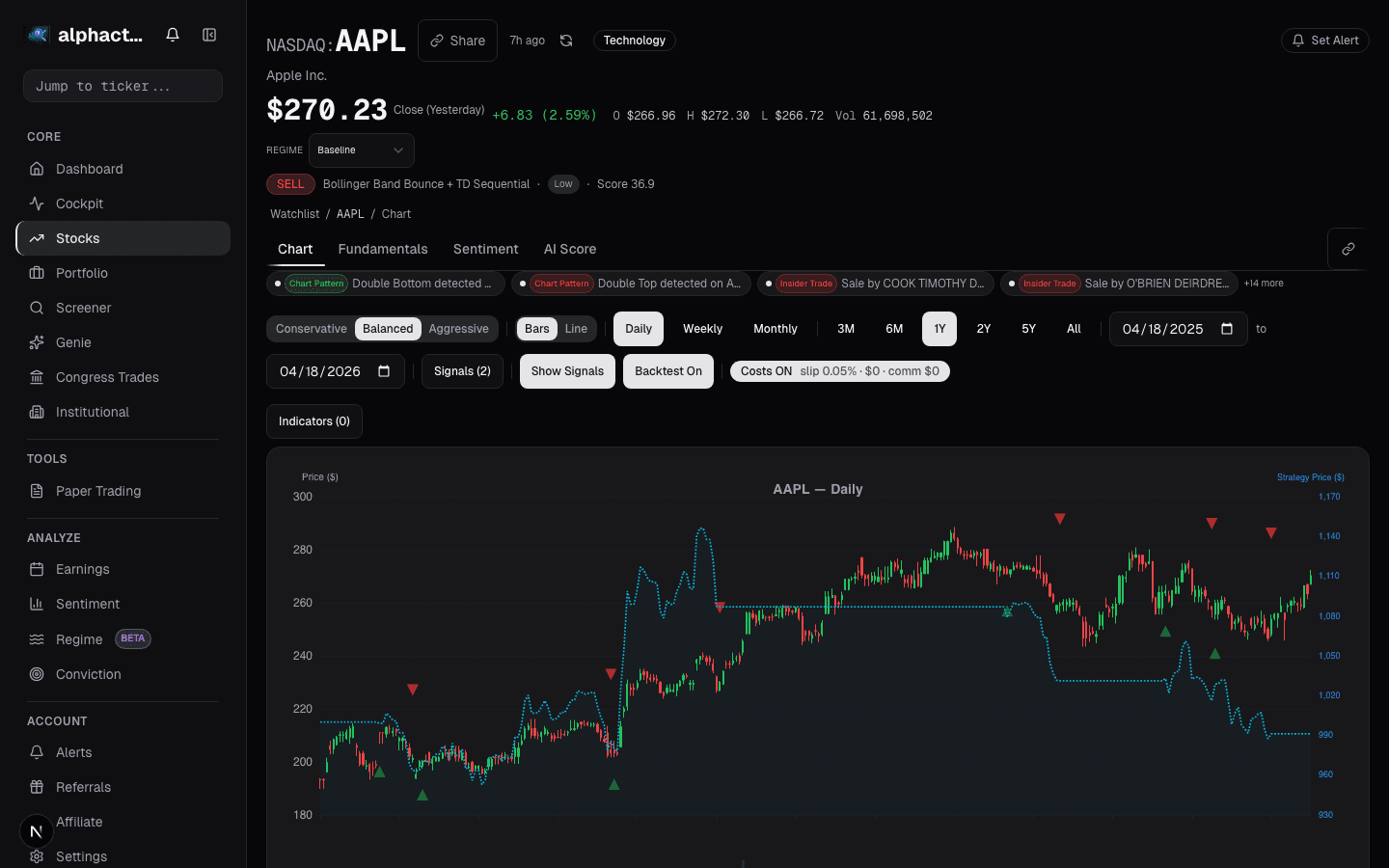
Do not trust calm-market correlations. The correlation between two stocks at the 50th percentile of market volatility is almost meaningless for predicting their correlation at the 99th percentile. Use stock comparison to see how your holdings' correlations shift under different market conditions, which is the correlation that actually matters for risk management.
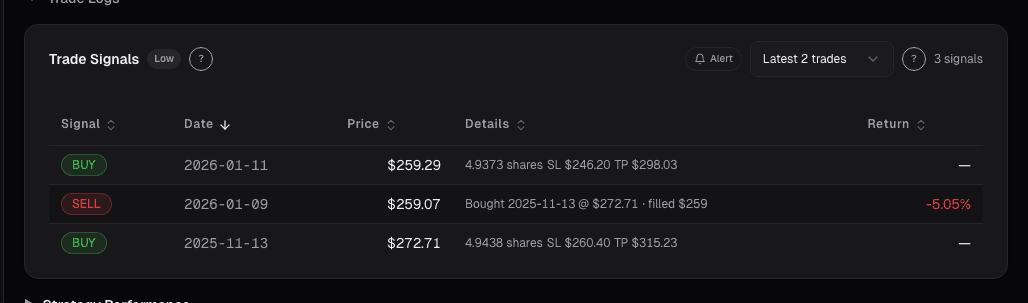
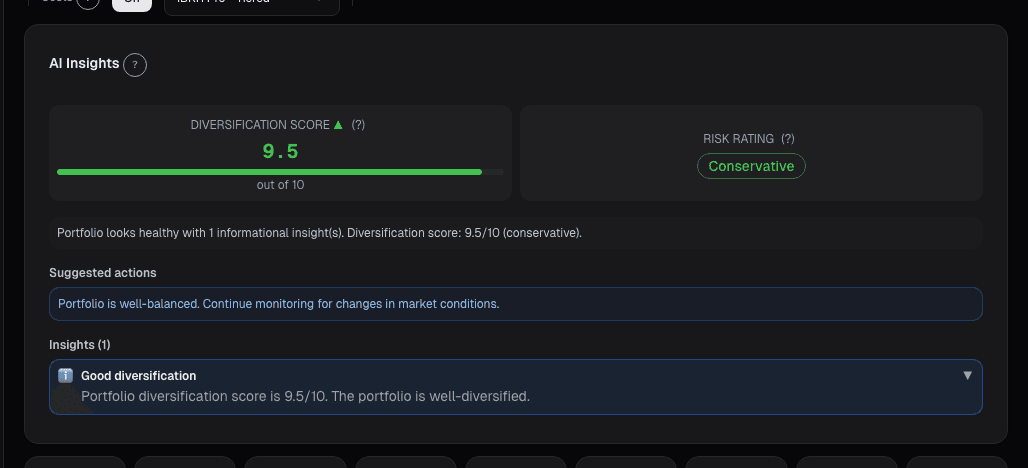
Size for the worst case. If your portfolio would lose 40% if all correlations went to 0.9, your position sizes are too large. Run the scenario in your portfolio dashboard. If the result is unsurvivable, cut exposure until it is not.
Hold assets that benefit from crisis, not just survive it. A small allocation (5-10%) to assets or strategies that tend to appreciate during equity crashes, like long volatility positions or trend-following, can offset the correlation spike in the rest of your portfolio.
Accept the cost of true diversification. Assets that are genuinely uncorrelated to equities in a crisis will usually underperform equities in bull markets. That underperformance is the premium you pay for insurance. If you are not willing to pay it during good times, you will not have the protection during bad times.
The Uncomfortable Reality
The whole premise of diversification is that not everything moves together. In calm markets, that is true. In crises, when diversification is the difference between a recoverable drawdown and a portfolio-ending loss, it is often false. Build your portfolio for the crisis, not the calm. The calm takes care of itself.
See it in the app
Live dashboard views that match this post. Each tile deep-links to the exact card.
Stocks mentioned
Related reading
Debt-to-Equity Ratio
How to evaluate a company's debt load, when leverage creates value, when it destroys it, and the sector-specific thresholds that matter.
Half-Kelly Position Sizing
Half-Kelly gives about three-quarters of full Kelly growth while cutting drawdown by roughly 50%, making a theoretically optimal bet practically executable.
Why Maximum Drawdown Is More Important Than Annual Return
Maximum drawdown reveals what your portfolio almost did to you. Here is why it matters more than the number everyone brags about.
Portfolio Earnings: Calendar, Exposure
Earnings risk is about the whole book into the week, not each position. When 40% of NAV reports in one week, and 60% of that is in a single sector, you're…
Factor Exposure
Factor exposures are bets whether or not you chose them. Decomposition surfaces unintentional tilts before a rotation exposes them as underperformance.
FX Exposure: The Currency Risk Hiding in Your USD Portfolio
You bought US stocks in dollars, so you have no FX risk, right? Wrong. US large-cap multinationals earn 40-60% of revenue abroad.
Ready to try alphactor.ai?
Validate your trading strategies with statistical credibility testing. Start free.
Get Started Free