Sector Allocation: How Much Tech Is Too Much?
Sector creep is the most common risk in retail portfolios. Measuring weight vs. risk contribution and setting caps prevents a rotation from causing big losses.
 Marcus Chen4 min read
The Sector Creep Problem
It starts innocently. You buy Apple because you love the ecosystem. Then NVIDIA because AI is transformative. Then Microsoft for the cloud business. Then Amazon because it is a great compounder. Each pick is defensible on its own. But step back and you own a portfolio that is 45% technology by weight and 60%+ by risk contribution, because tech stocks are more volatile and more correlated with each other than the broad market.
Sector creep is the most common unintended risk in retail portfolios. It happens because our strongest convictions tend to cluster. If you follow tech news, you generate tech ideas. If you work in healthcare, you understand pharma names. The portfolio ends up reflecting your information diet rather than a deliberate allocation decision.
What the Benchmarks Say
The S&P 500's sector weights shift over time, but as of recent data, technology-related sectors (Information Technology plus Communication Services) represent roughly 35-40% of the index. If your portfolio is meaningfully above that, you are making an active bet on tech outperformance whether you intended to or not.
Here is a rough sector breakdown for a market-weight U.S. equity portfolio:
- Technology + Communication Services: 35-40%
- Healthcare: 12-14%
- Financials: 12-13%
- Consumer Discretionary: 10-11%
- Industrials: 8-9%
- Consumer Staples: 6-7%
- Energy: 4-5%
- Utilities, Real Estate, Materials: 2-4% each
You do not need to match these weights. But you should know where you deviate and why.
Building a Sector Framework
Rather than matching the benchmark, build your allocation around three buckets based on economic sensitivity.
Growth sectors (target: 35-45%). Technology, Communication Services, Consumer Discretionary. These sectors drive portfolio returns in expansions and bull markets. They are also the first to get hit in rate-hiking cycles and recessions. Keeping this bucket at 35-45% gives you meaningful growth exposure without betting the portfolio on a single economic outcome.
Defensive sectors (target: 20-30%). Healthcare, Consumer Staples, Utilities. These businesses have stable demand regardless of economic conditions. People take their medications, buy groceries, and keep the lights on in recessions. They lag in bull markets but protect in downturns. A 20-30% allocation provides ballast.
Cyclical sectors (target: 20-30%). Financials, Industrials, Energy, Materials. These sectors are tied to the economic cycle. They outperform in recoveries and early expansions, and underperform in late-cycle slowdowns. A 20-30% allocation gives you economic participation without overexposure to any single part of the cycle.
The remaining 5-15% goes wherever your highest-conviction ideas fall, regardless of sector. This is your active bet allowance. If you have a strong view on energy or a specific healthcare subsector, this is where it lives.
The Tech Concentration Test
If your technology-related exposure exceeds 40%, run this test:
Question 1: Would a 30% tech sector decline be survivable? In 2022, the Nasdaq dropped roughly 33%. Apply that to your tech holdings specifically. If your total portfolio would decline more than 15%, you are likely overconcentrated.
Question 2: Are your tech holdings actually diversified within the sector? Owning Apple, Microsoft, and Google gives you large-cap platform businesses. Owning Apple, Cloudflare, and Palo Alto gives you consumer hardware, infrastructure, and cybersecurity. Same sector, different drivers. Intra-sector diversification matters.
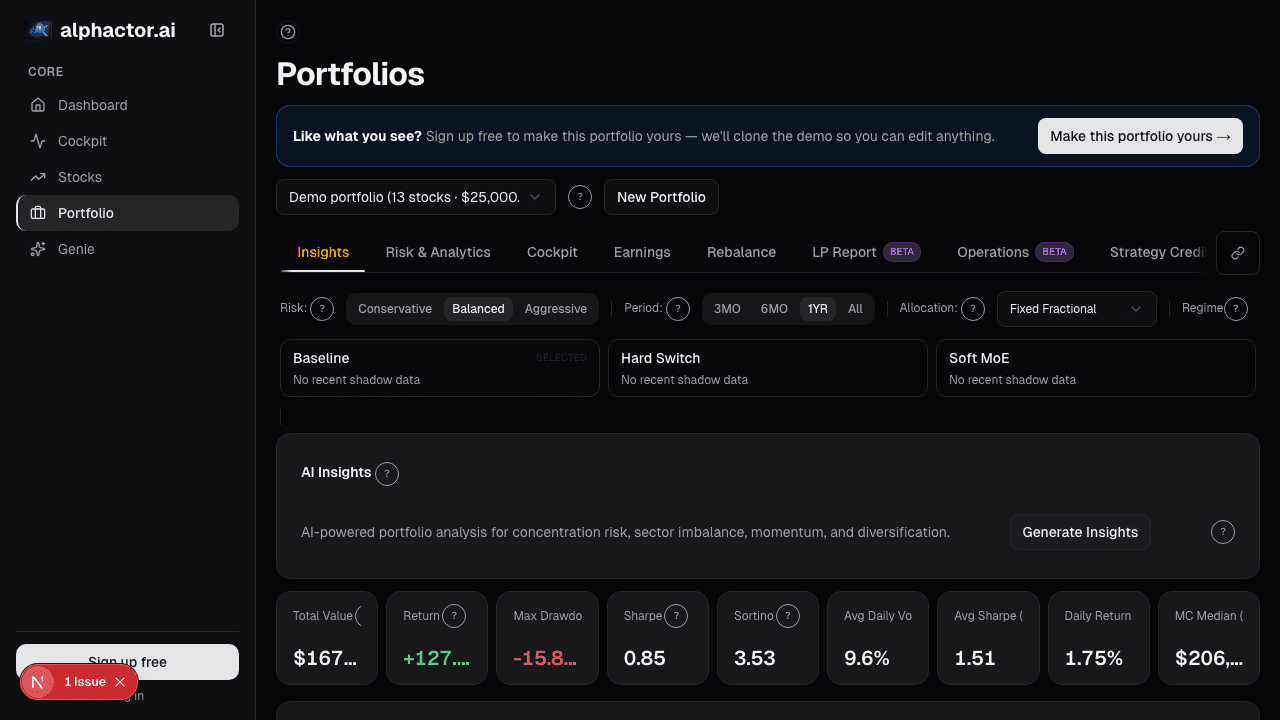
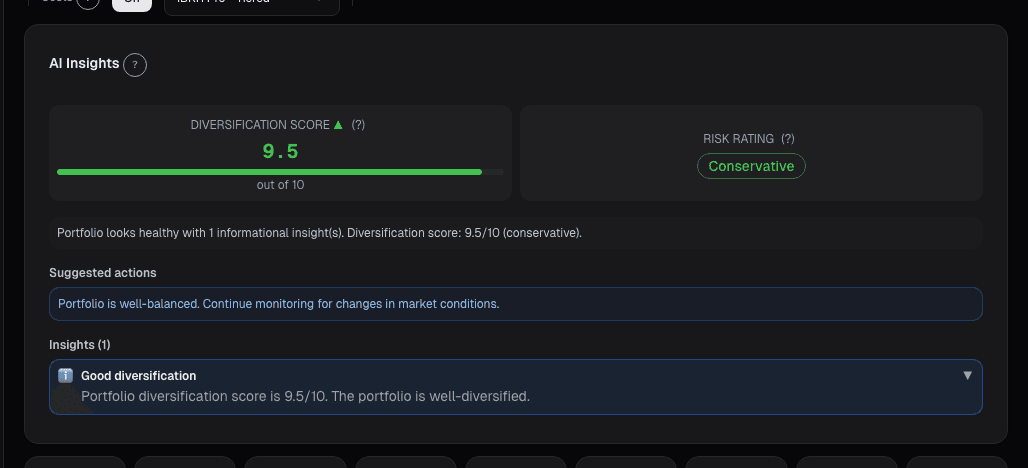
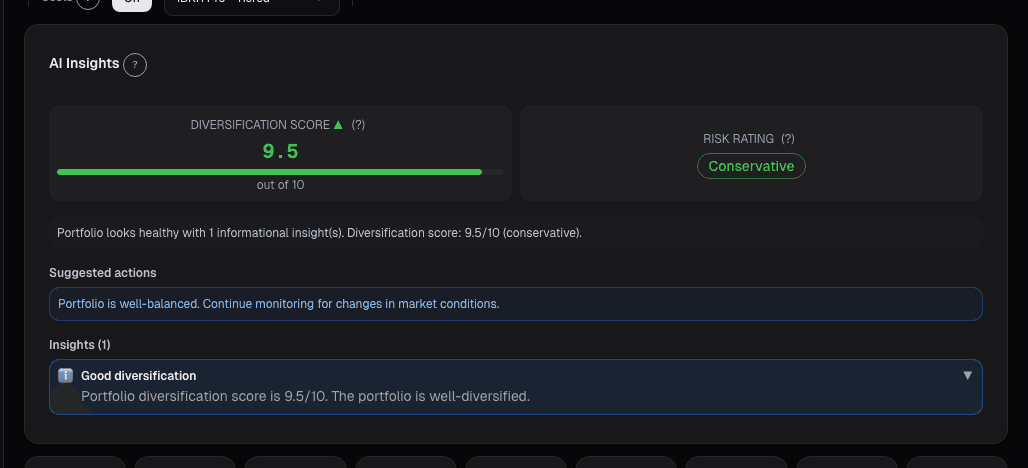
Question 3: What is the correlation of your tech holdings with each other? If the average pairwise correlation is above 0.65, your five tech stocks behave like two or three from a risk perspective. Alphactor's portfolio dashboard risk scoring quantifies this, showing the effective number of independent bets in your portfolio versus the nominal position count.
Common Sector Mistakes
Zero energy allocation. Many growth-oriented investors avoid energy entirely. But energy stocks often have negative or low correlation with technology, making them powerful diversifiers. Even a 5% allocation to energy significantly reduces portfolio-level drawdowns in periods when tech sells off and energy rallies, as happened in 2022.
Confusing sector labels with economic exposure. Amazon is classified as Consumer Discretionary, but a large portion of its profits come from AWS, which is cloud computing. Tesla is Consumer Discretionary but behaves like a high-beta tech stock. Look at revenue drivers, not just GICS sector codes.
Chasing last year's winner. The temptation to overweight whatever sector performed best recently is strong. Energy led in 2022. Tech led in 2023 and 2024. Rotating into the recent winner is trend-following with extra transaction costs. Sector allocation should be set based on your risk framework, not recent performance.
A Practical Rebalancing Rule
Set sector caps and floors. A reasonable structure for an individual stock portfolio:
- No sector above 35% of portfolio
- No sector below 5% if you hold it at all
- Review sector weights quarterly alongside position-level rebalancing
When a sector hits your cap, stop adding new positions in that sector and direct new capital elsewhere. This simple rule prevents creep without requiring you to sell positions you still believe in.
The Bottom Line
Sector allocation is not about finding the right sectors. It is about preventing unintended concentration in any single sector. A portfolio that is 50% tech is not an investment portfolio; it is a sector bet with side positions. Know your sector weights, set boundaries, and redirect capital when those boundaries are tested.
See it in the app
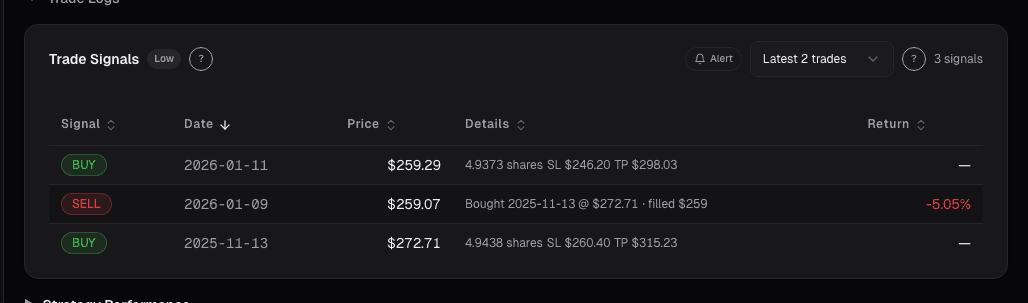
Live dashboard views that match this post. Each tile deep-links to the exact card.
Related reading
How to Analyze Tech Stocks
The financial metrics that separate winning tech investments from hype-driven traps, with frameworks for evaluating SaaS, hardware, and platform businesses.
Alt-Data Sentiment at the Portfolio Level
Per-ticker alt-data breaks down past 10 positions. A roll-up of WSB, news, MSPR, and options lets a 90-second scan replace 100 minutes of manual checking.
Portfolio Attribution: Where Your Returns Actually Come From
Beating the benchmark by 400bps feels good until attribution tells you it was all allocation luck on one sector call. Selection vs. allocation vs.
Portfolio Audit Trail: Every Decision
Regulated managers need an audit trail. The Audit Trail card on alphactor.ai records every trade, rebalance, alert, and note into one timestamped log you…
Risk Parity: Allocating by Risk, Not by Dollars
How risk parity portfolios work, why they differ from traditional allocation, and how to apply the concept without a PhD in finance.
Ready to try alphactor.ai?
Validate your trading strategies with statistical credibility testing. Start free.
Get Started Free