Small Cap vs Large Cap: When Size Matters in Stock Selection
The historical performance gap between small and large cap stocks, when each segment leads, and how to use market conditions to decide where to allocate.
 Marcus Chen4 min read
A Decade of Large-Cap Dominance
From 2014 through 2023, the S&P 500 returned roughly 190% cumulatively. The Russell 2000, the benchmark for U.S. small caps, returned roughly 90% over the same period. That gap of 100 percentage points represents one of the most prolonged periods of large-cap dominance in market history.
The reasons are structural and cyclical. Mega-cap technology companies benefited from network effects, near-zero interest rates, and globalization in ways that smaller companies could not replicate. Apple, Microsoft, Amazon, Alphabet, and Nvidia became self-reinforcing monopolies that attracted passive capital flows and international investment simultaneously.
But history shows that these regimes do not last forever. From 2000 to 2013, small caps outperformed large caps by a wide margin. The Russell 2000 returned over 130% while the S&P 500 returned roughly 40%, including the lost decade for large-cap stocks that followed the dot-com bubble.
Understanding when each size segment leads is one of the most consequential allocation decisions an investor can make.
Why Small Caps Outperform (Sometimes)
The academic case for small caps rests on the Fama-French size premium: smaller companies are riskier (less diversified, less liquid, more volatile), and investors demand higher returns for bearing that risk. The data supports this over very long periods. Since 1926, small caps have outperformed large caps by roughly 2% annually in the U.S.
But that 2% annual premium is not delivered evenly. It arrives in concentrated bursts, typically during specific economic conditions.
After recessions: Small caps dramatically outperform coming out of economic downturns. In the twelve months following the March 2009 bottom, the Russell 2000 rose 80% versus 68% for the S&P 500. After the March 2020 bottom, small caps outperformed by an even wider margin through mid-2021. The logic is straightforward: small companies are more leveraged to the domestic economy, and a recovering economy lifts them disproportionately.
During rate-cutting cycles: When the Fed shifts from tightening to easing, small caps benefit more because roughly 40% of Russell 2000 debt is floating-rate. Falling rates directly reduce their interest expense and improve their earnings. Large caps, which tend to have fixed-rate debt and enormous cash balances, see less direct benefit.
When the dollar weakens: Small caps derive a larger share of their revenue domestically, roughly 80% versus 60% for the S&P 500. When the U.S. dollar weakens, large-cap multinationals benefit from currency translation, but small caps benefit from a more competitive domestic economy and stronger relative earnings growth.
When Large Caps Dominate
Large caps thrive in the opposite conditions: rising rates, a strong dollar, decelerating economic growth, and risk-off environments.
During 2022, the combination of aggressive Fed tightening, a surging dollar, and recession fears crushed small caps. The Russell 2000 fell 21%, and many individual small caps fell 40-60%. Meanwhile, mega-cap companies with fortress balance sheets and pricing power held up relatively better.

Large caps also dominate when capital flows favor passive indexing and international buying. Foreign investors buying U.S. equities tend to buy the most liquid, recognizable names, which concentrates flows into the largest companies. The rise of passive investing has amplified this effect, as index funds mechanically allocate more capital to the largest stocks by market weight.
The Quality Problem in Small Caps
One reason the raw small-cap premium has disappointed in recent decades is the deteriorating quality of the small-cap universe. Roughly 40% of Russell 2000 companies are unprofitable in any given year, compared to under 10% for the S&P 500. The index includes micro-cap biotechs burning cash on clinical trials, SPACs that merged with marginal businesses, and zombie companies surviving on cheap debt.
The solution is quality-filtered small-cap exposure. When you screen the Russell 2000 for companies with positive earnings, return on equity above 10%, and manageable debt levels, the resulting portfolio has historically outperformed both the unfiltered Russell 2000 and the S&P 500 over full cycles.
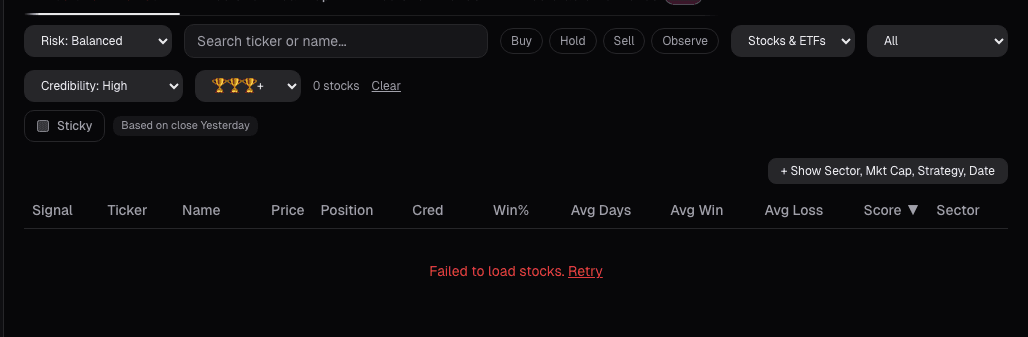
The universe scanner and fundamentals view can help you build this filtered universe. By layering quality metrics on top of the small-cap opportunity set, you avoid the junk that drags down the index while capturing the genuine small-cap premium.
A Practical Allocation Framework
Rather than choosing one or the other, think about your small-cap versus large-cap allocation as a dial you adjust based on conditions.
When the economy is emerging from recession, the yield curve is steepening, and the Fed is cutting rates, turn the dial toward small caps. When growth is decelerating, the dollar is strengthening, and volatility is rising, turn it toward large caps.
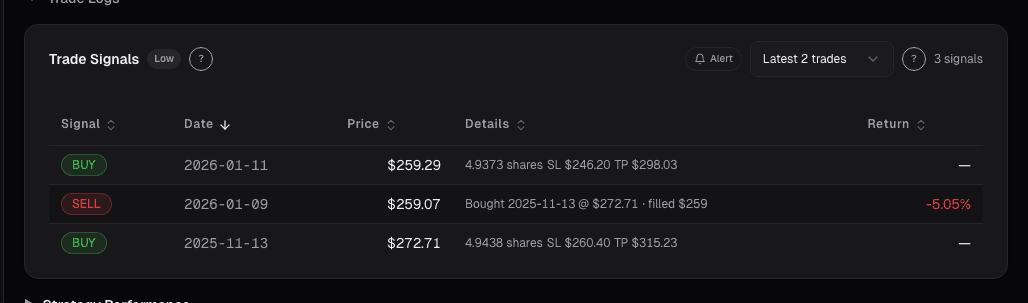
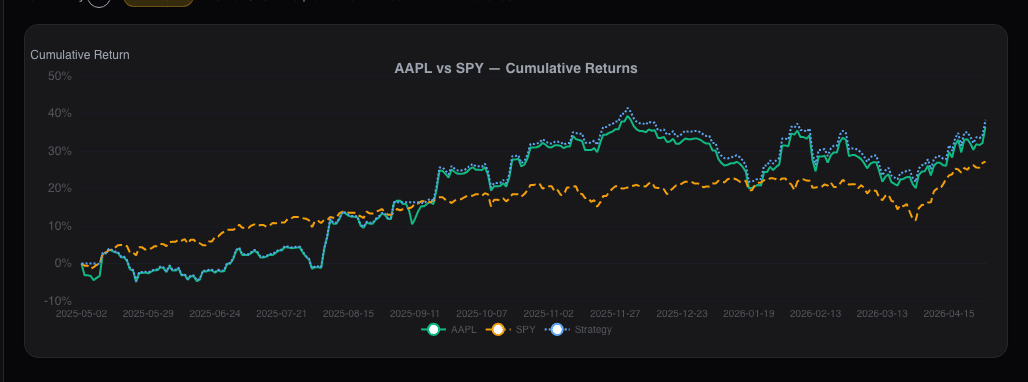
Use stock comparison to track whether small caps or large caps are showing relative strength. Persistent outperformance over a rolling three-month window, confirmed by improving breadth within the small-cap universe, is a reliable signal that the rotation is underway.
The size decision is not about which segment is "better." Both have earned their place in a diversified portfolio. The decision is about which segment the current economic environment favors, and sizing your bet accordingly.
See it in the app
Live dashboard views that match this post. Each tile deep-links to the exact card.
Stocks mentioned
Related reading
Dark Pool Activity: Reading the Institutional Order Flow
What dark pools are, why institutions use them, and how tracking dark pool prints and volume can reveal where smart money is positioning before it shows up…
How Earnings Season Actually Moves Markets
Why the market's reaction to earnings reports depends on guidance, positioning, and expectations far more than the headline EPS number.
What the Options Market Tells You About Stock Direction
How to read implied volatility, put/call ratios, unusual activity, and gamma exposure to extract directional signals from the options market.
Stock Market Seasonality: Which Calendar Effects Still Work?
An evidence-based look at the January effect, sell-in-May, the Santa Claus rally, and other seasonal patterns, separating the ones that still hold from…
Sentiment Extremes: When Fear and Greed Become Tradeable
How to identify sentiment extremes using survey data, options positioning, and fund flows, and why contrarian signals work best when combined with technical…
Ready to try alphactor.ai?
Validate your trading strategies with statistical credibility testing. Start free.
Get Started Free