Sentiment Extremes: When Fear and Greed Become Tradeable
How to identify sentiment extremes using survey data, options positioning, and fund flows, and why contrarian signals work best when combined with technical…
 Marcus Chen4 min read
The Crowd Is Right, Until It Isn't
Warren Buffett's instruction to "be fearful when others are greedy, and greedy when others are fearful" has become a cliche. But like most cliches, it persists because it contains a core truth. The challenge is not the principle. It is knowing when fear or greed has reached the extreme level that creates a tradeable opportunity rather than just a mood.
In March 2020, the AAII Investor Sentiment Survey showed bearish readings above 50%, a level reached fewer than a dozen times in the prior three decades. The VIX hit 82, the highest since 2008. Fund flows showed massive equity liquidation. Every measurable sentiment indicator screamed fear. The S&P 500 bottomed within days and rallied 70% over the following twelve months.
In January 2021, the same survey showed bullish sentiment above 45%, Reddit forums were coordinating mass buying of meme stocks, and speculative call option volume hit levels never seen before. The Nasdaq peaked two months later and spent the next eighteen months declining.
Sentiment extremes work. But they require the right tools, the right interpretation, and the right timing framework.
Measuring Fear and Greed
Surveys: The AAII Investor Sentiment Survey, published weekly, tracks the percentage of individual investors who are bullish, bearish, or neutral. Extreme readings, bullish above 45% or bearish above 50%, are rare and have historically been reliable contrarian signals. The Investors Intelligence survey captures newsletter writers' sentiment and has a similar contrarian track record.
Options data: The put/call ratio measures the volume of bearish bets (puts) relative to bullish bets (calls). When it spikes above 1.2, fear is extreme. When it drops below 0.5, complacency is elevated. The CBOE equity put/call ratio hit 1.4 in October 2022, just before the bear market low. It dropped to 0.4 in July 2023, preceding a 10% correction.
VIX levels: The VIX itself is a sentiment gauge. Readings above 35 indicate panic. Readings below 13 indicate extreme complacency. The VIX spent most of 2017 below 12, and the market eventually experienced a 10% correction in February 2018 triggered by the very volatility that complacency had made invisible.
Fund flows: When money is flooding into equity ETFs and mutual funds at record pace, it reflects euphoria. When outflows are extreme, investors have capitulated. ICI and EPFR data track these flows weekly. The largest equity fund inflows in history occurred in early 2021, near the top for speculative stocks.
Why Extremes Produce Reversals
Sentiment extremes work as contrarian signals because they represent exhausted positioning. When everyone who wants to buy has already bought, there are no remaining buyers to push prices higher. The reverse is true at fear extremes: when everyone who wants to sell has sold, selling pressure is exhausted.
This is mechanical, not mystical. Markets need a constant flow of new buyers to sustain a rally. When surveys show extreme bullishness, margin balances are elevated, and call option volumes are at records, the marginal buyer has already arrived. Any negative catalyst, no matter how minor, can trigger a reversal because there is no one left to provide support.
At fear extremes, the opposite mechanism operates. Forced selling by leveraged funds, capitulation by retail investors, and tax-loss harvesting create supply that has nothing to do with fundamental value. When the forced selling exhausts itself, prices rebound sharply because the marginal seller has already sold.
The Confirmation Problem
The trap with sentiment-based investing is acting too early. Sentiment can remain extreme for weeks or months before reversing. Buying into panic during a bear market feels terrible, and the market can go lower before it turns. Selling into euphoria means missing the final, often vertical, phase of a rally.
The solution is combining sentiment extremes with technical confirmation. A fear extreme combined with a bullish reversal signal (a breadth thrust, a VIX reversal from above 35, or a successful retest of a support level) dramatically improves timing. The sentiment dashboard, when combined with Alphactor charts, helps identify these confluence moments where extreme sentiment aligns with a concrete price signal.
Similarly, greed extremes paired with breadth deterioration and momentum divergences are far more actionable than greed alone.
A Practical Sentiment Framework
Build a composite sentiment dashboard that combines survey data, options positioning, VIX levels, and fund flows. When three or more of these indicators reach extreme readings simultaneously, the probability of a meaningful reversal rises sharply.
At fear extremes with technical confirmation: begin adding risk in stages. Buy quality names that were sold indiscriminately. Increase position sizes gradually as the reversal confirms.
At greed extremes with deteriorating breadth: begin reducing risk. Trim overextended winners. Raise cash. Tighten trailing stops.
The key is that sentiment is a condition, not a trigger. It tells you the environment is ripe for a reversal. Price action tells you the reversal has begun. Combining both dramatically improves the odds of being on the right side.
See it in the app
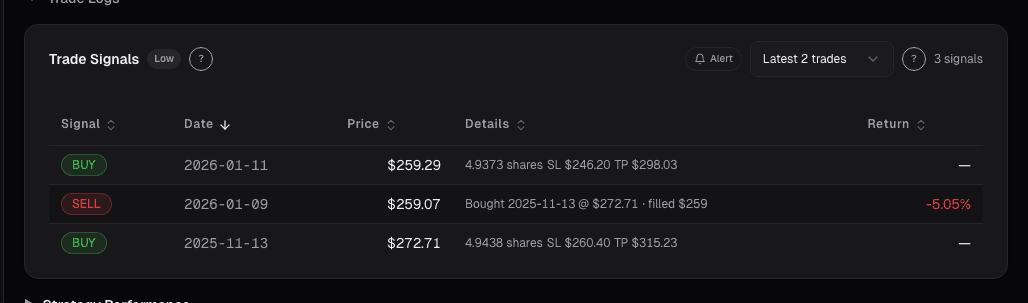
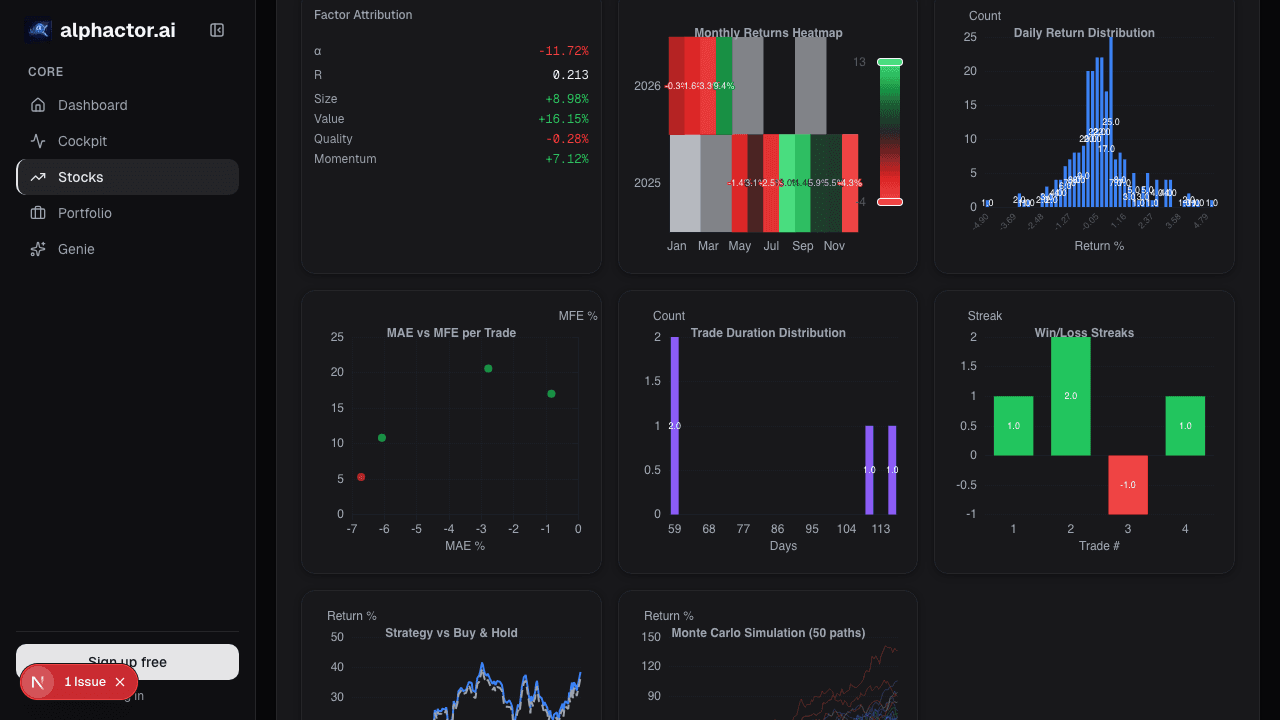
Live dashboard views that match this post. Each tile deep-links to the exact card.
Stocks mentioned
Related reading
Congressional Trades on a Single Stock
The 'Congress outperforms the market' story hides where the actual signal is. It's not aggregate Congressional portfolios, it's a single committee chair's…
Corporate Lobbying Disclosures
Lobbying spend publicly discloses which regulatory fights a company is fighting. A quarter-over-quarter jump in contacts to a new agency often precedes the…
Dark Pool Prints
Off-exchange share above 45% clustered into weakness signals institutional accumulation. Dark pool prints are regulated, post-trade transparent, and measurable.
Dashboard News: A Filtered Stream Across Your Holdings
Generic news feeds drown you in noise. The Dashboard News card filters by your holdings and ranks by sentiment impact: what's new, what matters, why.
Stock Market Seasonality: Which Calendar Effects Still Work?
An evidence-based look at the January effect, sell-in-May, the Santa Claus rally, and other seasonal patterns, separating the ones that still hold from…
Small Cap vs Large Cap: When Size Matters in Stock Selection
The historical performance gap between small and large cap stocks, when each segment leads, and how to use market conditions to decide where to allocate.
Ready to try alphactor.ai?
Validate your trading strategies with statistical credibility testing. Start free.
Get Started Free