The Quarterly Portfolio Review Checklist
A structured quarterly review process covering performance attribution, risk assessment, thesis validation, and rebalancing decisions.
 Marcus Chen4 min read
Why Quarterly
Daily monitoring leads to overtrading. Annual reviews let problems compound undetected. Quarterly strikes the right balance: frequent enough to catch drift and thesis violations, infrequent enough to let positions develop. Most earnings cycles are quarterly, which means each review captures a fresh set of fundamental data for every holding.
Block 60-90 minutes once per quarter. Treat it like an appointment. The structure below walks through what to cover and in what order.
Step 1: Performance Attribution (15 minutes)
Start with the numbers. Pull your portfolio's total return for the quarter and compare it to your benchmark. Not the S&P 500 by default, but the benchmark that matches your portfolio's asset allocation and style.
Then decompose the return:
Which positions contributed the most? Rank holdings by contribution to total return (position return multiplied by position weight). The top three contributors and bottom three detractors tell you where performance came from. If outperformance came entirely from one position, that is concentration risk, not skill.
Allocation vs. selection. Did you outperform because you were overweight the right sectors, or because you picked better stocks within sectors? Allocation success is often macro luck. Selection success reflects research quality.
Cash drag. If you held significant cash, calculate the cost. In a quarter where equities returned 5%, a 15% cash position reduced portfolio return by roughly 0.75 percentage points. Cash is a deliberate position. Know what it costs.
Step 2: Risk Assessment (15 minutes)
Performance looks backward. Risk looks forward.
Portfolio volatility. Review trailing volatility. If it has crept up more than 20% relative to last quarter, something has changed that warrants investigation.
Correlation check. Review pairwise correlations of your top 10 holdings. If average correlation has increased, effective diversification has decreased. This often happens gradually as the portfolio drifts toward sector concentration.
Drawdown from peak. Note your current drawdown from the all-time high. If you are approaching your 10% or 15% threshold, tighten stops and defer new buys.
Concentration review. No position should exceed your maximum size (typically 8-10% for high conviction, 5% for standard). No sector should exceed 30-35%. Flag anything past the limit for trimming.
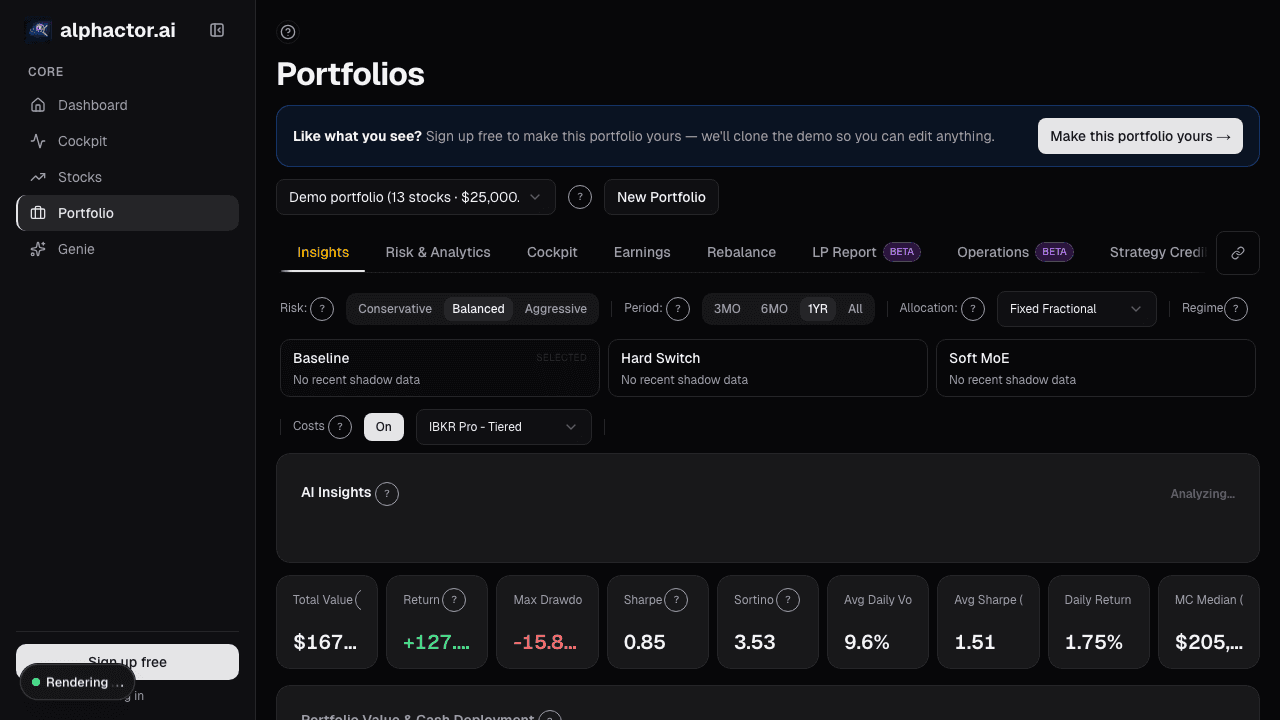
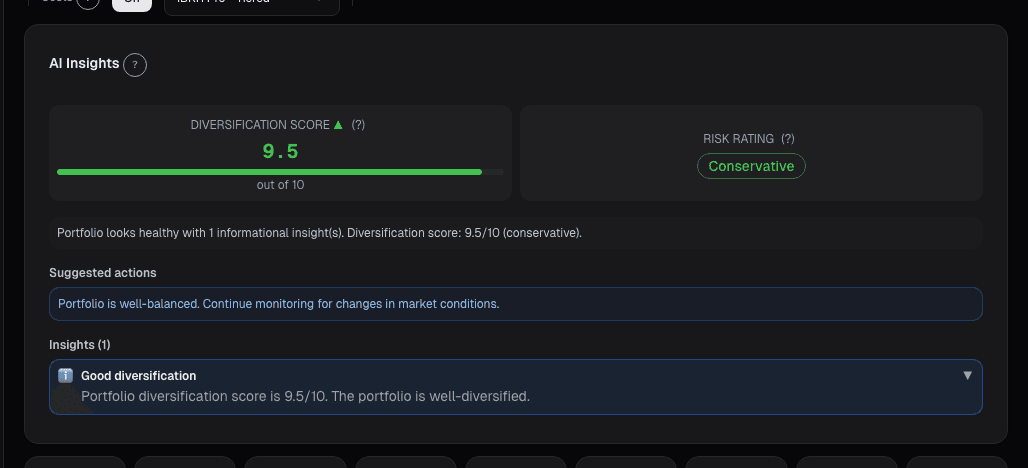
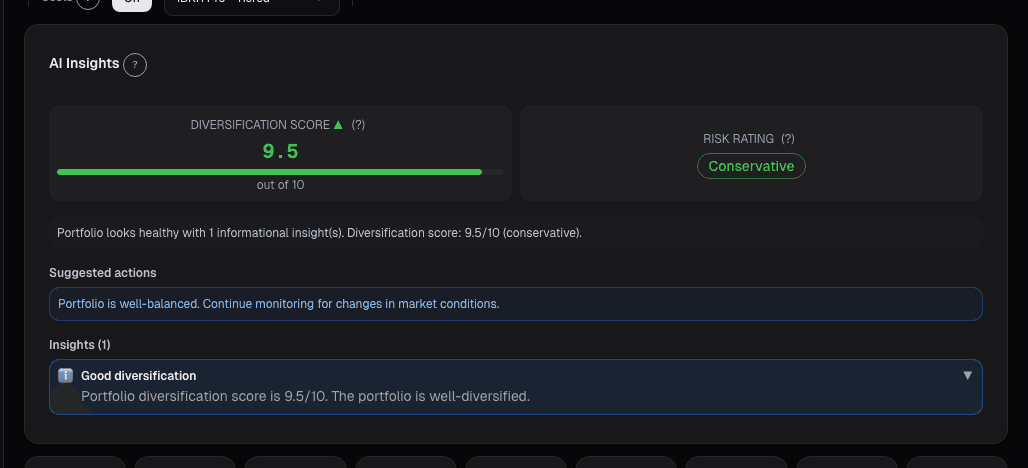
Alphactor's portfolio dashboard provides a consolidated view of these metrics, highlighting positions where risk contribution exceeds the portfolio average and flagging correlation clusters that may not be visible from sector labels alone.
Step 3: Thesis Validation (20 minutes)
This is the most important step and the one most investors skip. For each position, ask three questions:
Is the original thesis still intact? Write down the reason you bought each stock in one sentence. Compare current fundamentals to your expectations at purchase: revenue growth, margins, competitive position. If the business is tracking your thesis, hold. If the thesis has been violated, the position is a sell regardless of current price.
Have the fundamentals changed? Review the most recent quarterly earnings. Look for revenue growth deceleration, margin compression, guidance cuts, and management changes. One weak quarter may be noise. Two consecutive quarters of deterioration is a pattern.
Is the valuation still reasonable? A stock can have an intact thesis but trade at a valuation that prices in five years of growth. If the price has run far ahead of fundamentals, consider trimming. You can always add back at a better price.
Step 4: Rebalancing Decisions (15 minutes)
With performance, risk, and thesis review complete, you have the information to make rebalancing decisions.
Trim overweight positions. Any position more than 3 percentage points above target weight is a candidate. Prioritize trimming where the thesis is weakening or valuation has stretched.
Add to underweight positions. Direct available capital toward positions that have drifted below target weight and where the thesis remains strong.
Exit broken theses. If step 3 identified thesis violations, sell those positions. Do not wait for a recovery. A position with a broken thesis is dead capital.
Harvest tax losses. In taxable accounts, check for positions below cost basis. Combining rebalancing with harvesting is efficient because you are already making trades.
Step 5: Forward Planning (10 minutes)
End the review by looking ahead.
Cash deployment plan. If you are holding cash or expecting inflows, identify where the next dollar goes. Rank your highest-conviction ideas at or below target weight.
Watchlist update. Add or remove names based on what you learned this quarter. Begin research on new ideas. Remove watchlist names that have moved past your entry price.
Calendar awareness. Note major events in the next quarter: earnings dates, product launches, regulatory decisions, Fed meetings. You do not need to trade around these, but you should not be surprised by them.
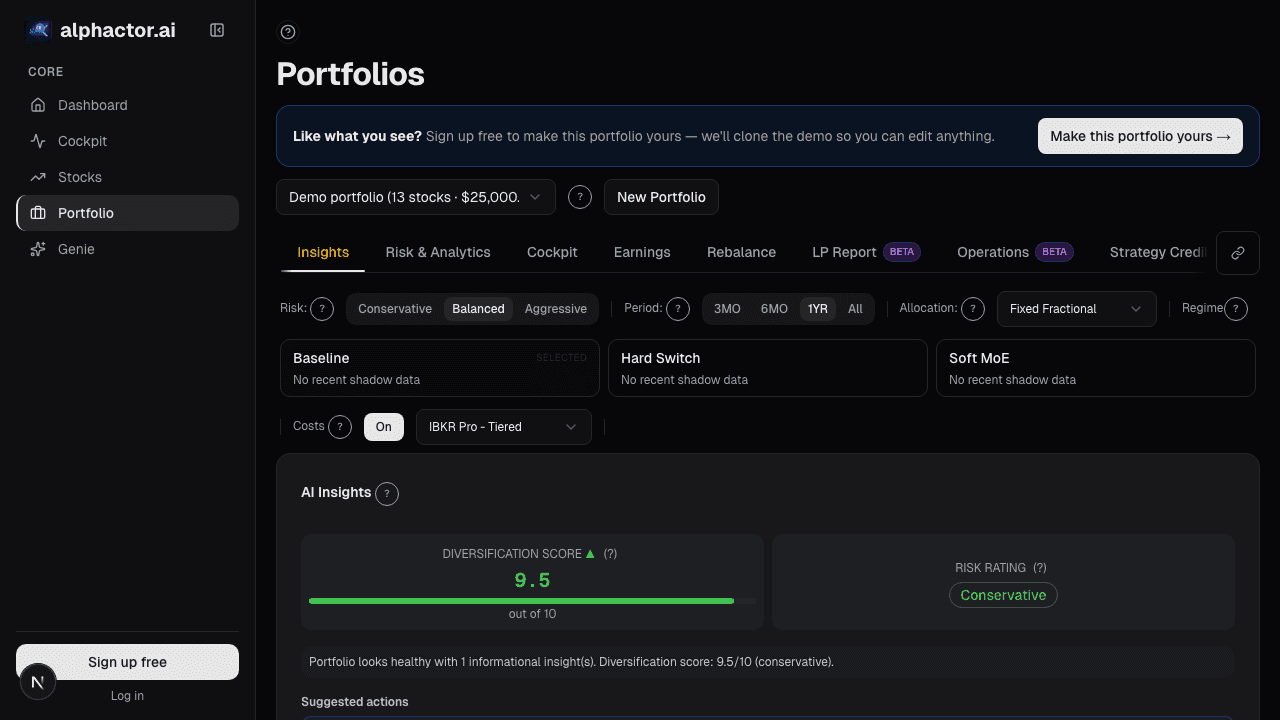
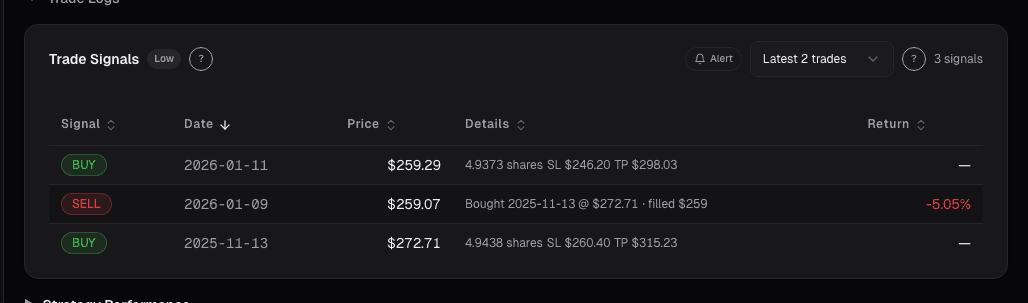
Document your decisions. Write a brief summary of what you changed and why. This creates a record you can review next quarter. Alphactor's portfolio dashboard notes feature makes this easy to attach to your holdings. You can also set up trade alerts for positions approaching your predefined thresholds so you are not caught off guard between reviews.
The Discipline That Matters
A quarterly review is not about finding the next great trade. It is about maintaining the integrity of the portfolio you have already built. Drift unchecked becomes concentration. Broken theses held too long become dead weight. Risk unmonitored becomes a surprise. Sixty minutes, four times a year, keeps all of it in check.
See it in the app
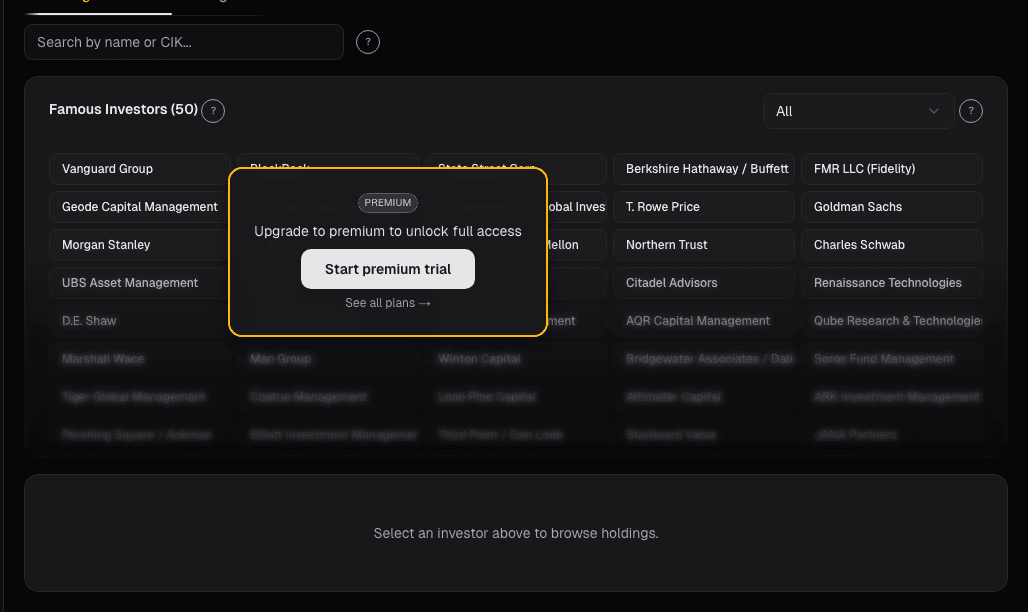
Live dashboard views that match this post. Each tile deep-links to the exact card.
Related reading
Choosing the Right Benchmark (Hint
Why benchmarking against the wrong index distorts your performance assessment and how to select a benchmark that matches your actual portfolio.
Alt-Data Sentiment at the Portfolio Level
Per-ticker alt-data breaks down past 10 positions. A roll-up of WSB, news, MSPR, and options lets a 90-second scan replace 100 minutes of manual checking.
Portfolio Attribution: Where Your Returns Actually Come From
Beating the benchmark by 400bps feels good until attribution tells you it was all allocation luck on one sector call. Selection vs. allocation vs.
Portfolio Audit Trail: Every Decision
Regulated managers need an audit trail. The Audit Trail card on alphactor.ai records every trade, rebalance, alert, and note into one timestamped log you…
Portfolio Credibility
Conviction is self-reported; credibility is externally anchored. The two diverge exactly where mistakes live, an 8% position in a name you love with a…
Keeping a Trading Journal
A trading journal is the cheapest, most effective tool for improving performance. Here is what to track, how to review it, and why most people quit too soon.
Ready to try alphactor.ai?
Validate your trading strategies with statistical credibility testing. Start free.
Get Started Free