Free Cash Flow (FCF)
Cash generated by operations after funding the capex needed to maintain or grow the business.
`FCF = Cash from operations − Capital expenditure`. Some practitioners split this into maintenance FCF (what you'd need to keep the current footprint) and growth FCF (additional capex spent to expand).
Why it matters. Net income is an accounting construct; FCF is the number that actually lands in shareholders' hands (after buybacks, dividends, and M&A). DCF, EPV and most modern valuation frameworks run on FCF, not EPS. A widening gap between net income and FCF is often an early warning of accounting shenanigans.
Pitfalls. Capex definition matters, working-capital movements can swing FCF materially quarter-to-quarter. Always average across a cycle. For banks and insurers, FCF is a poor concept; use distributable earnings or dividends instead.
See it applied
Related reading
- EV/Revenue: The Multiple That Survives When Earnings Don't
EV/Revenue survives where P/E breaks, but needs a growth bridge. Pre-profit software mid-cycle runs 0.2-0.4x growth-adjusted, how to avoid the reading traps.
- FCF Yield: What You're Actually Earning Today
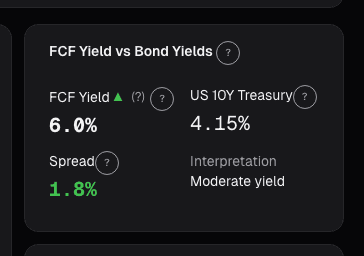
FCF yield answers the most basic question in equity investing: if I buy this company today, how much cash does it throw off per dollar?
- Earnings Power Value
EPV asks what a company is worth assuming zero growth, forever. The gap between EPV and market cap is the growth premium.