Part of: Fundamental Analysis
Earnings Season Checklist: What to Watch Before, During
A structured approach to earnings season: how to prepare, what metrics matter on the call, and how to interpret post-earnings price action.
 Sarah Patel4 min read
Why Most Investors Get Earnings Wrong
Earnings season comes four times a year, and four times a year most retail investors make the same mistake: they watch the headline EPS number, see whether the stock is up or down after hours, and react emotionally. Beat estimates? Must be good. Miss estimates? Must be bad.
Reality is messier. A company can beat EPS by $0.03 and drop 8% because guidance was weak. Another can miss revenue expectations and rally because margins expanded more than anyone expected. The headline number tells you almost nothing without context.
Before the Report: Preparation
The work that matters happens before the earnings call, not during it.
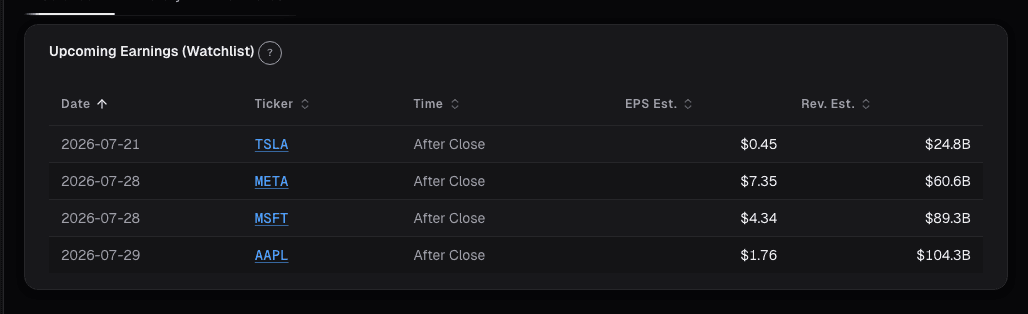
Know the consensus estimates. Revenue, EPS, and segment-specific metrics the market tracks. For Amazon, AWS revenue growth matters as much as consolidated numbers. For a bank, net interest margin and credit loss provisions are what analysts watch.
Identify 2-3 key questions. What is the market most uncertain about? For a retailer, same-store sales. For a SaaS company, net revenue retention. For an industrial, order backlog. If you cannot name the 2-3 things that will move the stock on earnings day, you have not done enough homework.
Check the options market. Implied volatility on the at-the-money straddle tells you how much the market expects the stock to move. If options are pricing in a 6% move and you see the stock drop 3%, that is actually a below-expectations reaction, not a panic.
Review the prior quarter's call. Management made promises last quarter. Did they follow through? If the CFO said margins would expand in Q2 and they compressed instead, that is a credibility issue regardless of whether they beat EPS.
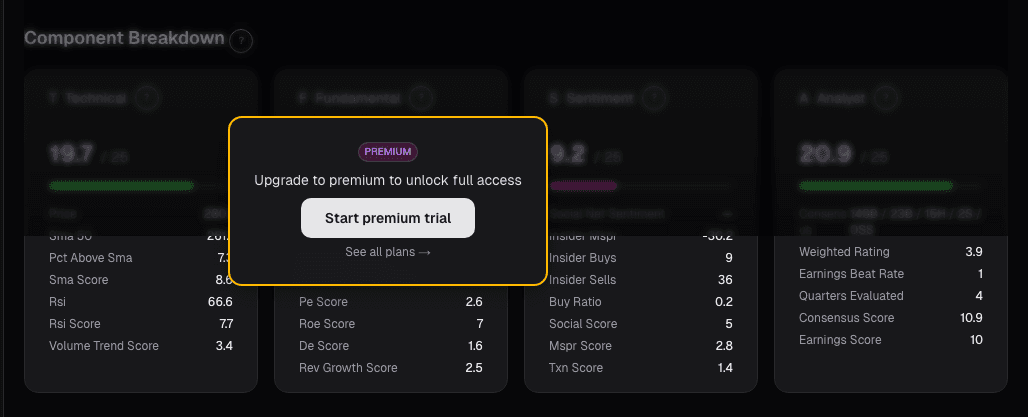
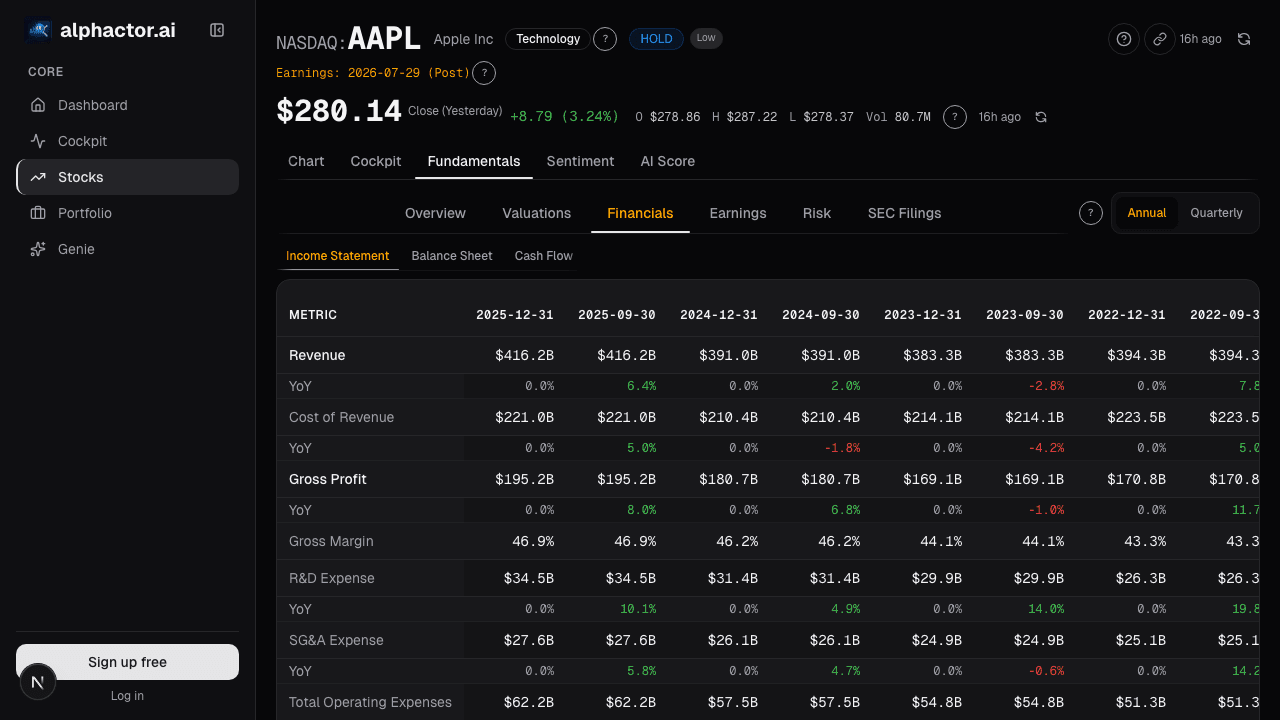
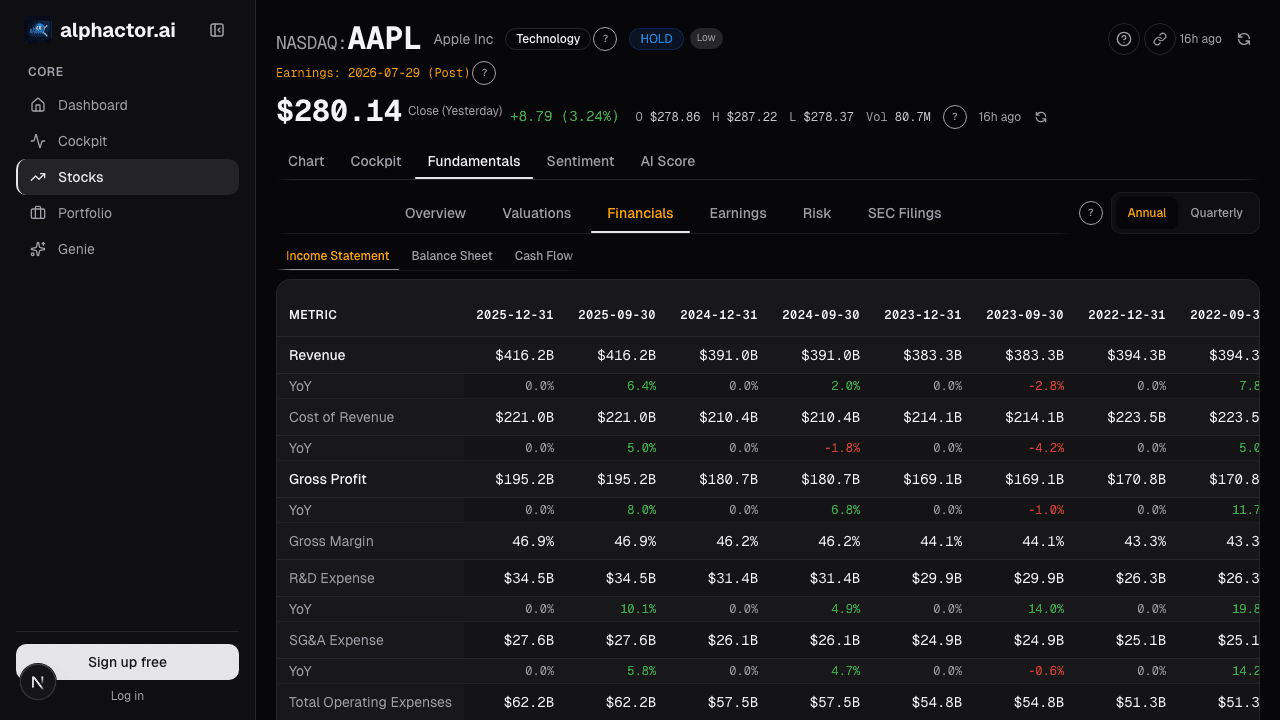
Alphactor's conviction scoring incorporates earnings surprise history and estimate revisions, which helps you gauge whether the consensus is anchored in reality or drifting on stale assumptions. The earnings calendar keeps all upcoming report dates in one place so nothing catches you off guard.
During the Call: What to Listen For
Earnings calls run 45-60 minutes. The prepared remarks are mostly scripted. The real information comes from the Q&A and from reading between the lines.
Revenue quality matters more than revenue quantity. A company can grow revenue 20% by acquiring another business. Organic growth of 12% is more impressive than acquisition-driven growth of 20% with integration risk. Listen for the organic versus inorganic breakdown.
Margin trajectory tells the real story. Revenue growth is easy to model. Margin expansion or compression often surprises. If gross margins are expanding while a competitor's are flat, that signals pricing power or efficiency gains.
Guidance is the main event. For most stocks, next-quarter and full-year guidance moves the price more than the results just reported. A beat on the quarter with a guidance cut is net negative. A miss on the quarter with a guidance raise can be net positive.
Watch for language shifts. When management goes from "strong demand environment" to "resilient demand despite headwinds," that is a downgrade wrapped in optimism. Words like "prudent," "disciplined," and "selective" often precede spending cuts.
After the Report: Post-Earnings Drift
The most well-documented anomaly in equity markets is post-earnings announcement drift (PEAD). Stocks that report strong earnings tend to continue outperforming for 30-60 days after the announcement. Stocks that disappoint tend to keep drifting lower.
This happens because the market underreacts to earnings information initially. Not everyone digests the report on day one. Institutional rebalancing takes time. Analyst revisions trickle in over the following weeks.
How to use this:
Do not chase the gap. If a stock gaps up 10% on earnings morning, buying at the open is usually the worst entry. Wait for a pullback, typically 2-5 days later, as momentum traders take profits.
Watch the first full session. After-hours reactions are low-volume and unreliable. The first full trading day, especially the last two hours, gives a much better signal about institutional sentiment.
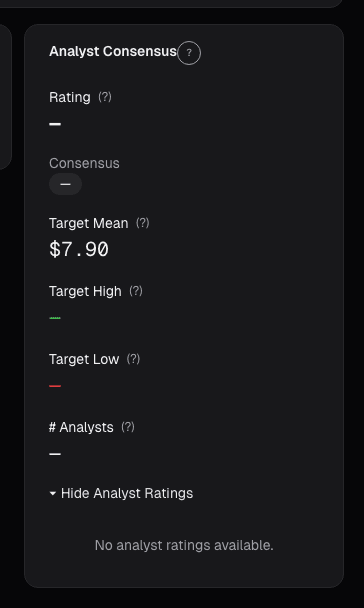
Track estimate revisions. In the two weeks following earnings, watch whether analysts raise or cut their numbers. Upward revisions after a beat confirm the results were genuinely strong.
Compare to sector peers. If your stock beat but the whole sector rallied, the market may be pricing in a macro tailwind rather than company-specific strength.
Building an Earnings Season Routine
A practical cadence for earnings season:
- One week before: Review estimates, re-read last quarter's call, write down your 2-3 key questions.
- Report day: Read the press release for headline numbers and guidance. Scan the call transcript or listen live.
- Day after: Assess the full-session price action. Read sell-side quick takes for anything you missed.
- One week after: Check for estimate revisions and analyst target changes. Update your thesis.
This takes 30-45 minutes per position per quarter. If that sounds like a lot, consider that you are betting real money. The alternative, reacting to the headline EPS number, is not analysis. It is a coin flip with extra steps.
See it in the app
Live dashboard views that match this post. Each tile deep-links to the exact card.
Stocks mentioned
Related reading
Accruals Quality: How to Spot Earnings That Aren't Real
Accruals measure the gap between reported earnings and actual cash. Widening accruals is one of the most reliable red flags in financial analysis, Sloan's…
Altman Z-Score: A Bankruptcy Predictor That Still Works
Edward Altman's 1968 discriminant model predicts bankruptcy within two years about 72% of the time at its distress threshold.
Balance Sheet Deep Dive
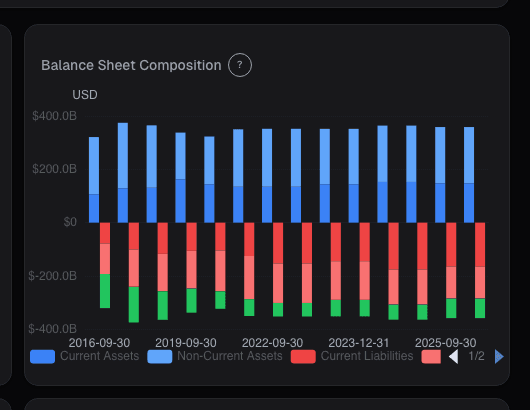
Balance sheet changes lead income statements by 2-6 quarters. Net debt, receivables days, and goodwill are the lines that move stocks first.
Earnings History
Each stock has an earnings personality. Twelve quarters of per-ticker history reveals beat-miss cadence and drift patterns that aggregate statistics mask.
How Earnings Season Actually Moves Markets
Why the market's reaction to earnings reports depends on guidance, positioning, and expectations far more than the headline EPS number.
How to Analyze a Company Before Earnings in 15 Minutes
A 15-minute pre-earnings checklist covering guidance revisions, balance sheet flags, and estimate dispersion using Alphactor tools: no deep-dive report needed.
Ready to try alphactor.ai?
Validate your trading strategies with statistical credibility testing. Start free.
Get Started Free